Episode Transcript
[00:00:00] Speaker A: Foreign.
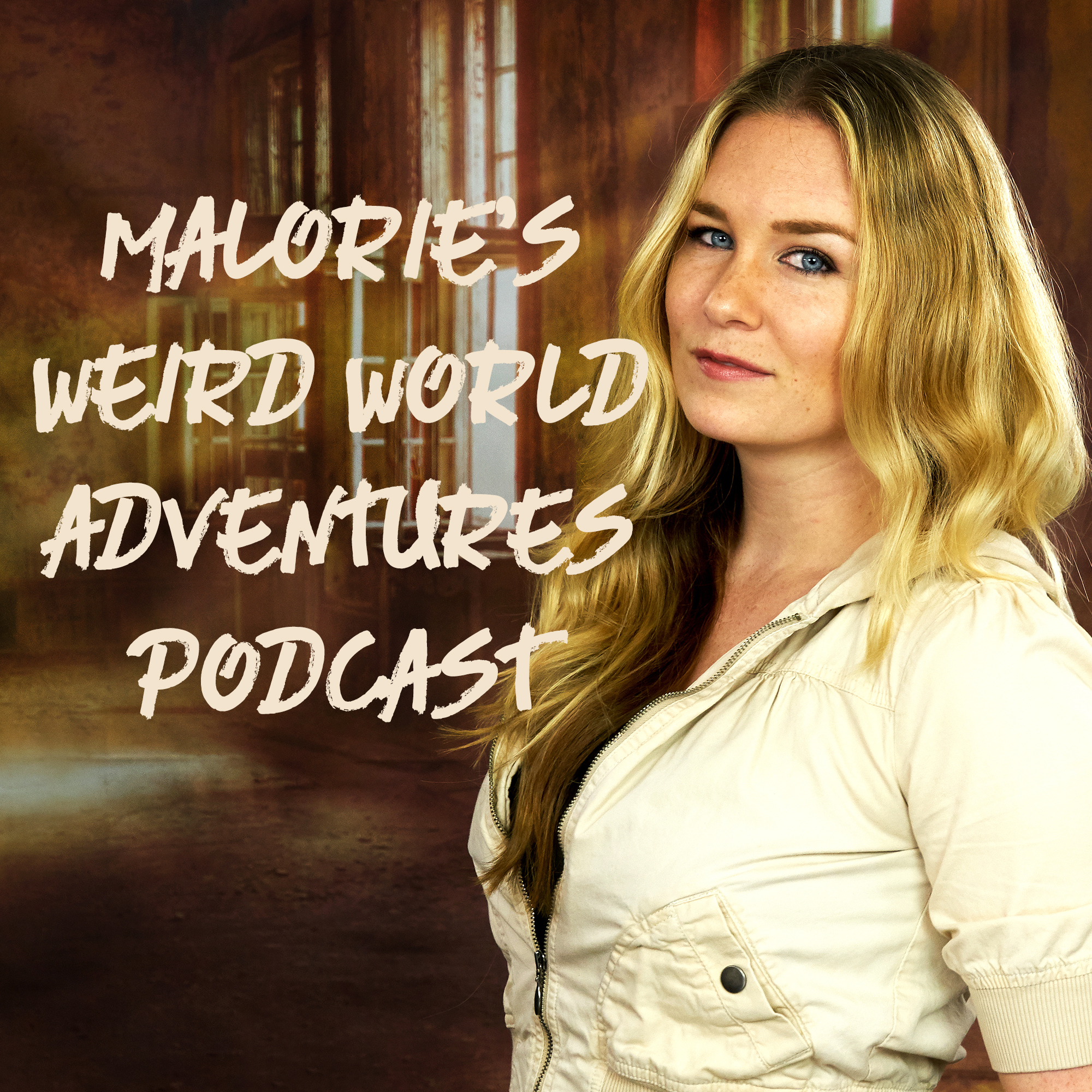
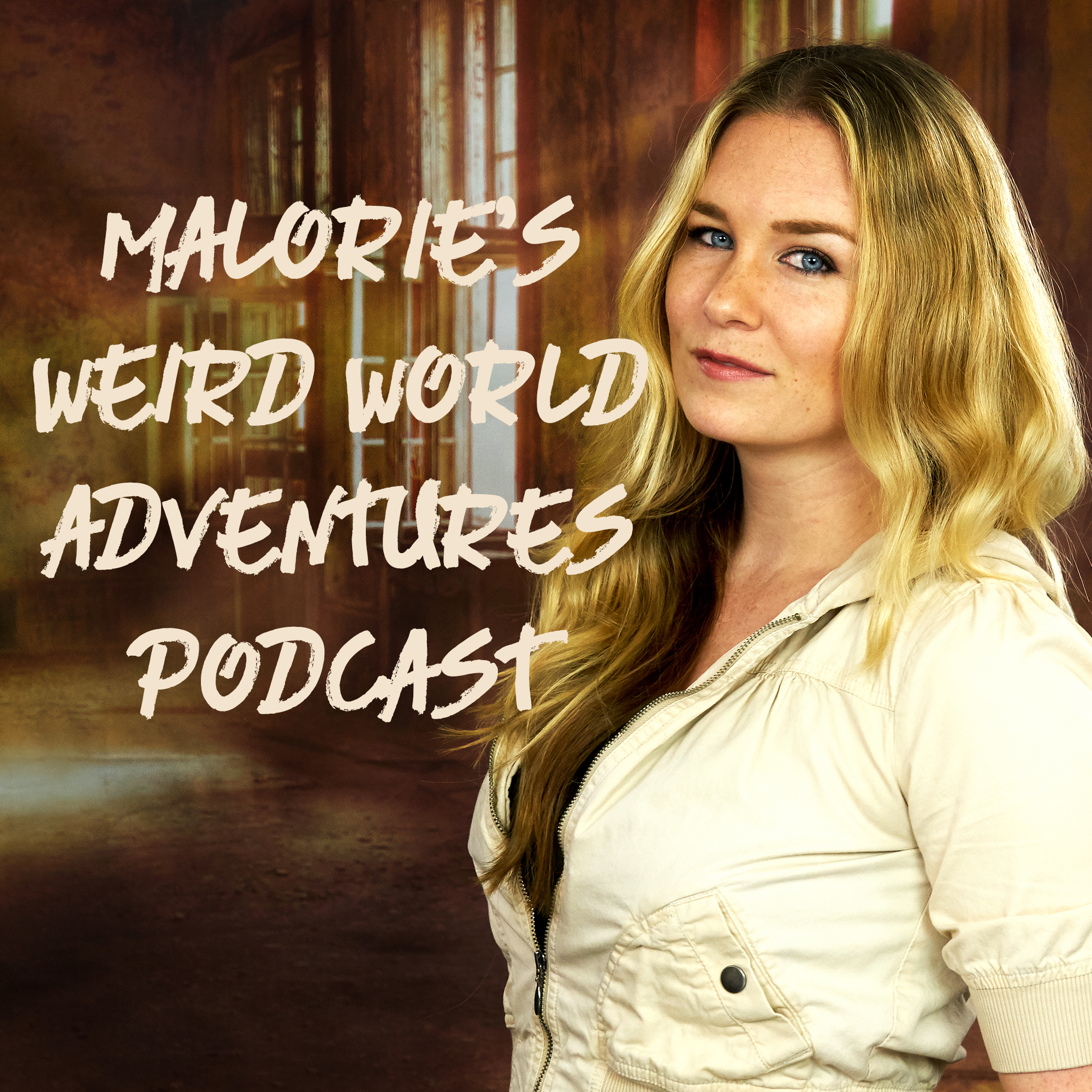
Hello, everyone. Welcome back to Weird World Adventures, the podcast. I'm your host, Mallory, and I'm here to show you just how weird this world of ours really is. And I'm very excited to have Kenny Biddle here with me today.
Thank you for joining us, Kenny.
[00:00:20] Speaker B: Oh, how are. How are you?
[00:00:22] Speaker A: I'm doing all right. How are you?
[00:00:24] Speaker B: I'm doing good. I'm doing good. I'm. I'm still. I think I finally am catching up from cycon. I think I'm finally getting like. Like, caught up in all the work and stuff like that that I kind of pushed to the side because, hey, we have four days of entertaining everyone in the scientific world and skeptical world and all that. So, yeah, I'm. I'm finally there. I'm good. I'm good.
[00:00:50] Speaker A: Yeah, it was. I feel like I'm just now catching up from. From scicon, too. It's just a whirlwind, and everything happened so fast, but it was. Thank you for all you do for that, too. I know you did so much, and it was so wonderful. And. And the Niagara Falls experience, where it was like we all showered and.
[00:01:09] Speaker B: Yes, that was.
I see, I told you. We're laughing about it now. And I. That's what I said there. Like, we. We arrived at Niagara Falls to take the Maid of the Mist boat ride, and I think we. We. The bus left us off probably two blocks away. I mean, we had a. We had a walk, and by the time we walked to the entrance, the sky opened up and just poured on top of us, and it wasn't refreshing. It was cold.
[00:01:40] Speaker A: It was cold.
[00:01:41] Speaker B: It was cold. And we were drenched well before we got on the boat.
But it was.
[00:01:47] Speaker A: It was like an insult to injury a little bit. Where the. The ponchos were so close, but they were so. So far.
[00:01:54] Speaker B: Yes. That very, very thin layer of plastic really doesn't do much. I mean, especially.
We were already soaked, so it didn't matter.
[00:02:05] Speaker A: And I had. I had this Adidas bag, and I was like, you know, this is great. This will keep everything nice and dry. We'll bring it. We'll take out the electronics just in case, and we'll bring the Adidas bag, and it'll be fine. And it says it's waterproof. It was not waterproof.
[00:02:20] Speaker B: Nope, nope.
Usually they are not.
I do have a habit of doing the whole plastic bag thing. I get a Ziploc and, like, anything like that where I know I'm going on an adventure, put them in a Ziploc bag, put Them in my backpack, and then I feel a little bit better.
But, yeah, it was fun, though. And we bought a good time, and the trivia was fun.
Although I did hear everyone.
And this is just my personal opinion injecting here. Everyone enjoyed my trivia much better than Brian Dunnings.
I love Brian. I love Brian, and I love giving him. Giving him crap.
[00:02:57] Speaker A: Oh, me too. But he did have a lot of very technical trivia. And I was like, I can't. I can't step up to the plate here.
The ghost trivia. I can't do the hard facts about waterfalls.
[00:03:08] Speaker B: Yeah, I know. Like, that. I didn't study for this test. I wanted. Because when we started, when we talked about the idea, it was like, all right, yeah, let's do trivia. And he's like, yeah, I'm gonna do, like, waterfalls and water and the science of hydroelectric power and this net. Like, all right, dude, I'm gonna do pop culture.
I'm gonna just do, like, Ghostbusters.
I'm gonna do movies. I'm gonna do cartoons. I'm gonna do stuff like that because that's. That's more fun for me. And because I'm not good at that. I like. I'm. I suck at trivia. I really do.
[00:03:43] Speaker A: Yeah, me too. I. I'm good with the obscure, weird stuff. I'm great with the pop culture, the ghost.
I knew several of yours. I'm not good with hard facts unless it's really obscure. Like, I could tell you pretty much anything about Evita Perron. Weirdly, like, there's certain topics where, like, I could nail this one, but.
[00:04:02] Speaker B: Well, that's. That's good. I mean, that's the kind of stuff I like. And that's. That's where we could have conversations. You know, you sit down and you mention that. I'm like, well, tell me about that. Who is that? I don't know anything about it. Now. It's a chance to learn, and I love to learn. So I would just sit and listen to you talk about that for. Over dinner.
Yeah. Because it would just be fun.
[00:04:26] Speaker A: I wanted to talk with you a little bit, too, today about your personal journey into skepticism. And I know a lot of people come to skepticism through different routes, and many people were believers before they kind of become skeptics and kind of go into that mindset.
Do you have formative experiences or beliefs prior to working for CFI and kind of getting into that world?
[00:04:51] Speaker B: So, I mean, we can go all the way back to when I was a youngin.
I was raised Catholic.
My mother is a devout Catholic and my father is not. So that meant that I was raised Catholic because mom was the boss.
And I. I grew up having those beliefs because that's. I was indoctrinated into it, you know, like, that's. That's what my world view was. And once I got to high school, I realized that there were people. I even went to a Catholic high school, but I realized, like, there were other people that were going to the school that were not Catholic. And that was a foreign concept to me. I didn't realize there was something else.
I had a neighbor that was Jewish. And it was funny because, like, every time religion came up and my mother would reference our neighbor, it was always that, well, you know, he's Jewish, and. And that's okay.
But. And then, like, I never got that until I was an adult, where I was like, that was. That was very condescending. That. That was. That was horrible, the way that we were referred to our neighbor like that.
But then, yeah, realizing that there were other religious beliefs, and some people didn't have any beliefs whatsoever, you know, and didn't believe in any kind of God or gods or goddesses or anything like that, and I was like, wow. You know, And I was always fascinated with Egyptian mythology, Greek mythology. I love that because I. I grew up playing Dungeons and Dragons.
[00:06:28] Speaker A: Me too.
[00:06:29] Speaker B: Oh, that's awesome.
I mean, I. I was surprised that my mother let me, but it was something that we could get my friends to come over. It was my. My. My circle was D D. That's all we did, you know. And so, yeah, that I had those religious beliefs until after high school. Sometime after high school, I. I started doing the. Well, I'm not going to go to church. I want to see what happens. And once I stopped going and realized, like, nothing happened, I didn't get struck by lightning, you know, nothing horrible befell my family or anything like that. Like, okay, this isn't for me. I'm not going to do the church thing anymore.
And I mean, I have nothing against anyone that does go to church or anything like that. You do. You. As long as it doesn't hurt other people. That's my philosophy.
And then with that, I did have a strong belief in the afterlife. I. I thought there were ghosts because it was always, like, you could pray and talk to your deceased loved ones and. And you could pray to things in heaven and ask.
Basically ask for wishes, right, to see if that would, you know, come true.
So there was something that I was being taught that I was like, all right, there's this, there's something, there's something there. And I went into ghost hunting because once, once I got married, I realized that there was this thing called the Internet. And we got a computer. We.
I still, I found the receipt to my first computer. And it was an Internet ready computer. That's how it was promoted.
And we had, I think we had 16 megabytes of RAM.
[00:08:18] Speaker A: Oh my God.
[00:08:18] Speaker B: And that was top of the line. And I remember getting the receipt and having everything listed and the sales guy telling us, you will never need another computer. Like, this is, this is top of the line. And I was like, great, well, I'm gonna surf the net. I'm gonna do all this stuff. And I mean, the first thing I looked up was comic books, because I'm comic book nerd. And then I looked up ghosts because I always had an interest. And there was a local group joined, it started going out. And I'm almost embarrassed to say that, yes, I believed in ghosts. I believed psychics could talk to ghosts, mediums talk to ghosts. I believe that there was demons and that everything from little balls of light on your photographs to scratchy noises on an audio recording meant ghost.
[00:09:11] Speaker A: Right?
[00:09:14] Speaker B: And that was. That took me all the way up. I'm sorry, I'm going long here, but.
[00:09:18] Speaker A: No, no, no, this is great. Now, please.
[00:09:20] Speaker B: That took me up until I got into photography. I picked that up as a hobby and started learning more about how light interacts with the film or with the, the sensor in the digital cameras and realizing like, wow, we could do a lot of tricks. And there's a lot of mistakes that I can make with aperture, long exposures and, and just how light plays within the camera itself, within the lenses. I'm like, wow, there's a lot going on here. And the light bulb finally went off. Like all, all these photographs people are getting, they're not ghosts. It's operator error, misinterpretations and, and sometimes people just did it.
I wouldn't say deliberately. Although, yes, there's plenty out there that do it deliberately. I think people were making mistakes and just didn't.
They didn't know what they were doing because they didn't read the damn manual.
[00:10:16] Speaker A: Right?
[00:10:17] Speaker B: That's what it comes down to. Nobody read the manual. And I did. I sat and read the manual for my camera and I was like, oh, it addresses these balls of light. It actually tells me what they are. And wow, that's amazing. And that got into more and more of writing about. Writing like a blog about what could cause this effect in a camera? That led to a little self published book called Orbs or Dust, which a friend of mine sent to Ben Radford who is one of the deputy editor. He's the deputy editor of Skeptical Inquirer magazine. He liked it, couldn't review it because it wasn't an officially published book, but loved it and reached out and we were in contact and he kind of showed me the ropes.
How to submit articles, how to cite my sources, which I didn't do before. I had no idea. Oh, this is what you do.
I have to tell you where I got the information. What is that?
[00:11:17] Speaker A: I really hate citing sources. I know how important it is, but I'm so bad at it.
[00:11:22] Speaker B: It is, but you know what? Now it's become second nature.
And now that I, I still do writing for the magazine for Skeptical Inquiry magazine, but I also produce a lot of videos for them. And it's actually easier for me to include references because every video or picture or document, especially all the documents, everything, I cite it right on screen. So you know exactly where I got it from.
Even though I'm showing you the document, I want you to look it up too.
[00:11:51] Speaker A: Right.
[00:11:52] Speaker B: But after talking with Ben for a while and I submitted an article to, it was called Skeptical Briefs. It was a newsletter that they put out that was my first published article. And I was like, wow, this is great. And it really. I realized there was a whole world out there, a community of people that looked into this and, and really looked at it from a scientific point of view and a proper investigative methodology. And I was like, wow, I, I want this, I want to be a part of this. And here I am.
Here I am, I am sitting in the office of the chief investigator at the, at CFI headquarters in Buffalo. And this is my full time job. So yay, you did it.
[00:12:40] Speaker A: That's amazing.
Do you remember you, you talked about this and I just. Art Bell. I remember early Internet, there was a place called Art Bell and they had a whole listing of ghost photos. And me and my friends would just click on all those ghost photos when we were teenagers.
Online at Art Bell.
[00:12:59] Speaker B: Online at Art Bell. I used to go there.
There was also a, there was a site called the International Ghost Hunters Society.
And that was.
They. They did a lot of conferences. They did the first paranormal conferences that I knew about in the, the late 90s, early 2000s and I did the same thing. I would go through every photo on the website and some of them I could explain, the others I couldn't and my, my behavior, my, my approach to this won't let me give it up. Like I, if I see something and I'm like, I don't think that's real.
It will, I will obsess over it for forever until I figure it out.
And it's good and bad. I mean the good part is that it does focus me. And I will, I will beeline it like that's it. That's what I'm doing for the next couple hours until I figure this out. I will research it, I will replicate it. I'll get the same camera.
I will, I will get under the same conditions and I will try to replicate what's going on until I get it done.
The bad part is I will spend the next couple hours or days doing this.
Yeah. And my wife is like, just let it go.
I can't. I can't. I gotta figure it out.
So. Yeah. It's, It's. Huh.
Yeah. I would do the same thing. So either Art Bell Online or the, the IGH hs, which is what they were called. And then just going from group to group.
But there weren't a lot then. I mean I got, I got married in 97. Our first computer. Internet ready computer was our wedding gift to ourselves.
So I would spend time on there. But in 97 there weren't a lot of groups at the time. It was still a little like a.
I don't know what the word is. It was. It was more rare to find groups. Yeah. And I mean we still had shows like Sightings, Unsolved Mysteries and, and stuff like that where we were watching them on TV and, and that's where I was getting ideas like where can I go? Where can I, where can I? But all these places were so far away to me. You know, like, because I was still living in Philadelphia, just married, really didn't travel much.
I mean I, I never traveled as a child. So it was like these places are so far away. Even though they were only like four or five hour drive.
But yeah.
So there you go. That, that was a long winded answer.
[00:15:46] Speaker A: But that was perfect. I love it.
[00:15:48] Speaker B: Awesome.
[00:15:49] Speaker A: And I don't know. Do you remember so back when this is. This is just again off what you said, it reminded me. So when. When Ghost Hunters was new and that was like the big deal and they had paranormal reality shows for the first time and it was the Sci Fi Channel and I was all about the early Sci Fi Channel and they had this show called Fact or Faked.
And I feel like it did a good Job bringing people in that like the paranormal. But then they would also try to recreate the viral Internet videos online and disprove them too. Which was one of the first shows I've ever seen do something like that. Did you ever see that show? Because it was, it was great.
[00:16:25] Speaker B: I did, I did and I.
[00:16:30] Speaker A: Terribly acted, I will say, like, it was so staged and so poorly acted. But the concept behind it, I was like, this is great.
[00:16:37] Speaker B: The concept was. Was good.
I think it was poorly executed because they.
When you're looking at something and you're trying to say fact or fate, that's. That's going in with the black and white attitude.
[00:16:52] Speaker A: Yes, I agree with that.
[00:16:54] Speaker B: And it could be something else. You know, like when you, when you're saying that like a paranormal experience is either fact, it's factual, or someone faked it. That's going to both extremes. And you're not leaving room for maybe it was a mistake, maybe something like that.
[00:17:13] Speaker A: Yeah.
[00:17:13] Speaker B: So. And seeing that show, they would go through the story and like, looking back now, I can say it at the time, I didn't know. But looking back now at some of the episodes which I've done, they didn't do good research. Oh, yeah.
They cheated on the history.
And when they tried to go through a replication, I think many of them were over the top.
[00:17:44] Speaker A: Oh, yeah.
[00:17:45] Speaker B: So they made. Like, for instance, they did an episode where they, they. There was a case called the Ghost Writer. Polaroids or Polaroid Ghostwriter, that's what it was. And I did a big video on it. It was a guy in California that swears that he was communicating with a ghost through a Polaroid camera and that he would take sealed packs of film, load it into a Polaroid, take a picture, and there'd be rating on it.
Messages. Which was interesting at the time. Like, that's great. And Sightings was the show that originally covered it.
This is amazing. But then later on it came up on Fact or Fate, where they tried to recreate it. And what really annoyed me one was that they had a decent explanation for it, except they didn't credit the people that came up with it because I know who came up with it. It was the Georgia skeptics.
They actually came up with it and exposed the trick, like two months after the, the Sightings episode air. So it was already out there, so they didn't get credit for it. And then the, the people, the crew, I guess the cast messed it up.
They really messed it up. I mean, you're, you've. You're into photography.
[00:19:05] Speaker A: Right.
[00:19:06] Speaker B: I know. I. I know you are. I've seen some of your pictures. I have your book right up here.
There it is right there. Yay.
So they were. They were taking film, Polaroid film out on the pack, and they were supposed to be in complete darkness, but they were taking it out of the pack to expose it for a double exposure kind of thing. But they had, like, light, the. The. The distance sensor or the range finder from the camera lighting up and exposing the film. And they were messing it up like, it was annoying me because it was like, these people are not following their own instructions.
Plus their titles. The lower thirds that they gave themselves. The titles they gave themselves didn't apply.
[00:19:50] Speaker A: Oh, yeah. Total nonsense. Not at all. I will say I was in LA during that, like, that time, like, early, me being in la, and I saw the castings for those go out. They were not actual experts in what they said.
[00:20:01] Speaker B: Right, right. And, you know, like, you don't see that until later on, you know, when you start researching the shows. Like, if that comes up in one of the cases that I'm looking at, I'll. I'll deep dive into that show and I'll look up all the cast members. Are they really who they. They say they are? No, no, no, no, not at all. And you're surprised by the background that you find out, like, yeah, they're an actor and that's it. Not a photography expert, no idea how to do certain things.
And. And it's just. It's annoying and it makes all of us look silly because they're presented as investigators, professional ones, and they simply are not.
So. But, yeah, I've watched several of those episodes only because I had to.
[00:20:55] Speaker A: Right.
[00:20:56] Speaker B: I would check it out once in a while. Like, I'd watch the first episode of any series that comes out because I was curious. I want to see what they say. What do the cast members.
How do they approach the mystery?
[00:21:09] Speaker A: Right.
[00:21:10] Speaker B: You know, are they looking at it from a critical thinking point of view or are they looking at it from a pseudo skeptic point of view where it's like, I don't know about that. But then 10 seconds later they're like, dude, that was a ghost. There's no other explanation for it.
And it just. It was like, all right, you know, like, the first episode can tell me everything I need to know about them.
[00:21:35] Speaker A: Definitely. Yeah, definitely. So that show just came to mind because I feel like it was the first time they ever tried to. At least that I saw in those realities, just break down something to maybe it's not just ghosts.
[00:21:47] Speaker B: And, well, I will say that even ghost hunters, the original ghost hunters, they. In the beginning, like the first.
First and second season, they tried to debunk a lot of stuff. So they would go.
[00:22:01] Speaker A: I liked that.
[00:22:02] Speaker B: Yeah. They. They went in, they. They looked at the claims. They tried to figure out what was going on. And sometimes they did.
They're one of the best cases that they handled was the.
Oh, man. The big ship in California.
[00:22:17] Speaker A: The Queen Mary.
[00:22:19] Speaker B: Yeah. Yes. Thank you.
[00:22:20] Speaker A: Another controversial episode of Ghost Hunters.
[00:22:22] Speaker B: Yes.
Because they found that somebody moved the camera and somebody was in the room and hid behind a bed. And they found it because they went back through the footage and found where it was cut. And I was like, all right. Well, I mean, my first impression was like, I don't know if that's the Queen Mary staff or if it's your staff.
Like, we don't have any footage of that.
But it was something that they put out there and say, you know, they could have just had, like, edited the footage and said, look, we caught this. You know, this is amazing footage. This is definitely something. Nobody was in the room. We had a camera on there. This is probably paranormal.
This is awesome. And I think most of their viewers would have sucked it up.
[00:23:08] Speaker A: Yeah.
[00:23:09] Speaker B: And. And loved it. But at least they came out and said, you know, we found something wrong. We're putting it out there. There you go. And I mean, since then, I. I've. I am friends with Jason Halls, so full disclaimer or disclosure. I. I've been friends with him since they went to Eastern State Penitentiary in Philadelphia. And I talk to him frequently, so. But we do have an understanding where he knows this is my job. I know that that's his job. And even though we have different opinions, we can talk, we can. We can have pretty good debates, but as soon as it's over, it's all right, man. You want to get a beer? Yeah, go get something to eat. And we chill. We talk about other things, family and life and all that stuff, so. And that's the way it should be. I really think that's the way it should be. Yeah.
[00:23:58] Speaker A: I love that. You also like to go to the paranormal conventions and kind of try to talk to people in their language and. And. And approach things from a very not abrasive way, which I think has to happen. It is incredibly wonderful to see that.
And a lot of my friends are ghost hunters, too. I mean, like, you know, like in that world. Steve. You know, Steve Gonzalez from Ghost Hunters. We, we've done stuff together. I love him. Elizabeth Saint. There's like a bunch of people on those shows that I've worked with that I enjoy very much. And we know we have different views
[00:24:30] Speaker B: and yeah, I think we can work together. I mean, if, if we're all working towards the same goal and, and that's not always apparent. Sometimes, you know, you really have to, to get to know them and work with them to understand where they're coming from. But I think for the most part, we're all trying to figure out what's going on. Our approaches are different. That's. That's all. And I think they should at least complement each other so that if we're going in and someone's, you know, the stereotypical believer and I'm the stereotypical skeptic going in, let's talk something happens, talk about it. And why do you believe that it's something ghostly and why do I think it's not?
Let's talk about it and get out in the open. And then we can, we can both grow from that, I think. And it also helps improve the quality of everyone's work.
Because if we're putting, if we're pointing out flaws in some kind of experiment or, hey, you're trying to do this or replicate this, but it's not the same conditions. Like, maybe you got a video at night and the camera was in night vision mode and now you're trying to replicate it during the day, right? That's not the same. We need to stop. We need to redo this at the same time. And I've seen that on a lot of these shows. I've seen it from a lot of groups where they don't understand you have to have the same environmental conditions.
So going in and just saying, hey, can I make a suggestion?
And I think that that alone is so powerful because it's not going on. Going into a group and going, you guys are doing it wrong. You all suck.
You know, it's, can I make a suggestion? If they say no, okay, and I walk away, that's it. But if they say yes, okay, here's what I would do and explain it to them. And hey, you want to try it? I'm up for it. Let's try it. And that usually opens doors. You know, they want to work with you, and they're like, okay, great. And the next time something comes up, and this is one of the great feedbacks that I get when something else comes up and they don't understand it. Instead of just posting and saying this is probably paranormal, they reach out and say, hey, Kenny, what do you think of this?
And for me, that's like one of the biggest compliments because it made an impact, you know, I'm having. I'm making a difference in what they're doing and they're second guessing it.
[00:27:04] Speaker A: Yeah, good.
[00:27:05] Speaker B: I mean, good. And I mean, if they got something really cool, I'm gonna tell them that I'm not gonna, I'm not gonna skeptic for the sake of skepticing.
If they have something that I don't know what it is, I. Dude, I don't know. But now I'm interested. Let's look. Can I look deeper into it with you? You know, can I, can I go along with you? Because I want to see. I want to, I want to see. So, yeah, I think being nice, being kind, being polite and professional is the way to go. That opens doors instead of closing them. Because if, if you're the stereotypical skeptic from decades ago where you just went in there and just.
No. And you were mean and you were in their face, which I understand. I, I wanna on, on the side, I understand the attitude because that's what they were getting from the other side. It was a, it was a fight. But somebody has to say, you know what, I'm not going to throw punches. I'm just, I'm gonna, I'm gonna offer a hand, let's shake it. Let's figure out what's going on together.
[00:28:10] Speaker A: Yeah.
[00:28:11] Speaker B: And that's my philosophy.
[00:28:12] Speaker A: I love that.
[00:28:14] Speaker B: Yay.
[00:28:15] Speaker A: And so when you take on a case, what does your actual investigation process look like? Is it. How would it be different than a paranormal investigator? You would. People would people traditionally expect.
[00:28:27] Speaker B: Yeah, traditionally, as a ghost hunter. And again, like I spent years doing the whole ghost hunting thing. So that would pretty much be. You heard a story, you booked the place, you go, you turn off all the lights.
Well, first you go in there with some of your meters, you walk around really quick. It usually takes like 10 minutes to get your quote unquote base readings, which they're really not, not even close, but they get it because it makes them feel better.
And then they usually split up or they get into a group in one room, they turn the lights off, they talk to the dark, they talk to the walls and hope they get something on their recorders. They randomly take pictures, they set up some cameras and then they watch it later, sometimes days later, which is not good because over the course of a couple hours you could forget everything. I mean, even if you have a camera set up in a hallway and you're not paying attention to it, you don't know what's going on.
[00:29:29] Speaker A: Right.
[00:29:29] Speaker B: There's no accountability for that camera except for its view. So you don't have.
We can, we can tie this back to the Queen Mary episode. You can see what's in front of that camera when it's recording, but you can't see to the sides, behind, above or below.
Don't know.
So when I go, when I take on a case, it really depends on the case itself. What are the claims? Where is it?
Can I get there? Do I need to get there?
Because when you collect the claims, then you have to separate the claims into testable and non testable.
So if I'm on location, could I test this claim? Whatever experience that they had, yes or no. Okay. And then we compile a list.
Some of the claims are historical.
So they, they claim that someone from 1887 died in that house by hanging or something like that.
Well, that I don't need to go to the house for. I can look that up. So, I mean, this, this cockpit I have here is awesome. It is so powerful because we can search newspapers and records and census and phone books and directories and all that kind of stuff from here. So I can usually confirm whether someone actually died and, or lived there or even visited there sometimes.
So it really depends on the claim. If it's historical, I can research it. If it's not, figure out the claims. What could possibly do it? If there's someone there already that, that is reaching out, I can say, hey, you know, try this, try that.
If not, then I will set up a time to visit and I will have all the claims listed already. I have my own little forms that I fill out all the claims. I usually have a folder with the. Any articles or newspaper articles, magazine articles, web page articles, social media posts where people claim something happened. Because I want all the details, I want everything that they wrote right in front of me all the time so that if I'm on location, I can, I can look down this hallway and say, all right, people, several people felt dizzy or nausea walking down this hallway. Okay. And look at the details. Did they mention anything out of the ordinary? Any smells, any.
Any weird sights? Did. Was there a weird noise or something like that? You know, and it might, it might be just like I need a, a bubble level, a spirit level, something like that. Where. Because the, the floor is unlevel or uneven.
I had, I had a place called the Knickerbocker in Pennsylvania. There's two. There's a famous Knickerbocker. And then the one that I went to, which is not so famous, still a very nice place, but they claim to be haunted. And there was stories about a ghost pushing people down the stairs, that people take a step down and they would feel the ghost push them. And when you went to that place? When I went to that place and looked at the stairs, I stood at the bottom. And I mean, I know that this is a podcast, but I'm gonna show you like the floor. The floor like this. Let's see. This is level. Okay. So the floor was like that.
[00:32:59] Speaker A: Oh wow.
[00:33:00] Speaker B: It was so tilted. It was probably a good like a 10, 15 degree tilt.
[00:33:07] Speaker A: Right?
[00:33:08] Speaker B: So bad. And I was like, there's no wonder people were falling down the stairs.
This, there's. There's a big difference. There was a good. From, from one side to the other. I say the step dropped easily four inches. Four inches or more. It was so bad.
But I, I guess it's not easy to describe what I do because it. If I'm searching for historical documents, that's what I'm doing all day. I'm sitting here looking through that.
I just did a. The recent video I published was about the Sallie house in Atchison, Kansas.
And I did a two hour video, my longest video I've done for cfi. I'm waiting for them to tell me, hey, bring it back to like an hour.
But the first hour was nothing but historical research on two people and just going through who they were, possible people that they were, where they were buried, where they lived, where they worked, and just interactions with family, what they had connected to the house, everything.
And it was just a solid hour on historical research and I could have stopped it there and been a really good investigation. Yeah, but there was more. There was photos and there were other experiences people had later. So that was the next hour. Photos and the personal experiences of people that were there.
So that kind of stuff, recreations are a big deal.
And, and a good example, this is the weirdest example that I've done where the gentleman that in that house claimed to be scratched a lot, where a little girl, mind you, a little girl ghost was putting man size hand scratches on his body.
And the very first one that was caught on camera was on his arm. He was sitting in a chair, he was holding his, his son on his lap. And there was a camera crew in the house, but they were occupied with his wife. No one was paying attention. To him until he called out and said, oh, I got scratched. And he didn't freak out.
He kind of took it like, oh, look, I got scratched. And I'm like, that behavior is weird, right? You know, you got scratched by a ghost and you're laughing about it. That's not the typical reaction, right? But I noticed that on his arm. So he had. He had three straight scratches going across equal distance apart. But the top scratch, the fourth scratch actually started up high, was still evenly spaced at the beginning with the other three scratches. But as it came towards the middle of his body, it made a V pattern. So the top scratch actually came down and met with the.
The scratch under it. And I was like, all right, I'm looking at him.
I bet you that's him. I bet you he did it himself.
Because I started looking, I'm like, I'm looking at my hand and I'm squeezing like this. I'm like, that top finger, the pointer finger is coming down and joining the rest of my hands.
So I didn't want to cut myself or scratch myself because I'm like, that's, that's, that would be weird.
So actually, I taped pens. I had four pens to my, my. The end. The tips of my fingers with the tip of the pen, like, creeping out just a little bit. And I, I reached over, grabbed my arm, and squeezed, and it came out perfect. Perfect match to what they had on screen. And I was like, wow. And then my co worker, Eric, he peeked in. He's like, what are you doing?
I'm like, I'm doing Freddy Krueger, man, my horror film on. But that was. That's some of the stuff that I do and, and recreating stuff. Like, I had a case. Well, same case where they had roses, they had a rose in the window. It was an evase.
Single rose that mysteriously got burned.
Okay? So I gotta recreate that. I gotta see if that could be done within a couple minutes, because they had, they said they had this window of five minutes where no one was paying attention to that area.
Okay? I got five minutes. How can I burn this? How can I make it look exactly like I did? Or, or they did on the TV shows, okay? And I did, I was, I figured out different ways, two ways, in fact, to burn that without any indication to anyone else that I, I did that. And it's fun being able to do that. It's fun trying to figure out all these.
Because the, the thing I, I, I don't assume that they're hoaxing it. I I try to assume first that this is a mistake, somebody misinterpreted it, or they're just not sure what happened.
[00:38:15] Speaker A: Right.
[00:38:16] Speaker B: And I want to figure out how it could possibly happen.
Sometimes that leads down to the road of hoaxing, and it sucks. But it's.
For me, it's so fascinating to figure out the tricks that you can do in order to do, like scratches on your arm or making your kitchen cabinets open and close by themselves. We've done that here.
In fact, the one kitchen is still rigged up. And when people come to visit and do a tour, sometimes we open and close the doors or the drawers by themselves.
And it looks great, but it's all in string, and the drawers are open, slide out, and I can get them to close multiple times. It's great.
We've had. We've had photography, the. The ghostwriter Polaroids that I mentioned earlier. Like, I figured out how to put writing on Polaroid images that are still sealed in the pack.
Wow.
So, like, I. I have a. An unedited uncut video of taking a box, a brand new box of Polaroid film, opening it, taking the foil pack out, unsealing that, taking the pack out, putting in the camera, taking four pictures, leaving those in front of the camera until they develop and there's writing on them. And when I started, I had no idea how to do it right?
But trial and error, figuring out, looking at the. The old videos and interviews and picking out little details, figured it out. And with the help of the Georgia skeptics who had figured it out before me.
[00:39:55] Speaker A: Right.
[00:39:56] Speaker B: And. And we have CFI here, has a huge library.
And not only do we have the largest collection of paranormal and skeptical books in the world, but we have a full library of newsletters from all different skeptical groups across the world. And we happen to have the newsletter that the Georgia skeptics published their report in. So I had it and I was able to read it and replicate what they did. So really, really cool. So I don't know if I answered your question completely, but there. There's just so many different paths that
[00:40:33] Speaker A: I go down every day.
[00:40:34] Speaker B: It does.
[00:40:35] Speaker A: Great. Yeah.
[00:40:36] Speaker B: And that's what keeps this job so interesting because it's. I don't know what I'm gonna do every day, right? No idea. Like, I could be making some new special effects images, photos, or I could be trying to make a doll move that's encased within, you know, a solid acrylic case. Like, how do I make that move?
All right. I think I can do this. Okay. And I mean, they. They're really cool here because there's been a couple times where we almost had the fire department out.
I don't know if you can see, but, like, there's a shelf up here, and it's nothing but different chemicals I've ordered over the years where it's like, all right, we'll mix this ratio. And I'm like, yeah, we'll just. We'll eyeball it. And it hasn't turned out well.
Smoke and some burning stuff. I still have marks on the desk that I had to fill in, so. But, yeah. Yeah, it.
There's no telling what I'll be up to. And the thing is, like, I will stick with that. Stick with a case until I solve it, because I think there. If I take a case on. One of the main reasons I'll take it on is that if I think there's enough information.
If there's not enough information, then I usually start a file, and I still have physical files. I have paper files over there and file cabinets. I will take documents. I will take the email request. If somebody likes. Mention it to me.
I will take any pictures because I always. I. I have that ADHD kind of thing where, yeah. You know, somebody's like, hey, I know you're busy, but I saw this ghost photo. And I'm like, oh, oh, let me. Let me look at that for the next 10 hours.
But I'll try to do 10 minutes, get what I can, put it in a file, close it, and then get back to my. What I'm working on.
But if there's enough information, that really grabs my attention, like, all right, I think this is solvable. I just. I have to dig. And sometimes that's weeks, sometimes it's a couple hours.
And. And sometimes, like, the last video, the Sally House video took.
I think I. I was there the first week in February of this year.
[00:42:56] Speaker A: Wow.
[00:42:57] Speaker B: And I just posted it a week ago.
So, yeah. Five months to. To get that out, get all the information that I.
Yeah, it's a lot of work, but it's. It's worth it. It's definitely worth it.
[00:43:09] Speaker A: It's rewarding. I know. We want. We want you to come out. We'll have to. We're trying to get a group together at some point to do the Brown Mountain lights because we. We saw them. And I. I will say, I get why people believe in you. See it. You're like, well, this is crazy. And obviously we know. Like, I know this is some weird science thing happening here, but I don't know what it is or how it's happening.
[00:43:30] Speaker B: We're gonna figure it out. Yes, we are going to figure this out. Because we talked about the first time we met.
You brought that up and we were talking about it and I was really interested. I remember coming home after that weekend and looking it up, like, let me find some videos. I found your videos and I was like, oh, oh, you sent me the videos. That's what it was.
[00:43:51] Speaker A: It was so wild because we could see it so vividly and just nothing on camera.
None of the cameras we had. I'm like, damn it.
[00:43:59] Speaker B: You send me videos. And I'm looking at them going, what? What the hell? There's nothing here.
[00:44:05] Speaker A: And me and Michael are like, this is so crazy. And then there's just nothing. And I want you to know you were a trooper. I also sent it to Brian Dunning who photoshopped a ghost in it. Like a pop scare. So he like, look really close at this second and he just, he got, he got us, he got.
[00:44:20] Speaker B: That's good, that's good. But yeah, yeah, I do want to come down and, and yeah, get together with everyone and that will be, that'll be a total like work focused, like weekend or, or whatever, two or three days that we come down there. Because I wanna, I wanna solve that mystery.
[00:44:38] Speaker A: Yes. And so famous. And it goes, it dates back to the early settlers, I think the Cherokee that were in the area. It's been documented for centuries, so. And no one has quite solved it.
[00:44:53] Speaker B: We'll, we'll, we'll do it.
[00:44:55] Speaker A: Yes, in the day and the night too. Because we actually went back and saw the space in the daytime and you don't realize how high up you are in the mountains and like how just kind of, it's, it's floating over nothing. Like you kind of to have the perspective in the daytime and then to be there at nighttime where it's just pitch black and there's these weird little ghost lights. You're like, this is awesome.
[00:45:16] Speaker B: I can't wait. I'm excited.
[00:45:17] Speaker A: It's gonna be great.
So speaking of some of the more famous cases, do you find those are harder to investigate because they kind of develop communities around?
[00:45:29] Speaker B: So I do not find them harder to investigate. I actually, I think it's easier in, in I'm gonna, I'm gonna venture to say many cases because once something becomes famous, everyone wants to cover it.
I usually ignore the, the YouTube commenters and you know, social media commenters because like, yeah, you'll have people that automatically take sides And I don't care. I don't care what side you're on. I'm looking for the facts. Give me the facts. So I will look at the newspaper reports, and usually with cases like Amityville or the Smeral haunting or the Entity case, that Doris Byer case, lots of newspaper articles, because that was the genre at the time, we didn't have the.
Anything going viral because it went viral through newspapers.
[00:46:26] Speaker A: Right.
[00:46:27] Speaker B: So I collect all the articles, I get them together. I try to find the earliest sources so I can get, like, where the story began, and then I'll trace it. And that's. That's fun to me. That's fun. I think most people would find that boring. But I trace the events through the newspapers because I want to see the evolution of the story.
[00:46:49] Speaker A: Right?
[00:46:50] Speaker B: Because you do see that the details change and the story shifts and it's like, wow, where. Where'd that come from? You know, like, you. You start out hearing the tribal knowledge kind of story about some haunted house, and then when you start going to the original source, you realize completely different story.
[00:47:08] Speaker A: Right?
[00:47:09] Speaker B: So, yeah, the. The. The popular places will also have books written about them. People will come before me and have written books. I mean, Amityville, that is a wealth of. Of information.
[00:47:24] Speaker A: Yes.
[00:47:24] Speaker B: So many books on not just the hauntings, but the murders and all that. So you have a lot of information to go by, and that helps because the more information you have, the bigger the picture you see.
[00:47:38] Speaker A: Right.
[00:47:38] Speaker B: And. And I do enjoy that. But on the other opposite side of that, when you do have a lesser known case, there's a lack of coverage in newspapers or online.
It might be obscure references here and there online about it, where you get a little blurb or it's. Especially nowadays, so many websites cut and paste, so you get the same exact story no matter where you go.
And that's fun in itself sometimes because now it's like, all right, I'm gonna track down where this came from. Where did all these people get it from? I want to know.
So, yeah, I think. I think famous cases will give you more information.
It gives you more to work with.
And there's coverage, there's tv.
There'll be cameras that are in the house so you can see what the house looked like at the time when the thing was happening. And I can compare it to today when I walk through, if I get to walk through, it's really, really helpful in order to. To establish where everything is.
One of the cases I worked on, the Smurl case, SM thing, In Pennsylvania, which was the. It was supposed to be the subject of the last Conjuring film, but the last Conjuring film kind of, like, mentioned it and then moved on.
[00:48:58] Speaker A: It derailed, yes, very quickly.
[00:49:02] Speaker B: I was. I was. I went in prepared. I mean, I did a deep dive months before when I heard it was coming out. And I sat in the theater in the back row with my notebook and a pen because I was like, I'm taking notes. You know, I'm gonna see what they were doing. And. And I think the Smurls were in it for all of, like, five minutes.
Like, this is stupid. This is one of the dumbest horror movies I've seen in a long time.
But even with that case, when you look at the actual case, there is so much coverage of it. There are interviews. There's a whole interview that Lorraine Warren did in the house that they. They took on a VHS tape, which is great because they walk through the house, and I get the layout. And. And from that video, I can sketch out floor plans and know where everything is so that when people talk about their stories now, I can. I can look at the floor plan and say, all right, well, you said you woke up, walked this way, and, you know, the ghost threw you this other direction, but you couldn't have, because the floor pan floor plan doesn't allow for that.
So I can question that.
And then also, the members of the family or the people that are involved are often more accessible because you have people that.
There's very few people in those kind of cases that want to remain anonymous.
And I get it. Some. They're the smart ones, honestly, the ones that remain anonymous, and they don't get into the public eye. They don't go to conferences. They stay out of it. I think they're the smart ones.
The other ones crave attention.
That's. That's a red flag from the beginning.
And they're constantly doing conventions, so you can go out and talk to them. And, I mean, even me, like, I've talked to, like, people like Andrea Perrin from the Conjuring House.
I was in a room with her. She signed my books because she put out three books, which I absolutely hate it.
Hate it. They were so, so bad.
And I had to take out. This is funny. I went to a conference. She was there and signing her books. And I had probably about 100 or so of the page flags in each book.
So 300, 350 page flags sticking out.
I mean, you can see it. But, like, all of these things.
[00:51:35] Speaker A: Oh, my gosh.
[00:51:36] Speaker B: I'm like, I. I wanna. I think it'd be funny because I hate the books and I think she's totally made most of this stuff up. But it'd be awesome if I can get her to autograph these books.
[00:51:44] Speaker A: Yeah.
[00:51:45] Speaker B: So I had to sit there and take all the flags out, write down the page number on each flag, take them all out, walk over, hand them to her, and, hey, can you autograph them? Yeah, sure. And she started paging through it to get to the title page, and she skipped ahead too far. And I was like, she's gonna see. Because I also write in the books.
I used to. I don't anymore because my librarian yelled at me, but I used to write in them. And I wrote notes, like, saying exactly what I thought of the people. And there's a lot of curse words and stuff like that. But I was. I was worried that she was going to see them, but she didn't, and she. She autographed them and I. I walked away. But, yeah, the, The.
It's. It's. People like that are more accessible.
You can talk to them. I can ask them questions. Sometimes they do a panel Q A and you can ask them questions. And again, it comes back to what we talked about in the beginning. Be professional. Be polite. Don't be confrontational. Don't, like, raise your hand. And when they look at you, like, your chest is going to. Because you're so angry, you know, like, just, hey, I got a question. And they call on you, say, yeah, what about this? Can you help me understand this a little bit better?
And, and giving lines like that, saying it like that. Can you help me understand?
Is such a great phrase. Because it's not confrontational.
[00:53:14] Speaker A: Right.
[00:53:14] Speaker B: And it's actually putting them in a more of a position of a teacher role because you're helping. You're asking them for help.
[00:53:22] Speaker A: Right.
[00:53:23] Speaker B: And they want to talk to you. They want to. They want to fill in that gap in your knowledge so they will answer your question. And you can get a lot more information that way.
[00:53:33] Speaker A: Yeah.
[00:53:33] Speaker B: As opposed to the smaller cases, again, that you might not find the people. I mean, there's been plenty of cases that I've. I've looked into where the previous owners. They don't want to be found.
I found them, but I reached out once. They said, no, okay, that's it. I'm done. I don't push, you know, like, I get it. So.
[00:53:55] Speaker A: Yeah.
[00:53:55] Speaker B: But yeah, when they, they want to go out to the conferences, they want that attention. You can get a lot of Information about them, out of them.
So. Good. Good question. I like that.
[00:54:05] Speaker A: Thanks.
And yeah, I just, I love the way that you approach it too, because I will say, I think we've talked about this too, too. I'm friends with several people that work with the Nesper, the Warrens group, and there, there are people in there that genuinely believe that they're doing good, that really were like wrapped in and believe it and I think are good people that sometimes just have been given a lot of misinformation.
[00:54:30] Speaker B: Right.
[00:54:31] Speaker A: And it's. I feel it's very important sometimes to see it that way and to kind of. To get that viewpoint eye to eye. And the conjuring, you know, Dan Rivera was the guy that passed on the Annabelle tour and they dedicated the conjuring to him. He was, he was a great guy and I liked that when the, when he passed, even the paranormal community came together and said, you know, don't make this about Annabelle. Don't do this misinformation. This is like, have respect for him. And, and stood. Stood ground in a way that like, it could have become a huge conspiracy. People tried to make it a big conspiracy and they're like, we're not going to let you do that. Right.
[00:55:06] Speaker B: And I saw some of that and I thought it was.
There's good and bad. I agree with what you were saying. Like, the community actually came together and said, hey, let's, let's approach this for what it was. You know, this person, this person. Let's always remember that there's people involved.
This person passed away. He was a family man.
He had kids.
He was a nice guy to people. I've never met him personally. There's no way I, I'm just going off of what everyone else. But there's no reason to attack someone just because.
And there were a lot of people that did say, well, he was on the tour with Annabelle, Annabelle did it. And I found that disgusting and just ridiculous. That is, that is ignoring everything. Common sense, science, critical thinking, everything and just saying, well, I believe this rag doll is haunted and caused the death of a, of a person.
[00:56:10] Speaker A: Right.
[00:56:10] Speaker B: Absolutely ridiculous.
And, and I also agree with you that a lot of people are, they have good intentions, they want to help, and maybe they don't see everything because they, they get blinded by emotion.
They get going to buy friendship, family and, and they won't cross lines because of those relationships.
[00:56:35] Speaker A: Right.
[00:56:37] Speaker B: I, I always talk, when I talk about trust, which is something that comes up a lot because people say, you know, this is haunted. Trust me, no, I'm not going to trust you. I don't trust anyone.
There's, there's certain levels of trust. There's different kinds of trust. Like, I trust that when I go to sleep at night, I won't wake up to a pillow over my face by my wife.
[00:57:03] Speaker A: Maybe for the most part.
[00:57:04] Speaker B: 99.
You know, sometimes I, I am hard to, to live with, so I understand if that happened, but I trust that. I trust that if I need help here in the office, that my co workers will help me out. You know, that, that's cool. But if, when it comes to an opinion on something, when somebody says, hey, I went to this house, trust me, it's haunted.
I, I saw Bigfoot. I know what I saw. Trust me. No, I'm not going to trust you.
And it, unfortunately, it comes down to what we're talking about here is like some of these good people that might be in this group, they will overlook the facts, they will overlook any information that contradicts their belief because they trust their friends, they trust their book. They've worked with this person for 10 years. They trust them.
That's great. But they can still have the wrong
[00:58:03] Speaker A: information or, or miss, see something or misunderstand something. Right.
[00:58:08] Speaker B: You know, I, I mean, I'm sure you've made mistakes in the, in the past. I've made mistakes every time I put something out, an article, a video, I make a, I do a little research, I invite people, fact check me because I might have gotten it wrong.
[00:58:24] Speaker A: Right.
[00:58:25] Speaker B: And when you start overlooking that, when you start, Oh God, what's the word? When you start saying, you know what? I'm, I'm not. I going to take his word for it because I trust him. I'm not going to fact check them.
You put yourself in trouble. You, you create a situation where you both could be wrong.
And now you're going to double down on being wrong because you don't want to be wrong. And that would mean that your friend was wrong.
[00:58:58] Speaker A: Right.
[00:58:59] Speaker B: That you trust doesn't mean that they lied to you.
[00:59:02] Speaker A: Right?
[00:59:04] Speaker B: But they could have had a bad information. And I see that a lot. I see that a lot with the interactions with people on, on both sides. You know, if we put the facts out there, if we put documentations, and I mean now, now we say I put the facts out there and I have the receipts, which I think is funny. I like that.
I like that. I mean, I, I still say I bring the documents, like I bring all the documentation with me. Here's all the information we have Their own words. I have interviews of people there, and you. You bring it all to the table, and they're still like, no, I'm gonna. I'm gonna. I'm gonna believe what I want to believe.
[00:59:42] Speaker A: Yes.
[00:59:43] Speaker B: Okay. I can't help you.
[00:59:45] Speaker A: Right.
[00:59:45] Speaker B: You know, there's no reason to continue this conversation because you just won't. You won't budge.
And if you're going to look at all the information that says otherwise and still say, well, no, I'm just going to believe what I want to believe.
Okay, we're done.
And unfortunately, that's the way it is sometimes. But I still try to be. I try to be nice.
Doesn't always work.
[01:00:09] Speaker A: You're good at it, though. You're very diplomatic.
[01:00:12] Speaker B: Thank you. I. I try and I really appreciate that. I mean, sometimes it just especially, like, you know, have a little rum in my tea and, like, you know, I feel snarky.
I'm gonna go pick a fight.
And I don't like doing that. I feel bad afterwards. I really do, because I shouldn't be.
I'm going to be aggressive in certain situations, but I don't want to be aggressive just for the sake of being aggressive.
[01:00:39] Speaker A: Right.
[01:00:40] Speaker B: I think that's ridiculous.
Something I will be aggressive on is, like, mediums that claim to talk to your loved ones.
[01:00:50] Speaker A: Manipulation.
[01:00:51] Speaker B: Yes. It's manipulating. It's. It's. Especially when it's kids, you know, when they're trying to talk and say, oh, I'm talking to your son, your daughter, your. Your brother, sister, you know, and it's obvious. Cold reading. You can show that they have no direct hits. They don't have any information. And even when they do have the direct hits.
But you can show, especially nowadays, because most of these things take place online.
As soon as I get the client's name, I can find so much information within minutes.
[01:01:24] Speaker A: Right.
[01:01:24] Speaker B: And imagine, like, this is a big thing, like when you do psychic readings. I don't know if you had a question about psychics. I'm just going off on psychics.
If you're having an interview like this, like, I see you, you see me, and I could have somebody. A window open with messenger on the side. And as long as I'm looking down to the. To the right, I can see the message box. So I have someone sitting off to the side. You wouldn't even know it, feeding me information.
And I'm going, let me see, I'm talking to your. I'm talking to your. Your grandfather. I think it's your grandfather. And they had Something. Yeah. And I'm. I'm looking at the messages of the information from, like, the obituary for your grandfather.
[01:02:09] Speaker A: Right.
[01:02:10] Speaker B: And I'm like, oh, great. I got this. I'm reading off information, and it's really easy to do, and that's usually what we find with hot readers, people that research you beforehand.
So. Yeah, I don't know. I totally forget where the question was.
I'm sorry.
[01:02:28] Speaker A: There is an episode of. About that. You remember the show. Oh, my God.
[01:02:31] Speaker B: Yeah, Absolutely. I met Penn and Teller at one of the Cycons. We. We met him at the show at. At the Cyclone. I got to escort Teller around for a little bit, so it was really cool talking to him. Yeah. But then we also went to a show, and I happened to have a Skeptical Enquirer shirt on when we went to a show. And they pulled me. After the show, they pulled me aside, like, we. Like that. And I was like, well, I work for them. They're like, oh, really? I was like, I'm hanging out with Penn and Teller. I'm hanging out with Pennant.
[01:03:05] Speaker A: So cool.
[01:03:06] Speaker B: Really, really cool. So, yeah, I love. I love that series. I have. I have the. The series on DVD because they really covered. They really did a good job covering all those weird topics.
[01:03:19] Speaker A: Definitely.
[01:03:20] Speaker B: And, yeah, I really learned a lot from them.
[01:03:23] Speaker A: Yeah, it was. It was great.
Is there any cases that you have worked on that have really surprised you?
[01:03:32] Speaker B: Any case.
[01:03:33] Speaker A: Really broad, but just in any. In any way that you left going. I did not expect that.
[01:03:41] Speaker B: So, yeah, there. There was one, and I mentioned it, the Smurl case.
So overall, they usually don't surprise me. It's interesting.
I think that's a better word. Interesting. The. The pathways that I go down to find out what happened or the people that lived in a house or something like that.
But in that case, I covered something in. In the video that I did on that that I never thought I would cover, and it was nocturnal.
[01:04:20] Speaker A: Oh.
[01:04:20] Speaker B: Oh, my goodness.
Emissions. Nocturnal emissions.
And it was an issue where adult males would have basically a wet dream.
[01:04:33] Speaker A: Yeah.
[01:04:34] Speaker B: And it's abnormal. It's.
[01:04:38] Speaker A: It's.
[01:04:38] Speaker B: Well, it's not really abnormal. I mean, men do go through it, but it's not common. That's the better term. Not common. And there was some descriptions of events that happened during that alleged haunting where when I compared it to nocturnal emissions, I was like, this all lines up. Everything he's saying in his interviews lines up with this.
And it was the first time in a video where I was like,
[01:05:11] Speaker A: how
[01:05:12] Speaker B: do I cover this?
I Have to cover it because it's important. It's a big deal. It was in newspapers. I mean, he. He talked about being sexually assaulted by this demon. Demon that was in the house, you know, And I. I don't think it is. I got to make sure. I don't say I'm a doctor or anything. Like, I'm not diagnosing this because I can't.
[01:05:36] Speaker A: Right.
[01:05:36] Speaker B: But I have to talk about this. And it took me a while because I was, like, looking at the camera, and all I'm doing is looking at myself, but I'm still like, I can't. And I'm not laughing at him.
I'm not laughing at him or, you know, anyone that goes through it. It was just an uncomfortable, weird thing that I was like, I'm going to talk to the camera, which is going to go out to thousands of people, and I'm going to talk about a gentleman that I've never met having nocturnal ambitions and thinking it's a demon. That's a weird thing even now to say.
[01:06:11] Speaker A: Oh, yeah.
[01:06:12] Speaker B: But it was. It was interesting because once I went down that road, like, learning about it, like, oh, okay, it's not common, but it's. It's one of them things where it's. It's like, it's not common, but it's not rare. It's right in the middle there. And I was like, oh, okay. And then I started, you know, going down the rabbit hole. Like, could this happen to me? Like, what's. What's going. Oh, what's. What do I do? How do I perfect this? How do I do? And it's. I, like, I think I was on it for two days, and I've only used it, like, for five minutes of the video.
But it was very interesting just to go down there. And. And that's the great part of my job, is that, like I said, I never know what I'm gonna do every day, and I get to learn something new every single day.
And, like, stuff I never would have thought of, like, you know, like old men, like, 40, 50 years old, having nocturnal emissions.
[01:07:09] Speaker A: Right.
[01:07:10] Speaker B: This is interesting. But it was a real cool part, and I got a lot of compliments because I. I'm always worried about how to handle that kind of thing where I'm talking about it or writing about it.
How do I present that in a professional manner, that I'm not making fun of the person. I'm not making fun of anyone else that may experience this and that. Hey, this is.
This is something that happens. Get over it.
And basically, that's how I. I handled it, you know, and I was just. I said in the beginning, I think that I'm gonna. I'm gonna be serious. You know, no jokes, no. No, you know, insert of videos that make you laugh or anything. This is a purely a serious segment here. And I went into it, and it. I got a lot of compliments saying that I handled it well. So I was very happy. Very happy. But, yeah, that was my. That was.
It didn't turn out the way I never expected that when I started looking into that case.
[01:08:07] Speaker A: I love that.
Are there any claims or pieces of folklore that you're excited to investigate that you haven't gotten the chance to yet, Things you would love to do?
[01:08:17] Speaker B: Yes.
In fact, I'm probably going to be fulfilling one of those in a couple weeks.
I always wanted to go to the bachelor Bachelor's grove cemetery because there is the. The picture called the Madonna of bachelor's grove. And it was taken. I think it was taken in the 90s with infrared film in this cemetery that is. It's not abandoned, but it's just.
It's. It's cared for by somebody. I think it's volunteers that care for it still. But it's kind of forgotten, except for the paranormal community.
There's no actually act. There's no access road to that cemetery. You have to walk through the woods to get to it, which is. I think it's great.
That's so great. But I want to go and. And try to replicate the photo because I think I know how it was done. I think I know what happened.
I don't think it was deliberate hoax, but I think it was somebody not paying attention. And I want to go and see if I can replicate that and then write it up. And then my boss, Stephen Hupp, I mentioned it to him, and he's like, yeah, I'm only like four hours away. When you go, call me. I want to go with you. So I was like, oh, that's great. You know, like, I get to show my boss what I do.
And he's excited because he. He doesn't do this kind of thing.
[01:09:42] Speaker A: Yeah.
[01:09:43] Speaker B: So he's excited to do that. So that's one. One of the places I do. I'm looking at my list. I have a whiteboard over here.
[01:09:49] Speaker A: Nice.
[01:09:50] Speaker B: With which I keep out of.
Because there's names and stuff on it.
[01:09:56] Speaker A: Right. Right.
[01:09:57] Speaker B: There's 26 projects that I have on there that are in different stages of completion.
And there's a. Where there's another place called the Omen House in LA that I want to go to. I heard it was.
I think it had something to do with Marilyn Manson. No, I forget. I. I totally forget. Somebody mentioned it. I put it up there. I want to go there.
The Brown Lady. Raymond Hall.
I really want to go to Raymond Hall. That is the most famous ghost photo ever.
And I absolutely want to go to Raymond hall to visit.
And I'm trying to plan it because I. I do have. I'm going on a trip to the UK next, next year. My first time overseas, so I'm excited.
[01:10:48] Speaker A: First time overseas.
[01:10:50] Speaker B: First time overseas. I've never.
Except for Niagara Falls, I have not been out of the States.
[01:10:59] Speaker A: Wow.
[01:10:59] Speaker B: So I know compared to you, like, I. I'm. I'm like little amateur.
I'm excited. We're. We're going to.
We're going to London. We're going to Edinburgh.
We're going to the Highlands of Scotland, which I'm a big Highlander fan. I don't know if you familiar with Highlander, but. Yes, yes, I. We named my son Connor after Connor McLoud.
So I'm so excited to be going to the Highlands.
I'm totally going to McLeod Castle.
I'm excited. But yeah, there's. There's. I'm trying to fit in a excursion to go over to Raymond hall. And if I could do that, oh, man, that'd be great. To be able to stand on the stairs where the. The not ghost was filmed. I.
[01:11:52] Speaker A: Nice.
[01:11:52] Speaker B: I would love that.
So, I mean, there's plenty of places.
It's one of the things. To be honest, I try not to think about that kind of question because it becomes overwhelming.
[01:12:07] Speaker A: Yes.
[01:12:07] Speaker B: Because there's so many places that I want to go. There's so many things I want to write about, so many things I want to film and. And just talk about and get the information out there that when I start thinking about, like, where do I want to go next, it's overwhelming. I sit here, I'm like, all right, calm down, calm down, calm down. Pick one. Just pick one.
[01:12:26] Speaker A: And I'm like, that's how we wind up doing a season three of our show before the baby's born, which was not supposed to happen. Right. You just get so excited. I have to do this. And.
[01:12:37] Speaker B: Right.
There's just. There's so much mystery in the world that it's. It's so interesting and exciting and I just want to do it all right now.
[01:12:49] Speaker A: Yes.
My big one is.
I've always loved the Phantom of the Opera in every iteration. I love the book. I think the book is wonderful. And Gaston Leroux on his deathbed, swore that the book was real. It's like, you know, like the folklore of all the things was real. And he wrote in so much detail about what happened. You could actually, I want to go through the Opera Garnier and deconstruct, like, what he wrote about to try to prove, like, what is thought feasible, what's not feasible.
[01:13:19] Speaker B: Wow, that's cool. Yeah, that is.
[01:13:21] Speaker A: There's a lake under there. There's a lake under the opera house.
There's.
The chandelier never actually fell, but awake from the chandelier fell and killed someone. So you can get, like the bits and pieces of things that inspired the story and see where it snowballed and.
[01:13:35] Speaker B: Oh, that's so cool. I love. That's not like a little mystery. That's not like a mystery movie where you just found the clues in the book. You're like, this is actually. This is like National Treasure. That's what this is.
You're like, it is true. The rumors were true. I'm not crazy.
Oh, man, that's awesome. That's so. That's so cool.
[01:13:57] Speaker A: All right, my. My last question, I'm going to take it back to the beginning here and just ask, what did you play in D and D?
[01:14:04] Speaker B: Oh.
So I was usually a fighter, magic user.
[01:14:09] Speaker A: Okay.
[01:14:10] Speaker B: That's. That was my favorite because I could never decide. Like, I love swords and sorcery, so I, I wanted to have both. And of course, my go to spell was magic missile, because that's what everyone gets because that's your best chance of survival right there.
But yeah, I used to play that a lot and I used to dm because I, I love, I have a pretty good imagination and I love creating stories and, and just seeing, creating the backstory and then the idea of the randomness that tells the story afterwards just fascinated me. So I, I absolutely loved to be the, the one creating the story for everyone else.
So I would, I would sit in the basement with, you know, the two or three pizzas that we ordered and the, the old school three liter bottle of Coke, and we would just go for hours and hours until my, my mother would kick us out because she's like, it smells down here. Get out.
[01:15:18] Speaker A: Have you played as an adult, like, any of the new stuff or.
[01:15:21] Speaker B: No, I stopped at second edition.
[01:15:24] Speaker A: Okay.
[01:15:24] Speaker B: I had the entire collection of second edition books and then I had all. I, I still have all my basic edition box sets from Basic and Expert and even immortal.
I have all those still.
I have all my dice. I mean, I still. I still play with dice.
[01:15:45] Speaker A: Nice.
[01:15:46] Speaker B: I'm holding for. For podcast listeners. I'm holding up.
[01:15:49] Speaker A: It's a D 2020.
[01:15:50] Speaker B: Yeah.
But I also have, like, I have a dice tower, and I have a bowl of dice over here that I usually play with because I still sit there and just roll the dice and spin them. You know, like, you get used to it and spin them. And it takes me back to my youth. So.
But playing as an adult, I tried a couple times, and it just never kept up. Like, life always got in the way. So that is.
Yeah, yeah. You start a campaign, and it's like, oh, we get together this weekend. Yeah, we'll get together next weekend. And then the third weekend, you can't, because somebody, you know, has to take the baby to the doctor and this net and it just falls apart. So right when I moved up here to Buffalo, I sadly made the decision that I probably was never going to play again. So I gave my books away to someone that will use them that he was teaching this kid how to play. And I was like, all right, well, you can have them, you know, because that continues the. The tradition of adventure.
So, yeah, I gave all. Oh, my God, like, 45, 50 bucks.
Yeah, I had everything.
And I do miss it because it was just. I guess that's why I do like video games now. But I like the open world.
Like, I play the witcher.
[01:17:13] Speaker A: Oh, yeah.
[01:17:14] Speaker B: Love that. And it's just. It's that mix. Swords, sorcery. You. You're basically a magic, a fighter. Magic and monsters and dragons and bad guys and just. Yeah, I can sit and play that for hours and hours and not be bored even doing the same thing over and over again. So, yeah, I miss that.
[01:17:37] Speaker A: If you ever get back into or have a group of people, because we. The way we do it now to get it to work is we'll do just a big module, you know, Ravenloft. Right. Like, we're gonna do Ravenloft for Halloween, and we're gonna put two days aside, and no one's gonna schedule anything. We're gonna get it done in two days. So if you. If you do a giant setting, that's the only way I found to really make it consistent.
[01:17:56] Speaker B: That'd be cool. Yeah, I was always into dragonlance. That was my big.
I had. I still have all the novels, so Chronicles was my favorite. And. And like, the. The characters in that story I actually related to. So I. I started reading Them. Have you read Dragonlance?
[01:18:17] Speaker A: No. I know all about it, but I haven't read those. I. I found the Ravenloft Realms.
[01:18:21] Speaker B: Okay. I. I found them in high school and I was a nerd in high school. I was a big nerd. Didn't have many friends.
So I related to the characters in Dragonlance, especially Tannis, half Alvin, like, that was the main character I felt, because he always felt like he didn't belong.
[01:18:43] Speaker A: Right.
[01:18:43] Speaker B: And was just. He had his little circle of friends and that was me. So never felt like I belonged anywhere. But I had like my four or five friends that I always talk to and I was like, this is. This is me. This is awesome. So I've read that book, or actually, like, there's a. The first six in the series I've read probably two or three dozen times.
Just when I feel like I'm overwhelmed and I need to get away, I just sit down and read them and takes me back.
Yeah.
[01:19:15] Speaker A: Well, you're very close to Toronto, so once you cross the seas for the first time, you should go up to Toronto. It's like you're within two hours. I was there when I visited for SCI Con, and there is a place called Stormcrow Manor and it's. It's a nerd like, bar, kind of like. Like food place. It looks like a big manor house. It's heavily focused on D D. And you can actually roll the dice to pick your burger or your meal. They have like a roll of D20 and whatever you roll, like, this is going to be your meal, so you can leave.
[01:19:46] Speaker B: Oh, that's awesome. That is. That is so cool. That's one of our.
That's on our list because we. We did. Like I said, we moved up here to Buffalo for four years. Yeah, about four years ago. And we haven't explored the area much. I mean, we went. The furthest we went into Canada was to go to Ikea, so we went there.
I've been up. I've been in there for a couple times for like toy shows and comic cons and stuff like that. But we want to go to Toronto mostly because we do have an idea. Joe Nickel, my predecessor here, he did a lot of work in Toronto and we.
I was talking with Tim Binga, our librarian, and he came up with the idea. He's like, why don't you do like a update, like a followup to all the stuff that Joe did in Toronto, like go around, visit the places and, you know, get an update, you know, see what they're doing. Do they still think the places are haunted or, you know, have they found causes for them? Was Joe's solution. Correct. And that's what I want to do. I want to spend like a week and just take two days, three days, maybe visit all those places, get the updates so I have a good article, but then see everything else. Like this restaurant. I want to go to this so bad now.
[01:21:05] Speaker A: Manner. It's amazing. You will love it. It has everything. Has Star wars, it has D D, it has Fallout, it has all the nerd avenues. It's great.
[01:21:13] Speaker B: I love Fallout too.
[01:21:14] Speaker A: I love Fallout too.
[01:21:16] Speaker B: Yeah.
So good. Cool.
[01:21:21] Speaker A: Well, thank you.
[01:21:25] Speaker B: This is great. Like, the last time we actually got the. When we first met, we sat down, we talked a lot, I think, because it was. There were a couple other people there and we outlast you. Outlasted them.
[01:21:38] Speaker A: Yes.
[01:21:38] Speaker B: And we sat and talked about a lot of stuff. And then we got to talk a little bit at Cyclone. But, like, it's fun learning, like, how nerdy you are.
[01:21:49] Speaker A: Huge nerd.
I started with. With Buffy and Angel. I'm forcing Mike to watch angel through right now. And it's so early 2000s, but in the best way, where I'm like, this. This is where it started. And then it just went into D and D and all the nerdy stuff.
[01:22:03] Speaker B: I watched Buffy and Angel too.
Yeah.
[01:22:06] Speaker A: Yeah.
[01:22:07] Speaker B: Because that was. Yeah, that fell right into the genre. So, yeah, really cool. I liked it. Okay, I'll stop talking now.
[01:22:14] Speaker A: No, it's great. This has been wonderful. And thank you so much for joining us today.
[01:22:19] Speaker B: Thank you for having me. I appreciate it.
[01:22:21] Speaker A: Of course.
And will you tell everyone where they can find you online, too, if they'd like to follow you?
[01:22:26] Speaker B: Yes, you can find me@skeptical inquirer.org under the name Kenny Biddle.
That's my authors page. So you can find a whole bunch of stuff, all my videos and articles. You can also find me on YouTube by just searching my name. And I do a live stream every Friday night called the Skeptical Help Bar, which is usually two hours. Sometimes I have a guest. Sometimes I just do what's called open mic night. And that allows people, mostly from the paranormal community, they come on, they watch, they can ask questions, and we have conversations about different topics. And it hardly ever gets heated.
But from for the most part, I treat it like, this is a pub. This is your local bar. You go in there, you're sitting down, and somebody sits next to you and you just start talking because you're both having a couple drinks and you're just being friendly, that's all. And that's how we treat the show. So it's a lot of fun. People can ask questions that they wouldn't normally ask someone like me because we won't them and we won't be mad that they ask a question. So, yeah, that's about it.
[01:23:37] Speaker A: Well, awesome. Thank you so much. And until next time, everybody stay.