Episode Transcript
[00:00:00] Speaker A: Foreign.
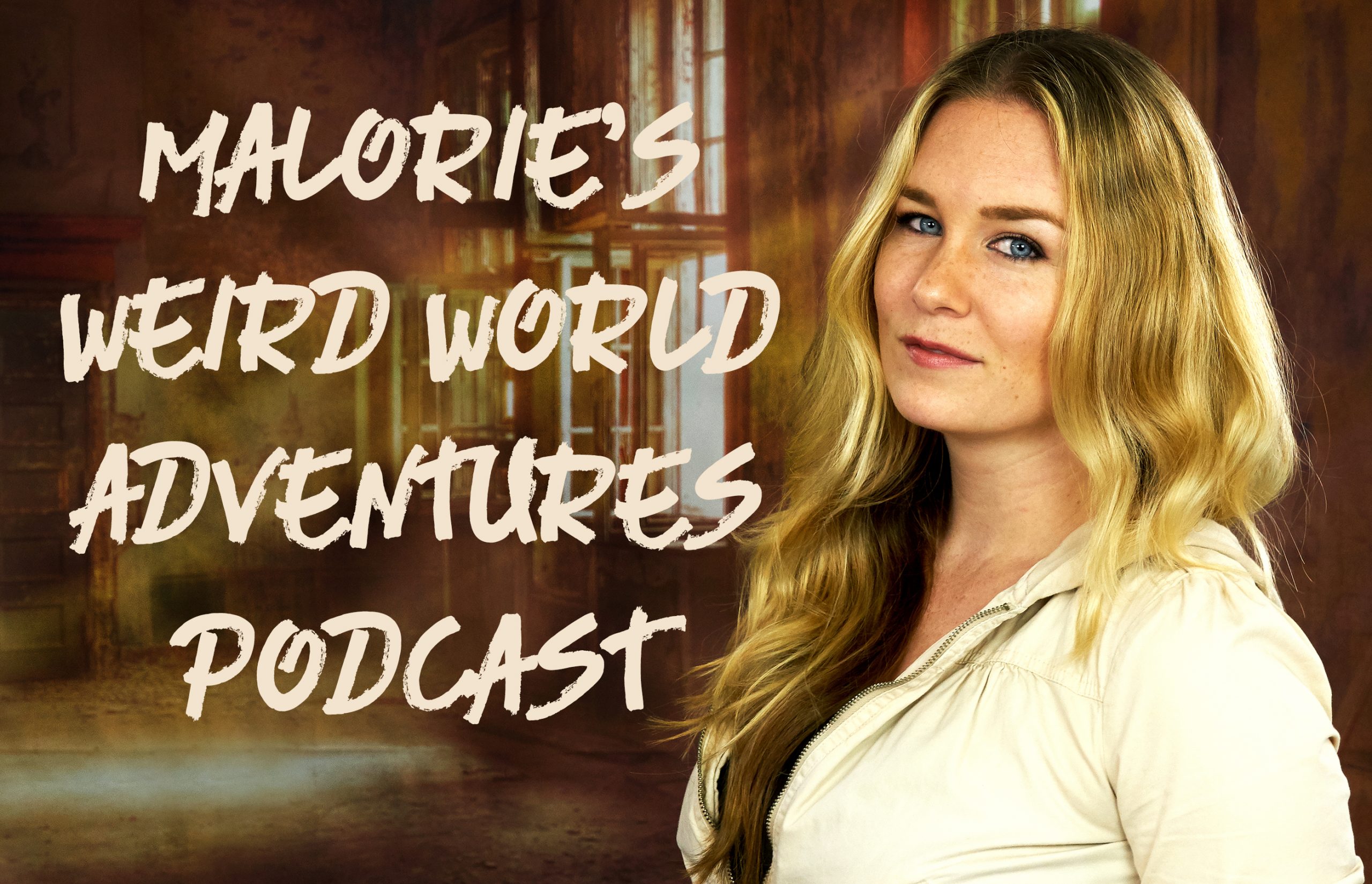
Hello everyone. Welcome back to Weird World Adventures, the podcast. I'm your host, Mallory, and I'm here to show you just how wonderfully weird our world is. Our guest today is Michael E. Man, Presidential Distinguished professor of Earth and Environmental Science and Director of the center for Science Sustainability in the Media at University of Pennsylvania.
And his new book, Science Under Siege, co authored with Peter Hotez, exposes how politically motivated forces undermine scientific truth and offers a roadmap for fighting back. Welcome, Michael.
[00:00:39] Speaker B: Thanks, Mallory. It's great to be with you.
[00:00:41] Speaker A: Great to be with you as well. So I'll get right into it here about science Under Siege. I'm very excited. It's a fantastic and very important read.
[00:00:49] Speaker B: Oh, thank you.
[00:00:51] Speaker A: Of course, you and Peter identify five specific forces attacking science.
Plutocrats, hetero states, pros, phonies, and the press. For our audience unfamiliar with these, can you briefly explain what each one represents?
[00:01:08] Speaker B: Sure. Thanks. So first of all, you've got the plutocrats. These are folks like Elon Musk and Rupert Murdoch and the Koch brothers, sort of wealthy billionaires who have basically used their media empires to promote anti science misinformation and disinformation about COVID 19 about climate change.
And they sort of provide a lot of the funding and the support for this larger anti science infrastructure that we're doing battle with the.
So then you've got the petro states.
Traditionally we'd be talking about countries like Saudi Arabia and Russia that, you know, whose economies are primarily based on extraction of natural resources, especially fossil fuels, oil, natural gas, and have typically opposed efforts to decarbonize to move off fossil fuels. But in fact they've played a role in the larger structure sort of assault on science in general. So you've got the plutocrats, you've got the petro states, you've got, I'll combine them, the pros, the professionals, that is, and the propagandists. These are the talking heads, often on conservative media, who promote the sort of anti science talking points, who attack the science of climate change, dismiss climate change. They dismiss, you know, the efficacy of vaccines.
And some of them do it just because it's a way to get a large following. Others literally get compensated for doing that. They're sort of paid propagandists, if you will. And then finally we talk about the press. And you know, we're not just talking about the conservative press.
The Murdoch media empire, Fox News, the Wall Street Journal editorial pages, of course, for years they have been a source of misinformation and disinformation about Climate, renewable energy, about COVID 19 and vaccines. But we also take to task the, you know, what you might call the legacy media, the Washington Post, the New York Times, who have too often presented anti science as if it's on an equal footing with science itself, who you treat it as if it's just a debate between two sides, false balance or what we call performative neutrality. You know, hey, we're just, we're neutral here, we're not taking sides. But you have to take sides when it involves fact versus falsehoods. And that's sort of what we're dealing with. And so these five forces are in many ways synergistic. They work together to create this sort of perfect storm of misinformation and disinformation that we're doing battle with.
[00:04:08] Speaker A: The phonies category seems particularly insidious in my opinion. These are actors who pose as credible voices while spreading misinformation. Can you give us a concrete example of how this playbook works?
[00:04:21] Speaker B: Yeah, and I guess we had different versions of the list. So the phonies are sort of the propagandists and the pros that we're talking about?
Yeah, I mean, you know, they are often, sometimes they're anonymous on social media. You know, the trolls that we encounter, the bots, the bot armies that promote all this misinformation or create conflict, they want to get us fighting with each other because then we don't present a united voice demanding action, demanding change.
And so, you know, it's anything from sort of the paid propagandists, the talking heads on Fox News who are, know, connected the fossil fuel industry and are promoting climate denialism or sort of the forces down in the trenches, you know, the, again, the sort of the trolls, the, you know, their troll farms, their bot armies. A lot of that is what we would call inauthentic, which is to say these aren't just everyday people like we meet on the street.
And of course there are some people that we meet on the street who might hold these views, but much of it is inauthentic. It's intended to make us think that there is indeed this groundswell of opposition to the science and to the actions suggested by the science.
[00:05:46] Speaker A: In your book, you talk about the role of dark money in funding doubt about science. How does this differ from legitimate scientific debate?
[00:05:55] Speaker B: Yeah, thanks, that's such a good question. Because, you know, the great Carl Sagan, who's sort of a hero to so many of us in the science communication world, you know, was always very clear that Skepticism is a good thing in science.
It's the self correcting machinery that keeps science, you know, on this path toward truth.
But the assumption is that it is, that it is a result of good faith engagement, that you know that, that you know, the, the more extraordinary acclaim, the more extraordinary the evidence has to be. Another saganism and it's appropriate to hold the scientific community accountable for that.
You know that when scientists say state a conclusion, it should be backed up by solid data, logical reasoning, rigorous calculations. And there is this give and take in science that takes place in the form of the peer reviewed literature where you submit a paper, an article to a scientific publication and there are anonymous reviewers who will try to poke holes in it and you're forced to address those holes. And that's a good thing. That's the self correcting machinery that Sagan so eloquently spoke of.
The problem is that bad actors have tried at times to get a hold of that machinery or at least to sort of, you know, to interfere with the gears of that machinery by attacking scientists in ad hominem ways. And as we speak right now, unfortunately, and I'm not sure when this, actually, this episode will appear, but right now in the Senate, Senate Republicans are attacking Anthony Fauci and trying to discredit him because of their views of anti vax views and their views that public health scientists have been trying to fool the public into taking action to avert the COVID 19 catastrophe.
So this is, that's not good faith engagement, that is politically motivated, ideologically motivated. And the difference is that the arguments don't stand up to the slightest bit of scrutiny in true scientific discourse. You know, if somebody's criticizing your work, it has to be based on rigorous reasoning on their data and, and logical reasoning and evidence that supports their contrary position. And that give and take is very important. But that's not what we're seeing here. What we're seeing here is an attempt to discredit an individual, to attack them in an ad hominem manner, to make an example of them for other scientists who might think to speak out. And, and that's what's so pernicious. It is antithetical to what true scientific skepticism is about. And it's not skepticism, that sort of one sided skepticism, if you will, is denialism. It's contrarianism and it's not helpful when, you know, when it comes to the sort of, the forward progress of science.
[00:09:25] Speaker A: It's very intention based. It would seem too you can tell when someone has intentions of trying to further science by helping versus shooting someone down.
[00:09:33] Speaker B: Absolutely. Yep.
[00:09:36] Speaker A: You've been personally attacked as well for your climate research. How do you distinguish between legitimate scientific criticism and these bad faith attacks designed to undermine credibility?
[00:09:47] Speaker B: Yeah, thanks. Another great question.
And you know, back in the late 1990s, my co authors and I published the so called hockey stick curve which demonstrated how unprecedented the recent warming is. And it became sort of a featured graphic, a sort of central exhibit in the case for concern about human caused climate change. And that made it an object of attack for some of these bad actors that we've been talking about, fossil fuel interests, those advocating for them, who don't, didn't like, you know, the message, the message of the hockey stick curve, which is that we've got a problem, we need to do something about it, we need to move away from fossil fuels towards clean energy. Well, that hurts their bottom line, that hurts the fossil fuel industry's bottom line. And so they used all of the tools and weap to them to try to attack and undermine confidence in the hockey stick. And often by going after me personally. And at first, you know, I have to say it's very tough. Right, because nothing in your training as a scientist prepares you to do sort of battle in this, in this bad faith environment where people are looking to discredit you, you know, for, as you said, for intentional reasons, for ideological reasons, for political reasons or you know, financial reasons.
And you know, it becomes pretty clear very quickly when you're being criticized in, you know, in a proper sense, you know, somebody arguing, well, you know, the, we used our own data in a different method and we come up with a slightly different picture from yours, you know, that's legitimate and we need to understand, understand, well, what's the sensitivity of the result you get to the data you use or the methods you use, what are the uncertainties and how do we estimate them? And that's all fair game. And there was a lot of that sort of discussion. In the end, no leading scientific group came up with a picture that was substantially different from the picture that we came up with. But nonetheless, the give and take led to a refinement of methods, extensions further back in time. Now some of these reconstructions go back not just 1,000 years as the hockey stick did, but tens of thousands of years and far more sophisticated using AI and machine learning tools that are plentiful now that weren't available, I hasten to say, nearly three decades ago when we began this research.
So that's all in the realm of honest good faith. Science.
And there was a fair amount of that and I think in the end it led to progress and the science. But then there were the attacks on the editorial pages of the Wall street journals.
There were accusations against me, a fraud that's, that's not legitimate scientific discourse. And ultimately we litigated that in court and they, and, and, and, and they found that indeed it was, those accusations were libelous.
So yeah, it's, you know, it's sort of like, you know it when you see it, I guess is one answer. But it really does have a very different feel. It's ad hominem in nature.
You know, the accusations are personal and, and they try to get at your integrity rather than say the choices you made or the methods that you used.
[00:13:23] Speaker A: Right.
What's one thing that scientists themselves could do differently or what can ordinary people do to counter the anti science move?
[00:13:34] Speaker B: Two great questions. I hope I can do justice to them.
First of all, in terms of scientists and this is something that I, and other science communicators, you know, I started out as a scientist, now I'm very much in the science communication realm. And it's an interesting evolution because as you go through that evolution you start to think about all the things that you were doing wrong, you know, until you really understood the difference between doing science and, and communicating it to the public.
And so I would say that many scientists, not all, some scientists should be left alone in the laboratories doing what they do best. We don't necessarily want them out there on television. It's not playing to their strengths.
And if we were try, if we were to try to force every scientist to be a science communicator, there would appropriately be a lot of pushback. What we do need to do is to provide opportunities for those scientists who have the interest and the proclivity to communicate science and to provide them with the training. The other side is very skilled in the art of rhetoric.
They're very good at sort of at creating confusion and doubt and misleading the public.
We have to be every bit as effective as them, but we have to use the tools of communication for good. Not bad in a way that's, you know, it's faithful to the science and it's, it's and is in good faith. And so the rules that we have to play by are arguably more rigorous than the rules the other side plays by, but we can be far more effective. And they're all sorts of, you know, there's now a whole literature on science communication there. You know, every AAAS meeting American association for the Advancement of Science or the American Geophysical Union, the largest professional organization in my field.
There are literally dozens of sessions now. I think that's great. It wasn't true when I was a graduate student decades ago, but it's true now. There are dozens of sessions on science communication. And there's so many things that we can learn from communication experts. You know, I'll just give one example so that it isn't entirely, you know, general and generic.
One of the things that scientists tend to do is to lead with the uncertainty, because that's where we are. The work that we're doing is at the forefront of knowledge. That's where we spend our time.
But there is this huge corpus of knowledge, this huge body of knowledge that is what's important to the public.
And we need to put in that context so we don't lead with the uncertainty, like, oh, yeah, well, you know, the work I'm doing investigates the, you know, the uncertainties in the effect of clouds on the feedback processes involved in climate change. And that's interesting, and it's important, and there's uncertainty there. But what we lead with is, like, what we know for certain.
We know we're warming up the planet. We know it's due to an increase in greenhouse gas concentrations from fossil fuel burning and other human activities, and that it's having all these profound consequences. And yes, there are uncertainties in just how much warming we'll see and what the precise consequences will be, but those uncertainties are not a reason for, you know, complacency. If anything, they're reason for even greater concern, because some of the. That uncertainty is not breaking in our favor, it's breaking against us. Some of these changes are taking place even faster than we predicted. So it's about the framing and, you know, communicating what we know and what the public really needs to know. And to the extent you have time, you can layer it in caveats and, well, you know, and the precise consequences, for example, when it comes to how hurricanes will change in the Atlantic, you can get into that, but only after you've communicated to the audience what we know and what they need to know.
It's sometimes referred to by sort of communication experts as the sort of the inverted.
You know, the inverted pyramid is what most scientists instinctually do. They start out with the uncertainty and then they work towards what we know. What we should be using is. Is a regular pyramid where we start out with the simple truths that people need to know. And then we can layer it in caveats to the extent that we have time to do so.
[00:18:08] Speaker A: Fantastic. And one last thing before we close up. If someone's listening right now and they're not sure whether to trust climate science or vaccines or some of those hot topic issues, what's your message for them?
[00:18:20] Speaker B: Oh, thanks. Because that reminds me, I didn't get to the other part of your question, which is what everyday people can do, you know, Absolutely. People can be involved in so many ways.
Like I said, a lot of the battle right now takes place in social media and you can be out there. You know, everybody now has a voice. It wasn't always like that.
You know, not everybody got to write columns in the newspaper, appear on television, but everybody can participate in social media. So everybody's got a voice. And you should use it to help, you know, within your own networks, make sure people understand, you know, what the science says, whether it's climate change or whether it's these deadly pandemics and the need for vaccination.
And you can make a difference using your voice, using your vote, voting for politicians who will support science based policies rather than act as, say, a rubber stamp for polluters. We get the politicians we vote for.
And people, you know, part of having a voice is through your vote because there are all sorts of, you know, systemic changes that need to take place that we can't institute ourselves as individuals. Sure, in our everyday activities we can try to minimize our environmental impact, our carbon footprint, et cetera, but we need big systemic changes that will, for example, move us away from fossil fuels towards renewable energy. And we need politicians who are willing to support the policies to do that. So use your voice and use your vote and be part of the conversation like we are here today.
[00:19:52] Speaker A: Yes. Amazing. Thank you so much for joining us, Michael.
[00:19:56] Speaker B: Thank you, of course.
[00:19:58] Speaker A: And everyone, please make sure you get science under siege. It was also co authored with Peter Hotez and of course, Michael E. Man. And until next time, everybody stay weird.