Episode Transcript
[00:00:00] Speaker A: Foreign.
[00:00:06] Speaker B: Hello, everyone.
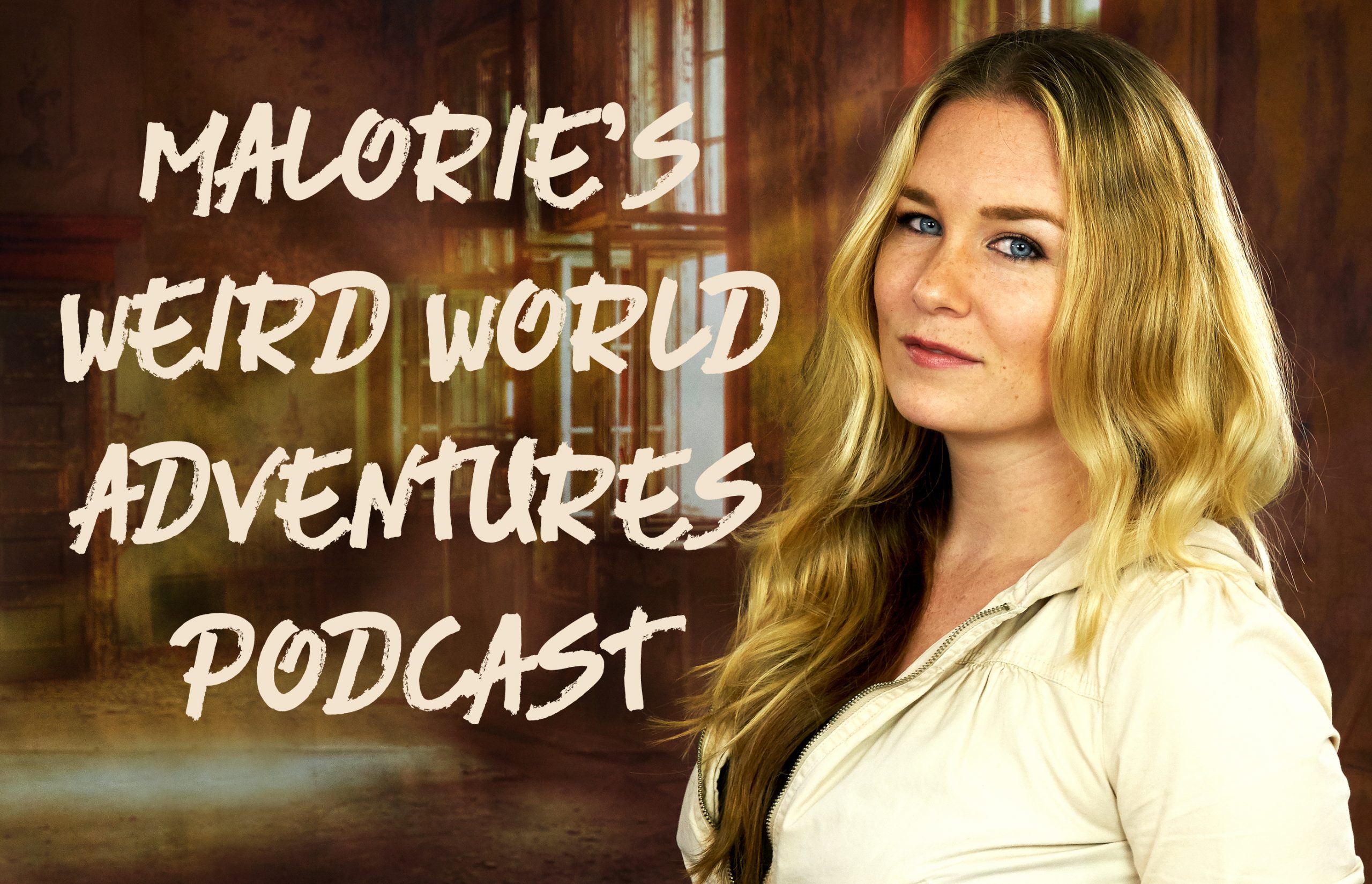
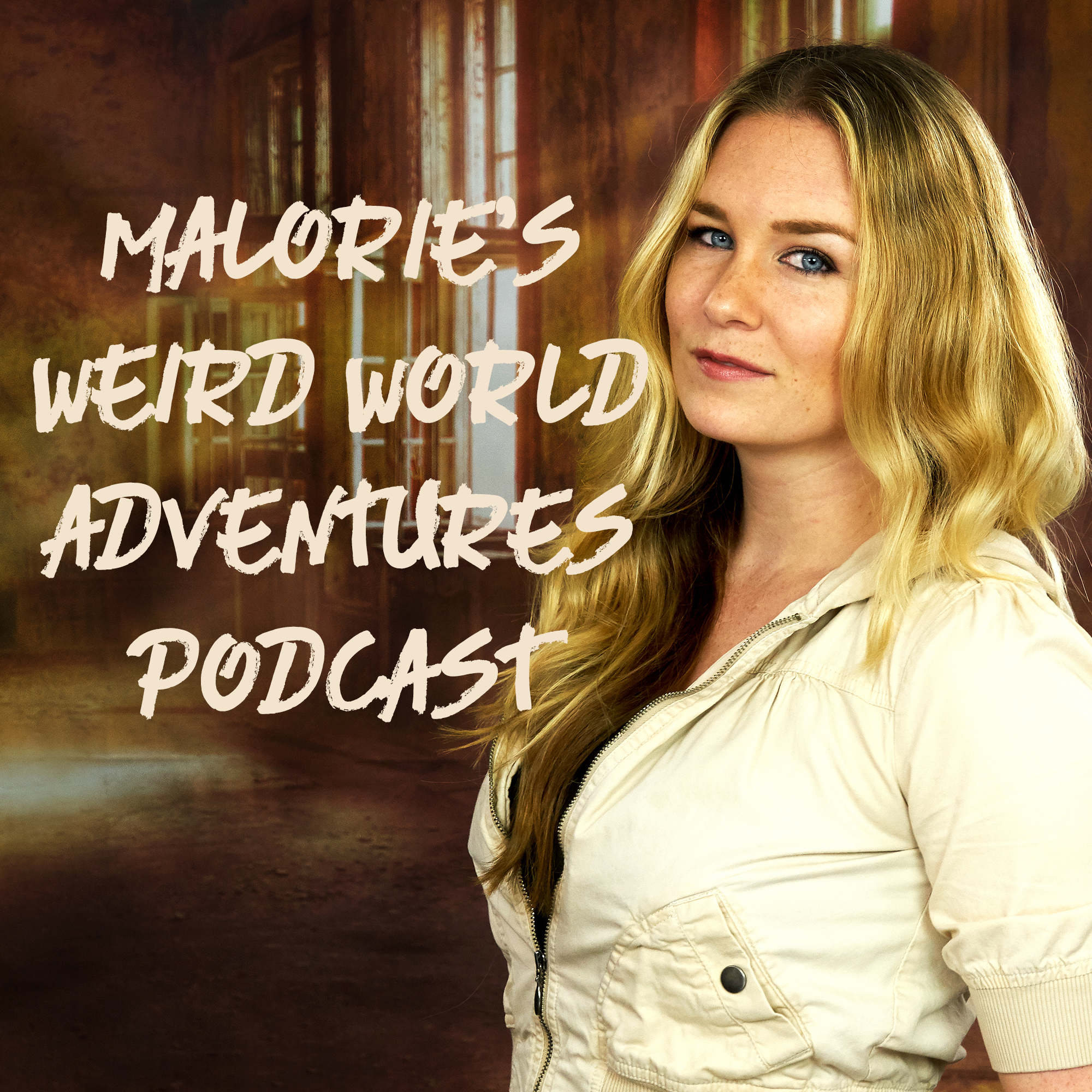
[00:00:07] Speaker A: Welcome back to Weird World Adventures, the podcast. I'm your host, Mallory, and I'm here to show you just how wonderfully weird our world is. I'm very excited to have Katie Saletta here with me today. Thank you for joining us, Katie.
[00:00:19] Speaker B: Thanks for having me.
[00:00:21] Speaker A: Of course. So you've worked extensively in the wellness space, so. So I would love to hear from you some of the most persistent health myths that you have encountered and what makes them so sticky, even when evidence contradicts them.
[00:00:35] Speaker B: Sure, yeah. I work a lot in the health and wellness space and kind of debunking misinformation.
One of the main kind of spaces that I work in is around supplements and the use of supplements and sort of now supplements have also kind of become this alternative to going to the doctor and people kind of self prescribe their own quote, unquote medicine, if you will. And so I do a lot of work in the supplement space and kind of demonstrating that supplements are one, probably not doing what you think they're doing and two, probably not made of what they claim to be made up.
And trying to especially kind of get some information out there about how supplements are not really regulated and therefore are also just not as safe as you might think they might be.
[00:01:22] Speaker A: Amazing. How did you transition from working within the wellness industry to kind of critiquing it and being more in the forefront of skepticism?
[00:01:33] Speaker B: You know, I've never actually worked in the wellness industry. My entire, my entire background is in public health and healthcare. And so I, I kind of was exposed to what was going on in the wellness space via. I used to work in Africa and I specifically worked in HIV in Kenya and I, I was exposed to a lot of conspiracy theories through the HIV space and getting to kind of understand what was behind it and kind of the communities that were behind a lot of the conspiracy theories that I was hearing about at the time, it was about the origins of HIV and what was perpetuating the pandemic. But I also would encounter a lot of anti vaccine rhetoric while I was working abroad as well. And I also, I worked in infectious diseases. So I've also worked in say, influenza pandemics and the, and the COVID pandemic and whatnot. So I've kind of brushed up against it a whole lot. And then since COVID I think the wellness industry has just really taken off in those spaces. So kind of around conspiracy theories and then anti vaccine rhetoric in particular.
Right.
[00:02:38] Speaker A: Gosh. Working with hiv, that's gotta be very intense. Can you tell me a little bit more about that and what that was like.
[00:02:45] Speaker B: Yeah. So my background is in epidemiology, and I specifically kind of worked on destigmatization and some education around how HIV is spread and how it's not spread. And I also did some surveillance work across the United States, so mostly in Chicago and Denver. But like I said, I also worked in Kenya. And it's a really intense space to work in, like you mentioned. And it's really, you know, a lot of people in public health kind of got their start in hiv, especially if they've been in public health in the last 40 years. A lot of people really got their start there. And there used to be a lot of money around it.
That has changed in the last year radically because a lot of people that used to work in HIV were working for usaid, and now that that has been effectively dismantled, a lot of people are now kind of left in the lurch of, well, what do we do now? Because there's no money in this space, and now we have to transition into working somewhere else in public health. But it's come with a lot of challenges, even though that space has been really, really amazing to see, from scientific advancements because we went from a novel viru to having really effective treatments, and now prevention in the span of about 40 years, 45 years.
So it's been amazing to watch, but it's also been one of those things where it's also obviously an incredibly sad story because we've lost so many people to it.
[00:04:13] Speaker A: What's the difference between wellness trends that are harmless placebo effects versus those that are actually causing harm? Like, do you have any good examples?
[00:04:22] Speaker B: That's a really good question.
I think, you know, a lot of people working in this space, in science communication in particular, struggle with this question. And I think the reason is because we want everyone to be kind of mindful about what good evidence looks like and good critical thinking skills. And so, sure, there can be things that people believe that are kind of silly and mostly harmless, but also, even sometimes the silly things can be harmful.
So I know, you know, the space that you're kind of in now with kind of like traveling around and kind of looking at local folklore and kind of investigating those types of things. You know, I was just thinking about, there's a story last year about some people that were out hunting Bigfoot, maybe it was two years ago in Washington state, and they ended up going out in the middle of winter unprepared, got lost, and at least one of them died. And so it's one of those things where it's like, you know, the, the belief in Bigfoot sounds relatively harmless, like what could possibly happen, but then it depends on how far people will go. Right. Some people are very motivated.
And so especially in the health and wellness space, then that becomes really tricky because, okay, so I mentioned at the top that I work in kind of supplement supplement spaces and for the most part, most supplements are probably just going to give you expensive pee and that's about it. And that's pretty harmless. But there are real consequences to when you have a supplement that say, is laced with something that's a very active ingredient, that it's not on the label, or if you take other pharmaceuticals that interact with said supplement, you just don't even think to mention it to your doctor. Things like that, where it's really hard to say where is that line, especially in the health world, because so many things can have unintended consequences and things that people just haven't even thought of. Right. Again, supplements are not even thought of as drugs, even though they are drugs effectively. And they can't have drug interactions.
But people don't really think of it that way, even though they kind of do. And so it spans this really weird gray space of this seems harmless, but also could be very harmful. And it's really hard to say what the actual difference between those things are, but just understanding kind of the logical extreme conclusions of what any particular belief could be.
[00:06:42] Speaker A: Mm.
In your experience, who profits the most from health misinformation? Is it bad faith actors or maybe well intentioned people spreading false claims?
[00:06:54] Speaker B: I mean, well intentioned people spreading false claims are not profiting off of it. Usually. Usually.
But you know, people that are literally profiting off of it. Right. At this point, if you are a wellness influencer and you're not selling your own supplement, you are losing money, right? You are absolutely losing money. And if you're not selling products, you're losing money. Right. And it's, it's really fascinating because the wellness industry is kind of sprung up as a, as a result of some fairly, I think, of some fair critiques of our health care system.
But instead of addressing those things, it's just kind of become its own. It's not even a cottage industry at this point. It's its own behemoth and it's doing the exact same things that they claim that kind of big healthcare does, which is. Right. They're, they're peddling things that we know don't work and it's all for profit. And it's all kind of at your own whim. Whatever you think might be good, not based off of what we know, actually works from good science.
So it's really, it's a really tricky space.
[00:08:02] Speaker A: And when you're kind of sharing that misinformation, what's your strategy for not just saying that's false, but actually kind of shifting people's viewpoints on it?
[00:08:12] Speaker B: You're asking so many hard questions. It's really, it's really hard to engage in this work. Right, Because I, I, me just coming in as a random person, I am likely not going to change anybody's minds. However, I'm a big believer in sort of the people that are there voyeuristically. So the people in the comments section, you're not going to change their mind, but the people that are reading the comments section, you might be able to sway. And so like, one, lead with empathy and compassion and understand that people have likely fallen down a rabbit hole that they don't even realize that they've fallen down. And it's good to not kind of come in hot and I know better than you, but again, leading with compassion and empathy and then two, making sure that you're really hearing them out and so engaging in good faith, engaging with, with questions as long as somebody is obviously asking questions in good faith and not TR you, which is also another one of those things where it can be sometimes hard to tell if someone's trolling you or not.
So it's really, it's really difficult work because it's one of those things of like just one interaction could, could have huge impacts, but likely, not likely it will be a throwaway thing that people don't even remember.
But it is one of those things where it's, you know, important to get good information out there because so much bad information is out there. And it kind of fills this vacuum that if people working in science communication aren't there to try to comb it, then it just really does blow up with only misinformation, which is not the state that we want to be in.
[00:09:46] Speaker A: Right.
Is there anything that you've debunked that has surprised you or like evidence you've gotten that's been different than what you expected it to be?
[00:09:56] Speaker B: Someone just was asking me about this the other day. You know, I started working in the space of health coaches, and when I first started that work, I was extraordinarily skeptical and I remain such. But that being said, I do actually think that there could be a place for Health coaching, it's just as it currently exists. It's not what it should be. So it's completely unregulated. So anybody can identify as a health coach. And that's very much a wellness industry thing of like, we go based off of vibes and what I think works for me and how I think health actually operates instead of what we know works. Right. And so because that space is completely unregulated, I remain very, very steadfast that like, this is not a good place for us. However, I think that health coaching could be really promising. And the reason is because at this point, even if you go to your doctor, oftentimes people feel left, left feeling unsatisfied by the interaction because they don't get to be with their doctor very often. And they want somebody that they can spend more time actually speaking about with their health, speaking about to their health and trying to figure out, you know, what, what might be going on with them. And you know, an 18 minute visit with a doctor or 10 minutes visit with a doctor is just not cutting it. So I think that that space could be really, really good. We just need to do the hard thing, which is regulate it.
[00:11:18] Speaker A: Right. And it's difficult too, being out because I experience it too in, in the field, seeing other cultures, seeing other people with their beliefs and like, how, how do you respectfully challenge when does it cross the line? Like, I feel like I deal with that every day.
[00:11:32] Speaker B: Yeah, it's one of those things where I try to pick my battles wisely and you know, it depends on kind of what the interactions might be and, you know, who these people are and how, how damaging is the information. And so it's a really delicate balancing act of, okay, they're taking this thing that's probably not doing anything and it likely won't harm them. So like, at this point, point it's probably not worth me to, it's probably not worth the time to just actually start in on my high horse about how, well, this isn't actually evidence based and you know, definitely not based in science, you know, those kinds of things.
But I will say whenever I come across things like anti vaccine rhetoric in the wild, it is something that I will engage with because again, the consequences are so much higher.
So it is trying to strike that balance of like, likely might be kind of okay versus like, nope, this is actually damaging on a societal level.
[00:12:30] Speaker A: Yes.
How do you balance being a skeptic with not dismissing people's lived experiences? It's kind of similar to what I
[00:12:40] Speaker B: asked before, but yeah, it's, you know, because I work in public health and because I've worked in so many kind of areas of public health, I've had. I've come across so many kind of conspiracy theories and whatnot that while they aren't true, they're likely rooted in something that happened. So there might be some background event that happened that makes people more likely to, you know, believe something that's even crazier kind of thing. And so, for example, you know, working abroad with hiv, there were a lot of conspiracy theories circulating about where the virus came from and kind of what was going on with the virus. And there are some really devastating stories that have been told about what has happened as a result of people believing some of these conspiracy theories. Anybody that's worked in HIV probably knows what happened in South Africa. The president of South Africa essentially made it so that people just couldn't get treatment for hiv, and that led to a lot of deaths. And it was all. It was all based in believing some conspiracy theories about where the virus came from and kind of who was controlling it and it being used as a bioweapon, you know, those kinds of things.
It's really hard because you're trying to balance, you know, cultural beliefs and then also lived experience of, say, some ism, insert your discrimination of choice and then you know what's actually going on with something that's really hard, like a chronic disease like hiv.
And so it's one of those things of like, again, really trying to hear people when they speak to you and asking questions in good faith and, you know, repeating back to them, actually listening. That's. That's really the main thing here, is just actually listening to people and not dismissing them outright.
[00:14:36] Speaker A: I love that. I, Kinney Biddle, has this wonderful way of just making friends with people and like, challenging people in the friendliest way. And I just love that. I feel like that that really does do wonders.
[00:14:47] Speaker B: It does. It does. Yeah. Not being a jerk goes a really long way.
[00:14:52] Speaker A: I want to go back a little bit to Africa. So how did you get to Africa? What drew you to infectious diseases and hiv? How did you wind up in that world?
[00:15:04] Speaker B: Wow, this is going to make me sound like a total hot mess, because I am. I didn't know what I wanted to do, and so I basically just started making choices based off of what I didn't want to do. I knew that there were things that I didn't want to do at all, and then just kind of ended up in the infectious disease and HIV world. And Ended up really loving it and really loving the work that I got to do. And where I was in Chicago at the time, in graduate school, there were. There was somebody who had a grant through kind of PEPFAR and interacting in the USAID space and working with the Kenyan government on destigmatization and then HIV education.
And so that's kind of how I fell into it. And so when I was getting my master's in public health, I ended up having that person as an instructor and then ended up working with him in one of his labs, and then just kind of ended up falling into the project for a while, which was great. And then went on to kind of do some work in my PhD in IT and just really kind of fell in love with the infectious disease space, which sounds really weird, but anybody that has gone through the infectious disease stuff probably knows what I'm talking about.
[00:16:12] Speaker A: Did you ever. This is totally out of left field. I just have to ask, because I
[00:16:15] Speaker B: was a theater kid.
[00:16:16] Speaker A: Did you ever see Rent, like, in
[00:16:18] Speaker B: the 90s when it was there? Yeah, yeah, I know all the music to Rent. Rent is great.
Rent.
[00:16:24] Speaker A: Rent was like. I don't. It came back, like, my generation of high school, like, was when they were trying to do the movie, and we were just all about Rent, and I just have the nostalgia for it.
[00:16:34] Speaker B: That's what I think.
Of course. Of course. Yes. Same, same. It was. I think you and I are probably around the same age and. Yep, I remember all of that.
[00:16:45] Speaker A: How has stigma around HIV shaped misinformation in ways that other diseases maybe haven't faced?
[00:16:55] Speaker B: Probably in the way that the pandemic has kind of unfolded in the last 45 years.
It is a very, very big problem in certain parts of the world. Now, that being said, it is a problem in the United States, but it is kind of localized in certain communities, which makes it a stigmatizing disease, given kind of the subpopulations that we tend to see it in in the United States. And then if you, you know, if you start talking about Africa, immediately, people are like, well, they've got a lot of HIV there, and it becomes this question of kind of poverty, and it becomes even more stigmatizing. And it's. It's sort of a disease that unfortunately highlights our social hierarchy in a really specific way because of the way that it spreads. And so it's.
That's kind of unique. Now, I think we saw some of this with COVID too, where you had people who could, say, afford to stay home.
They did, you know, they could their jobs were able to go remotely, and they were less likely to be infected. They were also probably more likely to be vaccinated quickly. You know, those kinds of things. So, I mean, it does. It does play out really. It can play out very similarly with almost any infectious disease. But hiv, I think, more than any other disease, really does kind of highlight our social hierarchy in this really awful way.
[00:18:19] Speaker A: That's a really good point. I never thought about it like that, but that's very true.
How does understanding virology and epidemiology kind of shape how you identify false health claims?
[00:18:33] Speaker B: I have a lot of training in research methodology, and I've spent a lot of time doing research because my background is in academia. And so I've done a lot of just kind of research methodology and statistics, and I've taught that at the graduate level to medical students, to fellows and residents and graduate students, just kind of abroad, across the board kind of thing. And it was always really important to me to understand how science was made so that you can understand how to. To interpret it. Because how something was conducted then absolutely limits, you know, what you can say about it and what conclusions you can draw from it. And so that's what was always really appealing to me about skepticism, too, is at the end of the day, it's how do we know what we know?
How do you know what you know is true and how do you know what you know is false? Just how do you know what you know in general? And, like, show me your work. And that's really important when you're trying to adv Advanced science. And then it's also really important when you're trying to spread good information and understand what's real and what's not.
[00:19:39] Speaker A: Right.
How did you get involved with Skeptical Inquirer? I should say we both have written for Skeptical Inquirer. We were at scicon this past time. And I think you said your first icon was also my first icon back in Vegas.
[00:19:51] Speaker B: Yeah. Yeah, it was. Yeah. A couple years ago.
How did I get involved in it?
Let's see. I don't know. I think. I mean, as so many people, especially around kind of our age cohort, someone introduced me to the SGU podcast, the Skeptics Guide to the Universe.
[00:20:07] Speaker A: Yes.
[00:20:08] Speaker B: And I remember I was started especially around HIV stuff. I was starting to get into science communication, but we didn't have a term for it at the time. Like, Bill Nye was around, but no one was referring to him as kind of science communicator in chief.
And I was Doing science communication around HIV stuff and around vaccine stuff. And then the pandemic hit, and then all of a sudden, science communication became a whole field in and of itself.
And I think at the time I was writing. I was writing and kind of looking for homes for some of my pieces, and I came across the Skeptical Inquirer, and I had heard the SGU talk about it on their podcast before, and I found it, and I submitted a piece of. And the interim editor at the time, Stuart Vice, was like, hey, this is great. Like, let's talk.
And then since then, I've. I have written for them several times. Steve Hupp put my face on the COVID last year. It was real weird.
And so, yeah, now I write for them fairly frequently. And it's great. I love. I love. Shout out to Steve Hupp and everybody at Skeptical Inquirer. It's a. It's a labor of love, and it's.
Man, it's a great. It's a great outlet.
[00:21:23] Speaker A: Definitely. Oh, yeah.
He's so wonderful. And I. I love that. So we both spoke at SciCon this year, and I love that you said. He was like, katie, you're really young. How do you speak to young people? You mentioned that about it, and I was like, oh, wow, that's. That happened to us. To me and Michael were sitting at the. The dinner.
It was really awesome because I got to sing, so I was, like, with Michael Mann at the table and Peter Hotez and all that.
[00:21:46] Speaker B: Like, it was.
[00:21:46] Speaker A: It was very cool. And Berta sat next to us, and she's like, oh, you guys are young.
[00:21:52] Speaker B: What brings you here?
Yep. Yeah. Bertha does so much great work in this space. And I. She and I are kind of working on some stuff behind the scenes now to kind of really. My talk had been focused on mentorship and bringing in the next generation. And so she and I are working on some stuff behind the scenes to try to figure out how we can actually do. Do it.
[00:22:16] Speaker A: That's amazing. It's really important because I feel like we're stuck in the same. The same kind of.
I don't want to say problem, but. But the Explorers Club, too, is trying to bring in younger people, and there are. There are people out there that are interested. But how do you reach the young people that are excited and interested and wanting to talk about it?
[00:22:36] Speaker B: Exactly. Exactly. And how do you. How do you bring them in? How do you make them feel welcome? Like, how do you get their attention? And then how do you bring them in and make them feel welcome and want to Stay in the community. And I think, you know, I think the skeptical community has so many great things about it, but. And I, you know, it's one of those things where I haven't looked back since becoming a part of it, and it's so amazing. I want to bring in more people because it's such a. It's like, such a great community, but it's also a little underground and kind of hard to find and aging and all of the things. And so it's just one of those things where it's like, well, I think it's really important for us to. To start investing in this now.
[00:23:16] Speaker A: Definitely. Who are some of your skeptical heroes you got to meet at scicon?
[00:23:23] Speaker B: That's a good question.
I had drinks with Bill Nye, so that was fun.
I, you know, a lot of people I'd already met and are kind of.
And I'm lucky to call kind of friends.
And so a lot of. A lot of. Kind of the next generation of people are sort of in my social circles now because of the science communication stuff, which is great. But I, you know, meeting Bill Nye and having a drink with Bill Nye, like, who doesn't want to do that?
I.
Let's see. Who. Let's see. I mean, I was just kind of love palling around, and I don't want to name drop, because that feels gross. But, like, I, you know, I'm very. I'm very tight with, like, Andrea Love and Nick Taylor and, you know, Rena Raphael and all, like, that whole crew of people. And it's always so much fun to see everybody.
It's also, you know, again, man, I will just continue to plug the shit out of sgu. Like, their extravaganzas are always great. I think you missed it, unfortunately, but their extravaganza on Friday night was really good.
I got to hang out with them a bit. And I will say George Robb is, like, one of the most fun human beings that you will ever encounter.
And, like, they're all just really lovely people. And so, yeah, Cyclones always just such a good time. Oh, and I would be remiss without shouting out, like, Stuart Weiss. Hanging out with Stuart Vice is always going to be one of my favorite things.
[00:24:45] Speaker A: It's such a welcoming group of people. I love how included I feel. I like, you know, I felt so included coming in. I had written my first piece for Skeptical Inquirer when I went in, I guess, was it whatever. Two years ago, 20, 24. Was it when we were.
[00:25:00] Speaker B: Yeah, yeah.
[00:25:01] Speaker A: Yes. And. And everyone was so welcoming and like, oh, let's just go grab drinks and. And I just.
You won't meet a more welcoming and, like, kind group of people that just wants to bring people in and have real conversations. And I think that's so magical.
[00:25:16] Speaker B: Yeah. I will say, one of the coolest things that happened to me that weekend, I think, was Eugenie Scott came up to me after my talk and was talking to me about my talk. And I remember I turned around and I was like, are you talking to me? Why are you talking to me?
And she was like. She was so kind. And.
Yeah, it's just like. It's such a. It's such a great. It's such a great experience to have, and there are just so many amazing people.
[00:25:42] Speaker A: Definitely we had that. We were. We were having lunch before going into.
I think it was before Ben Radford's talk. We were having lunch and he came in with some people and we were leaving and he was like, no, Mallory,
[00:25:54] Speaker B: you're not going to leave without saying hi. And I was like, I didn't even
[00:25:57] Speaker A: know you knew who I was. Ben.
[00:25:58] Speaker B: Hi.
Yeah, it's that stuff, right? It's so. It's so. It's just so much fun and so great to actually kind of get to meet everybody in person because a lot of this stuff happens online and it's fun to interact back and forth, but, like, it's just so different when you actually get to talk to people in person. And it was great to, like, put actual human beings to the people that I had been messaging. Right. Dan Wilson, Debunk the Funk. Let's shout him out. Because, like, he was somebody that I had talked to online, but actually getting to interact with him was great. It was so much fun. Kevin Felta. I mean, just all of these people, it was just. It's such a wonderful space and Zicon is always a good time.
[00:26:41] Speaker A: Definitely. Had you been to Buffalo before?
[00:26:44] Speaker B: No, it was my first time in Buffalo. I'd never been to that side of New York.
[00:26:48] Speaker A: Me neither. Did you. Did you check out the center for Inquiry one of those early days?
[00:26:53] Speaker B: I didn't.
I was going to, and then I got. It was one of those things where it was like, as soon as I left my hotel room, I, like, went to work out Thursday morning and ended up not working out because I ran into 17 people.
And so I never made it to the gym, but I was outside of my. My hotel room for a very long time. And I was supposed to be.
I was supposed to be on a couple of Calls. And then at some point, I was like, oh, no, I have to go back to my hotel room to take a couple of meetings.
So I didn't get to go to the center for Inquiry. I did. I was in LA a couple of weeks ago, and I did get to see CFI west, though. So I did get to see that, which was cool.
[00:27:32] Speaker A: That's very cool. Did you get to go outside the hotel at all? Because there was some. There was some fun, weird stuff in Buffalo we were looking at while we were there.
[00:27:40] Speaker B: You know, I. My radius outside of the hotel was maybe three blocks.
I went to, like, go get dinner and go get lunch, but didn't. Didn't actually go do anything outside of. Outside of the conference.
[00:27:52] Speaker A: We did the Niagara Falls tour and we. It was like we showered before we even got there because the rain just came out of nowhere. And I was. I was in my, like, dress from when we spoke because we just. We, like, did ours.
[00:28:05] Speaker B: Yeah. Yep.
[00:28:06] Speaker A: And then left and they gave us the poncho. And it was just too late at that, because, you know, then you're just like, well, I'm already. I'm already as what as I could possibly be. So I don't know what's going to move past this.
[00:28:18] Speaker B: Several of us were going to go, and then it started downpouring, and we were all like, what if we just hang out inside instead of not going?
But it was still. It was still, like. It was great because I think I ended up grabbing lunch with several people, and then dinner was several that, like, turned into dinner with a few people. So it was like. It was still really fun. But, yeah, I missed Niagara Falls.
It was downpouring that day, though. It was absolutely torrential.
[00:28:47] Speaker A: It was. It was. I don't think I've ever been rained on harder in my life. I mean, like, it was. It was. I'm like, you know what? I don't mind getting wet, so it's fine. But after, like, the third hour, when
[00:28:57] Speaker B: you're on the way back, you're like,
[00:28:58] Speaker A: I'm ready to be dry now.
[00:29:00] Speaker B: Yeah, I. Yes, I believe it. I remember when everybody left, I think I had talked to Brian Dunning about it, and he was like, yeah, are you. Are you guys gonna come? And I was like, I don't know.
It seems wet.
Like, wetter than it would be normally even.
[00:29:16] Speaker A: Yes, he was. He was great, too, because he had, like a. We had the GoPros, and it was hard to even use the GoPros because the water was getting him and he's like, I have a wipe.
[00:29:26] Speaker B: And he kept coming by with his like.
[00:29:27] Speaker A: I'm like, look at you being all prepared with your wet wipe for get rid of everything. Clean off the cameras.
[00:29:33] Speaker B: Yeah.
[00:29:35] Speaker A: Well, awesome. It was wonderful meeting you at scicon. I know we connected before and it was so exciting to officially meet and I can't wait for next year.
[00:29:43] Speaker B: We're going to be there the whole
[00:29:44] Speaker A: time and not, not, not show up late and half ass it. So.
[00:29:49] Speaker B: Yeah, yeah, it's. I know. I figured that out at Vegas because I had got. I was there for a few days and I was like, oh, I think I want to be here for longer next time. And so this time I was like, okay, I'm just going to make a whole thing out of it. So I went early and left late and I gotten that beta from a couple of people and I was glad that I did it. It was great. It was so much fun. Some of the, some of the most fun that I had was sort of in those liminal spaces where it was like, the conference is either not started yet or it's over and everybody is, you know, just kind of a mess and just having a ton of fun. So it's great. Highly recommend staying longer.
[00:30:24] Speaker A: Well, thank you so much for joining us today. Can you let people know where they can find you online?
[00:30:30] Speaker B: Yeah. Thanks so much again for having me. So I am at Dr. Katie Suletta on Instagram, Blue sky threads everywhere. That's not ex, essentially.
And then I've also got my own website that's. That's also just www.drkatyseletta.com and you can find all my work there.
[00:30:49] Speaker A: Thank you so much. Thanks for tuning in, everybody as well. And until next time, stay.
[00:30:55] Speaker B: We.