Episode Transcript
[00:00:03] Speaker A: Hey, thank you everybody for joining us. We're excited to have Mallory Mackey here discussing her new book, the Goth Atlas, A guide to the world's 500 most spooky in macabre places.
It is, And Mallory Mackey is a host, adventurer, professional explorer and full time writer editor with a focus on travel, adventure, the paranormal and the macabre. She created and runs her own travel and adventure blog, Mallory's Adventures, where she showcases the world's most unusual locations. More specifically, male, Mallory enjoys revealing what makes a place truly unique. Whether it's the biodiversity of a place, its natural landscape, or its folklore, Mallory's work in the realm of travel has helped bring her unique travel show, Weird World Adventures to life. Exciting adventures through the most bizarre and haunted places in the United States. Available on Amazon Prime.
And we'll get to her presentation.
[00:01:16] Speaker B: Hi, everybody. Thank you so much for joining us today.
Happy almost Halloween.
As he said. My name is Mallory Mackey and tonight I want to take you on a trip around the world with me without anyone having to sit in economy and just talk about some fun places. This is the Goth Atlas, a guide to the world's 500 most spooky and macabre places. Filled with castles, catacombs, ossuaries, mummies, witch markets, goth clubs, and a few places I'm not sure I should have gone to, but I did.
So I'm going to share a presentation here in a second, but first I'll say over the next 40 minutes I'll tell you a little bit about who I am, how I ended up making a career out of the strangest corners of the world, and why I think our fascination with death and darkness actually matters. And then we'll tour some of my favorite places from the book. And then if you guys have any questions, I am happy to answer those as well.
Bear with me if I'm a little brain fogged because I surprisingly had a baby about a week and a half ago. He wasn't expected for another month, but here we are. He's doing great. And I'm just still dazed but very excited about that too.
All right, I am going to share this presentation with you,
[00:02:34] Speaker C: Luna.
[00:02:37] Speaker B: There we go.
All right, so Goth Atlas, as we said, a guide to the world's 500 most spooky anima Cobb places.
So who am I?
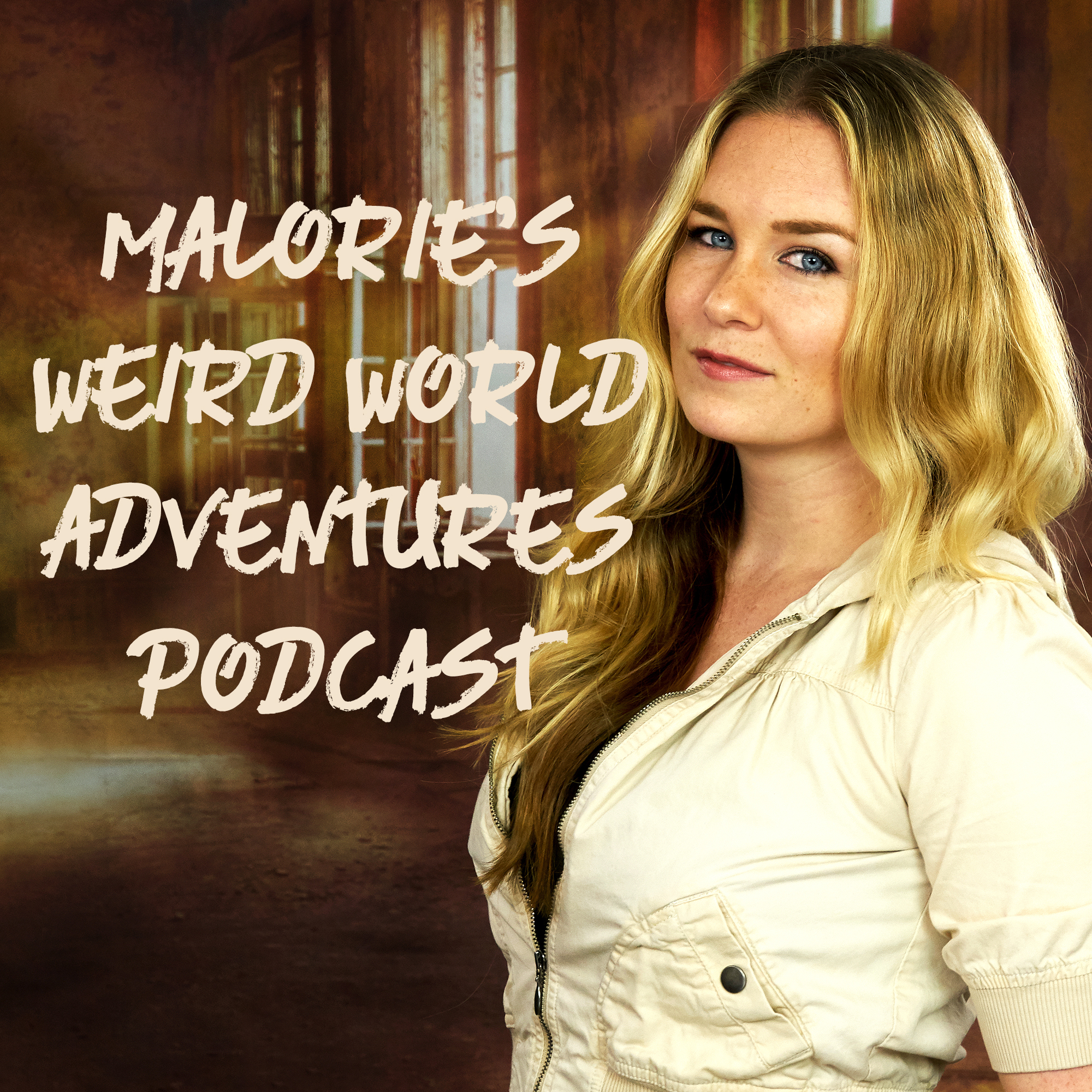
I'm Mallory Mackie. Some people have called me the modern myth hunter. And that name carries two halves of me that people sometimes don't think belong together. The first half is a journalist and anthropologist. So my Training is in folklore and mythology and the stories that people tell to explain the unexplainable and the rituals they build around death and fear of the unknown. And I'm sometimes less interested in whether a ghost is real, although I think it's exciting than in why. A whole town has believed in said Ghost for maybe 300 years. So the why is always very important to me. And the second half is that I am an explorer. So I host Weird World Adventures. It's a travel show on Prime Video, Tubing on demand. And we also have a podcast that under the same name, Weird World Adventures, that you can listen to wherever you listen to podcasts. And I'm a member of the Explorers Club, so in my spare time, I kind of like to work with warm weather penguins around the world, on top of studying anthropology through the Explorers Club.
So my job, more or less is to go to the strangest places on earth and see what's going on there, figure out the cultural phenomena from it and report back.
And in the last word on this slide kind of surprises people. I am also a skeptic, so I spend a lot of time in skeptic circles. I write for Skeptical Inquirer, and I go into every haunted location ready to go, but with doubt. My rule is simple. Kind of respect the belief, question the ghost. So the people who tell these stories deserve to be taken seriously, and I think the claims deserve to be tested. But both things can be true at once.
And holding both is what makes all of this fun. Having, you know, the. The air for mystery and the want to know why, but also trying to break down and see what's really going on somewhere. And I've just always loved weird stuff and use that word in a very loving way. So I'm also a proud weirdo, which it doesn't say on here, but I like to introduce myself as a proud weirdo as well.
So this is my journey a little bit.
Everybody who loves this stuff kind of has that first door, the first place that made their hair on their arms stand up. Something that said, I really need to know more about this.
For me, I've always had a fascination with the unusual and the unknown. I've read ghost stories all my life, starting from when I was very young. And then there were a few places I visited that really made me question reality sometimes and sparked more of the fascination into the paranormal, the macabre, the cultural phenomenons. I also fell down the rabbit hole of gothic horror and never looked back. When I was a teenager, I'm all about the Phantom of the Opera. I think Frankenstein is a fantastic book, and I think one of my favorite books is Dracula. So all about that, that OG Gothic horror, the field. So when I went on to study anthropology, I realized the thing I'd always been drawn to had a name and a method.
Folklore isn't just stories. It's data about what a community fears, values, and mourns. Suddenly, a haunted castle wasn't only a spooky building. It was a record of how people across the centuries processed war, loss, and power. Sometimes it's a way to grasp at control when you feel like you don't have any. So there's always cultural context behind every haunted or macabre place. And I love to discover and that.
So 500 places later, that curiosity turned into Weird World Adventures, which is the show and podcast that I have, and eventually into a very long list of places I couldn't stop talking about. So the Goth Atlas actually came to be because I was approached by Chronicle Books after releasing the first two seasons of Weird World. And when they came to me, I knew I was the perfect person for this book. And it was questionably going to be done by several authors. And I really fought to.
To make it my own and to just have me be the. The author for this book, because I'm like, this book, this was made for me. This is my topic. I have all these places in mind, and I'm very appreciative that they trusted me with that and never looked back. And we've had a wonderful collaboration since. But before we start the Tour on the 500 places in the book, I want to answer a question that I think is really important, and that's why does any of this matter?
Here's the anthropologist in me talking.
Every human culture that has ever existed has had the answer to the same question. They want to know, and they've looked for it and they've searched for it. What do we do with our dead? What happens after we die? Do we bury our dead? Do we burn them? Do we mummify them? Do we stack their bones into chapels?
Do we throw them a party once a year? And the answers are so wildly different. And the beliefs on what happens after you die are so incredibly different.
And that's exactly why they're so revealing. How a society treats death tells you what it believes about life. And I think we can learn so much about a culture from finding out how they. How they see the overall picture of life and death.
So people sometimes treat goth or macabre as a Mood.
And I'm there for it too. I absolutely love that. But underneath the aesthetic is something very old. A fascination with death, with mystery, with supernatural.
The cave tomb, the ghost story told around the fire. We've all been doing this for as long as we've been human, and it's a fascinating part of anthropology, in my opinion. Scholars even have a term for travel to places tied to death and tragedy now, which is called dark tourism, Coined in the 90s by researchers Malcolm Foley and Lenin. But I'd argue it isn't dark at all. Visiting these places is a way of looking directly at the thing every one of us will face and finding that it's full of art, love, humor, and so much more than just sadness. I think it gets a bad rep sometimes, especially in the Western world where we don't know how to process death. So we look at it in a way that is so sad.
And while I was choosing the 500 places for the book, I kept noticing these threads running through them. The first is grief made visible. The Victorians were the masters of this.
When Prince Albert died in 1861, Queen Victoria wore black for the rest of her life. Just four decades, and a whole culture of mourning followed, with traditions and things that people mirrored from there on out. In the Victorian era, the black crepe, the jet jewelry from Whitby, lockets woven from a loved one's hair, and we tend to call that morbid.
But they gave grief a form you could hold.
Ossuaries, garden, cemeteries, died muertos, altars. I can't speak, speak alters. They're all versions of the same thing. A love that outlives the body and trying to find a way to carry that love after death.
The second is fear safely. The Latin phrase memento mori, remember that you will die, sits behind a lot of these places.
So standing in a chapel made of bones, it's like a rehearsal. You get to look at your own mortality for 20 minutes.
It's a reminder that we all die and then walk back out into the sunshine and go have lunch and go on with your day. And that's not really morbid. That's healthy. It's a way for us to process the inevitable.
And the third is belong. Goth as a subculture grew out of the late 1970s and early 80s post punk scene in the UK.
And from the very beginning, it has been a home for people who don't fit in elsewhere. A lot of clubs, festivals and markets in this book exist because outsiders built their own insides, and that's worth Celebrating, too. Like I said, we love celebrating what makes people unique and people expressing themselves. And that's just a huge part of this as well.
So now that we've covered that, I want to kind of move into some of the fun, fun places that you will find in the book, places that I have some fun stories at that will kind of show you what you can get. There we go show you what we can find in there. So I love castles. There's a lot of castles represented in this book because how can you. How can you think of Goth and Gothic and not think of castles?
So let's start where every Gothic novel starts, the castle.
And so one of the main ones that I. Everyone has to talk about, Bran Castle.
Perched on a cliff in Transylvania. It's marketed to the world as Dracula's castle.
And when we went there, we. We actually filmed an interview there and stayed overnight for Weird World Adventures for the first episode of our second season.
And it's. It's a crazy tourist trap getting up there of just huge markets of Dracula everywhere. And here's the funny thing. Bram Stoker never actually visited that castle or Romania at all. And there's no solid evidence that Vlad Tepes III was Dracula, and there's no evidence that Vlad Tepes III ever actually stepped foot in that castle.
So there, if, you know, you hear that, and a lot of people say, well, Dracula, Dracula never visited this castle. Bram Stoker never visited this castle. It's not Dracula's castle. But when we spoke with the people who tour there, who work there, the researchers that are there all the time, they explained that, you know, Vlad Tepish iii, a lot of what he says is very much clearly mirrored to be, you know, Dracula was mirrored after him, and Vlad Tepes ruled in Wallachia and he was born in Sighisoara. So there's some wonderful places in Sighishoara in the book, including the birthplace of Vlad Tepish iii.
And Wallachia is kind of up north and Brasov is in between.
So this castle sits in the route from where he was born to where he ruled. And so there is evidence that he regularly went back and forth on that route between those places. And this castle is just naturally somewhere that he would stop.
So it's interesting that there's that debate behind it. But regardless, it's an amazing, wonderful, like, maze of hallways and rooms that I definitely recommend checking out. And it also has a whole wing on just the mythology and the creatures that are found in the mythology of Romania, including Yalele, which are Fairies that make you dance until you die. So really interesting characters that appear throughout mythology. So I definitely recommend Bran Castle. Couldn't. Couldn't not bring that up.
Houska Castle is another great one. It is in Blockcheck, just about an hour outside of Prague in the Czech Republic.
And Hauska supposedly hides the entrance to hell. That one is fun, too, because in theory, when it was built, there was just a hole that went all the way down to hell. And they were saying that demons were climbing up out of the ground there. So they put the castle over top of it to close off the entrance to hell with the chapel sealing the hole itself. And that is still the mythos for the castle today. It was also taken over by the Nazis during World War II, and they supposedly had experimentations around there. So that is another really interesting place historically and also mythologically.
And then there's also the dark side of fairy tales, which I think is really fun too. And we did a whole breakdown on the Brothers Grimm and their real footprint they left behind in Germany. And they never actually wrote the stories themselves from. Like, they weren't their original stories. They were retellings of stories that they had heard when they put their collections of children's tales together. And. And Rapunzel is another one that. Rapunzel was Italian, but they retold it, you know, in their German fairy tales. And Trendelberg Castle was an inspiration to. That they picked for Rapunzel's tower. So there is a real Rapunzel tower that exists in Trendelberg at Trendelberg Castle. And it is an incredible, beautiful, tiny little town to see that you can spend the night in the castle. It works like a motel. They have elaborate dinners. When I was there, they did this really interesting, bizarre puppet show that was based off of outer space. It had, like, aliens and they did it in German. So I was completely clueless as to what was happening. But I could. I could follow the basic premise of the story by the puppets in the way that they were reacting. So that was also very cool. So those are just a few really fun castle places you can find there in the book. Then we have ossuaries. Gotta include the ossuaries. For those who don't know, an ossuary is simply a place where bones are kept, usually because a cemetery ran out of room. But some communities turn that problem into an art.
So Sedlec Ossuary is one of the most famous ossuaries in the world. I'm sure you've all seen it. If you don't know what it is. It's on the back of the book here. So that's Sedleck, and that is also about an hour outside of the Czech Republic. And it holds the room, sorry, Prague in the Czech Republic. And it holds the remains of about tens of thousands of people.
In 1870, a wood carver was hired to arrange them, and he went all in with bone garlands. There is a bone coat of arms, a chandelier said to contain every bone in the human body presented in it. And he even signed his work there in bones.
It's really articulate and elaborate, and I feel like most of the ossuaries, it makes you question almost a little bit if it's tasteful. But it's all presented in a religious way, a way that someone is expressing their.
Their love and desire to honor the debt. So that's. That's something to me that's always been. That's always been fascinating, is, you know, it's a religious sacred place that needs to be treated with respect. But then you see how these bodies are presented, and it's so different than what we're used to It. It opens up the question where, you know, is, is this ethical? Why are they presented like this?
Is this how, you know, people would want to be remembered? But fascinating. There's also the.
In Evora, Portugal, Franciscan monks built the Capela dos Osos, the Chapel of bones, in the 1500s, lining the walls and pillars with skulls and femurs.
Over its door is the line, I'll show you next, because it might be my favorite sentence. So we'll wait for that.
And then we have the Paris catacombs. So I'm sure they're the most famous and most people have heard of them. But under Paris, the catacombs hold the remains of millions of people. They were moved there starting in the 1780s, when the cemeteries were actually literally overflowing and kind of rising up because the soil was not good for that, to have bodies buried into it in Paris.
And when you go down there now, there's actually a sign above the door that says stop. This is the empire of the dead.
And you can walk through that on a public tour and see I believe it's 6 million bodies is the rough count on display throughout. And there's an amazing amount. I think it's a couple hundred thousand miles of tunnels under Paris, and it's just a mile of it sully that actually has the bodies put in. And it's. It's definitely worth visiting if you have not.
And in Lima, Peru. There's a room of 10,000 ancient skulls, a reminder that this isn't only a European tradition.
These are found all over the world.
And what I want you to notice is that none of these were made to be frightening. They were not made to be disrespectful. They were made by religious communities.
And the reason that they're saying is to teach humility and the shortness of life and the horror is something we bring in with us.
So that. That inscription I mentioned in that Evora, we bones that are here are waiting for yours. So that's carved over the entrance to the Chapel of Bones. That's a little bit of a thread, a little bit of a joke, and a lot of truth.
So the monks weren't trying to scare. Scare anyone. They're inviting you in to think about what actually matters when you still have time to do something about it. And I think that's one of the most Goth sentences ever written. It was written about 500 years before anyone used the word Goth. And it kind of reminds me, too, of. So there's an exhibit called Body Worlds. And Body Worlds was a German scientist and artist that turned the bodies from his display. They were medical cadavers into posable figures using a process called plastination.
And so you can go in and see the musculature of the human body posed in different ways. Playing sports, doing ballet.
That kind of presents how your muscles work. And it's a great way for people to get up close with a human body and see the inner workings in a way that's not supposed to be dark, and it's not supposed to make you feel like you're looking at bodies. So one of the themes throughout it is actually happiness and remembering to smile.
And so they have a bunch of exhibits in there to make you smile, to step away, to remind you that your life is still here and you are still living it. It's kind of a celebration of life using medical cadavers. It's very fascinating. It travels the world in Europe and the United States.
And the last room of the exhibit allows you to write what you want to go out and do with your life on the board to kind of give that inspiration that you're still here.
You can still take your life by the reins. What do you want to do next? Which I think is a great. It's the purpose of kind of looking at death in these ossuaries and in these exhibits and museums.
So then mummies. Every. Every time I go on a press trip, I feel like there's mummies there, there's some building. Well, there's mummies in here.
And then I find out about it and I pressure them into taking us to see the mummies. It's happened many, many times. For some reason, most people hear mummies, they picture Egypt. But some of the most extraordinary mummies are not in Egypt. They are elsewhere around the world.
In Palermo, Sicily, the Capuchin catacombs hold thousands of preserved bodies.
Monks first, then wealthy locals who paid to be there.
And they stand and hang along the corridors. Some of them are hanging in their Sunday best, sorted into men, women, priests, professionals and children. And the most famous is little rosalita Lombardo, a two year old who died in 1920 and was embalmed so well, she's called the Sleeping Beauty.
It's a very tender and unsettling thing in equal measure. So which, if you think about it, is kind of this whole book in one room.
My favorite with the mummies is the Mummies of Guanajuato. In Guanajuato, Mexico, the mummies were not made on purpose. It was in the 1800s that the city introduced a tax, burial tax on the graves in the area.
And when families couldn't pay, or if they couldn't find the family of someone that was buried, bodies were exhumed and they found the bodies and they, they, they were mummified. The ones that they bull they pulled up were mummified. And they thought it was the silver in the soil in the area that naturally preserved them. At first, however, when they did more research into it, they realized that they were buried in these cement, it was like cement walls with wooden coffins. And they effectively had been cooked and dehydrated. And that's actually how the mummies came to be.
And they put them into a museum next to the burial site.
And today people line up around the block to go see them. And it is such a different cultural phenomenon because there are movies made about them. They've become very famous there. And families will bring their small children all to line up down the street to go get a glimpse of the mummies who had no idea when they were alive how famous they would be after they died.
And they say something powerful about class and death, who gets to rest and who gets to be displayed.
And in the Atamaca Desert in Chile, the Chinchorro people were deliberately mummifying their dead around 7,000 years ago, roughly 2,000 years before the Egyptians. And now there's a UNESCO World Heritage site there as well. That alone tells you this Impulse to keep our dead with us is about as old and as human as it gets.
All right, that's enough of the mummies.
So there are also many wonderful places where you. Places where you can celebrate and get a bite to eat and dance.
Goth isn't only about the dead. It's also about the living who love this stuff and people that want to express themselves in different ways and they know how to throw a good party.
So there's Wave Gothic Trefen in Leipzig, Germany. It's been held every year at Pentecost Weekend since the early 1990s and is one of the largest goth gatherings in the world. And for a few days, the whole city turns black and lace with corsets, Victorian picnics, and fashion that has to be seen to be believed. There's Whitby Goth Weekend, which happens in the seaside town in the north of England where Bram Stoker stayed and where in the novel Dracula comes ashore as a great black dog.
So you can climb the 199 steps up to the ruined abbey at dusk and remember the whippy jet the Victorians carved into the morning jewelry. It's the same town, so everything kind of connects there as well.
And there's also celebrations like Dia de los Muertos in Mexico. We went on a press trip last year and celebrated in Puerto Rico. And it's one of the most beautiful answers to the question from earlier about how we process death and what do we do with our dead. And in Mexico, you invite them to dinner. You set up an altar with marigolds and sugar skulls and their favorite foods and drinks.
And it isn't gimmicky. It's not Halloween. It is not mournful. It's a family reunion across the line between the living and the dead. And just a beautiful way to celebrate the people that you love that have passed on.
And then the book also covers witch markets and dark shopping districts around the world. So, yes, you can plan an entire trip covering anything you'd like to really along the goth theme, including museums. So if you prefer the macabre in a museum or to learn more, this has you covered too. We already brought up the Body worlds exhibit earlier.
There's also the Mutter Museum in Philadelphia, which belongs to the College of Physicians. And it's a cabinet of weird medical history with skeletons, wax models, preserved specimens. The soap lady who was a woman whose body turned into a waxy soap like substance.
The slides of Albert Einstein's brain are there. So this isn't there to be necessarily macabre. Gross people out. It's a reminder that every specimen was a person and that this is a medical museum that was built on their bodies.
The Museum of Witchcraft and Magic in Bo Castle, Cornwall, holds one of the largest collections of witchcraft and folk magic objects in the world. So charms, curses, puppets, protective objects all tucked into walls. And as a folklorist, this place is like a candy store. It shows that magic was mostly ordinary people trying to protect their homes, their kids, their cows, trying to grab and get control over situations when they felt like they didn't have any, trying to control the uncontrollable.
And that's kind of a theme through a lot of these things and belief systems overall. And the National Museum of Funeral History in Houston covers everything from Victorian mourning to fantasy coffins, from Ghana to presidential funerals. And their motto is any day above ground is a good one.
So I love the museum. That has a sense of humor, and they definitely do.
Two more quick stops here.
I'm sure a lot of people have heard of Eastern State Penitentiary in Philadelphia.
And it opened in 1829 as an experiment in total solitary confinement meant to bring prisoners to penitence.
And that's where this word penitentiary comes from. Inmates wore hoods when they were moved so they couldn't see one another.
Al Capone did time there in 1921 and 1930.
I'm sure people have seen those pictures of his cell or gone and seen it themselves. It was famously furnished with rugs and furniture and a radio and kind of showcased that when you had a name and you were important, you were treated differently than other people.
The prison closed in 1971, and today it is crumbling. It's a beautiful ruin and a museum and supposedly one of the most haunted places in America.
Most of the ghost hunters have been there, so that's a really fun and famous one.
And then on a more cultural side of it, there's the island of the Dolls and the canals of Chocomichilo. Gosh, I hope I said that right. In Mexico City, the story goes that a man named Ulan Santa Barbera found a girl drowned in the canal, then found a doll floating nearby and hung it in a tree to honor her.
And then he and others kept going there hanging dolls for decades. So today there are hundreds of sun bleached dolls, missing limbs and eyes and swaying in the trees.
And it leads people to believe, well, this island is most definitely haunted because that is really creepy, and I'll let you decide, but it's one man's grief turned into a landscape. And that's exactly the kind of place that we'd love to include in our book.
People always ask me, do you believe in ghosts? And my honest answer is, I haven't seen evidence that would convince me. Though I most definitely have had some very strange things happen. So I'm not closed off to any ideas.
But here's the thing. I don't need the ghost to be real for the place to matter. It's really about the culture and the history.
And the Green lady may have never walked the walls of Caterphilly, but generations of people telling her story is real. And what does that mean? The grief behind the island of the Dolls is real. The monks Navora were real, and they were trying to tell a story. They were trying to process grief.
And that.
That side of culture fascinates me. So my approach is, like I said before, respect the belief, question the ghost. You can love a haunted castle and still ask good questions about it, and you can be a skeptic and a goth. And in fact, I argue that's the. The best goths I've known have been both curious, unafraid of the dark, and unwilling to take anyone's word for it. So that's kind of the spirit of this book, is to inspire people to go to these places, to feel the chill, and then to ask why.
It also serves as a great way to plan a trip. You know, whenever you're going anywhere and you want to visit that strange place, it really is an atlas of, well, what's around me here that I can stop into and see, because that's. That's what I do whenever I go anywhere. I ask what's the strangest thing here? Because I think that defines the character of a place more than anything else.
So if tonight gave you a taste for this and you enjoyed it, here's where you can find more. As we said, Weird World Adventures is the travel show that I have on Prime Video and Tubi and On Demand.
And there is a podcast wherever you get your podcasts. And that's where you can see a lot of. There's many places we did in the show that are here in this book. You can see them on camera and hear conversations with investigators, historians, and fellow weirdos.
And if you want to go, put your boots in the ground and go hiking somewhere spooky.
I also recently wrote and released Haunted Hikes of the Great Smoky Mountains from Falcon Guides, which pairs real trails with the ghost stories and folklore attached to it. So there are 40 trails that we actually mapped and photographed and wrote the folklore of. From the Great Smoky Mountains, which is fun.
And then Secret Virginia from Reedy Press is a guide to the weird, wonderful, and obscure corners of Virginia.
So that's another one that's kind of like the Goth Atlas, but just more for Virginia since that's my home state there.
So thank you guys so much for spending your evening with me. The Goth Atlas is out now From Chronicle Books, 500 places around the world.
And it makes a great Halloween gift, a great coffee table book, and even better excuse to plan your next trip, like I said.
So that is. That is what I have for you tonight. And I am excited to answer your questions now.
I will.
[00:33:57] Speaker A: Yeah. So if you have any questions, you just put them in the. Put them in the chat.
Let me see.
So I had a question.
Considering it's Halloween time, is there any great Halloween trips you would recommend?
[00:34:17] Speaker B: Definitely. Well, first of all, not exactly Halloween, but Day of the Dead. We took a Day of the Dead trip last year to learn more about the celebrations of David. Los Muertos, and Puerto Vallarta is a great place for it. It's like an interesting art town. And there are resorts there, like the Marriott, like places that you would be familiar with that you can visit that are there to teach people about Day of the Dead. So I would definitely consider that.
I think we were talking right before this about the Winchester Mystery House. You know, Sarah Winchester, she was from Connecticut, I think New Haven, and she is. She's buried there, but she went and created the Winchester Mystery House after her husband died in San Jose, California, and lived there until she passed away. And she continually built on her house until she died. And it is this winding, crazy maze.
We interviewed them there. The historian. The historian to talk about Sarah's story and give us a tour of the house for Weird World Adventures.
And it took about three and a half hours to comfortably go through and do a tour of the house. So it's quite large, and they. They turn it into a Halloween maze for Halloween time, which I think is really fun. And so you can go through. And there's two sides of the house, so you can do both. And they have actors that are set up in there to scare you, like a haunted house. But it's. I think it's cool that it's one of the most notoriously famous haunted houses in the world and you can actually do a Halloween M through it. Same thing with the Queen Mary, too. I. Me and my husband took a trip two years ago for the show to do an interview at the Queen Mary. At Halloween time. And they have an experience called Dark harbor where you get to actually do a Halloween maze on the ship. And you're like going through the old engine rooms on the ship and the actors are, you know, set up in there. And it's. It's a really incredible experience because I don't think I've ever done Halloween maze like it.
[00:36:14] Speaker A: That's very cool. I know that you mentioned Eastern Shape Penitentiary. I've been meaning to go because they have. They have their own haunted thing around this time of year.
[00:36:27] Speaker B: There's something so special about getting to do like a haunted maze in an actual, like, historical place that is supposed to be haunted. I just love that.
[00:36:37] Speaker A: It's my understanding. I. I remember hearing about this years ago that they. You could have.
You could do a haunted maze or, you know, haunted attraction with them and you could. They could actually like, throw you in a cell or something. You could actually, like, agree to that, which is.
[00:36:56] Speaker B: That is really cool.
[00:36:57] Speaker A: Yeah, yeah. Yeah. I mean, it.
Interesting, but. Yeah, but not for everybody for sure.
[00:37:07] Speaker B: Right.
[00:37:09] Speaker A: I would. You mentioned Sleepy Hollow in your book, and I, I just went there over the weekend. So I would also say that that's a. That's a very nice spot. And it's not. It's not.
You know, it's not. It's not as crazy as Sleepy. Excuse me. Salem at this point.
[00:37:27] Speaker B: Salem is wonderful too. And I would say I wouldn't go to Salem at Halloween time because so many people do. But we went at Christmas and it was, it was wild. I mean, the, the tours. I think Mike Victor does these spellbound tours where they. I learned a lot about the witch trials that I didn't know. And then there's an actual, like, Salem witchboard museum where they. It's an entire museum dedicated to witchboards which are basically Ouija boards. Like, a Ouija board is a witchboard. And. And there's like Nightmare Gal and I think Annabelle is there now. They brought Annabelle up there. I've worked with the Warren's people a lot and they, they recently brought her up there for. I think they moved a lot of the Warrens artifacts up on display.
[00:38:15] Speaker A: Yeah, yeah, I know they're based in Connecticut here and.
Yeah, I know that. Yeah, they.
I, I think they had.
They had a museum that was. But now it's not open to the public. They had a museum from one of the Warrens. But yeah, but yeah,
[00:38:33] Speaker B: it was in their house. It was like where they collected the artifacts and Lorraine used to let people in and do like A presentation. And then when she got older, they. They stopped doing that. And we, we went and interviewed Tony Sparrows, their son in law for Weird World, and got to see some of the artifacts and they. I think this is the first time they've kind of put it all together in a semi permanent situation for a while. Because they were touring for a while for conventions, but this is like their attempt to reopen it.
[00:39:06] Speaker A: We did have Michelle saying that was great. Now I'll have to watch the show and read the book.
But I had like. Is there any place that you felt was like, exceptionally creepy that. That stood out amongst. Amongst the rest or any few places?
[00:39:25] Speaker B: Definitely. I'm trying to. I mean, I love.
I love ossuaries. For me, the mummies in Guanajuato that I brought up was. Was really just. It took a lot, like, a lot just to stomach it because there's some. I feel like ossuaries are, you know, bones are bones. They become so gimmicked with Halloween. So even. Even when you see real skeletons, it's not quite as, as terrifying as mummies, for me. I don't know. But. And, and in Guanajuato, the mummies, like, they're not covered. It's just like they're just kind of, you know, bodies that have been dehydrated and they're in a lot of very creepy positions and some of them still have, you know, their hair. And like, it's. It's something that's like a step between bones and being a live person. And then something about that made it very difficult to stomach. So that was. It was interesting and I really enjoyed it. But it's hard to look at sometimes. Some of the mummies that are presented especially there, they have like, murder victims. They had a pregnant woman, they had mummified babies. Like, there's things that we were just like, oh, this might be. This might be a little too much.
There was a bridge in Asheville, North Carolina. Asheville's supposed to be incredibly haunted. And me and my friend Elizabeth for Weird World, went to Asheville and we're kind of did an investigation on this bridge called Helen's Bridge. And the. The idea was that Helen took her own life after her daughter died. And it's become just this piece of folklore for the area. There's no actual written proof that this person Helen ever existed. And my friend had this, this app called like the Executioner's Block app that she was using to kind of. It cycles through sounds and the ideas, like a spirit can manipulate this box.
And there was some really crazy stuff that happened. I mean, it's, it's in the first season of the show and it looks like so much is going on because we had to condense it. But, but all of this stuff happened over the course of like an hour or two where we were getting direct responses for things.
And it was, it was really quite horrifying. So, so that it's. It's strange because it's just a bridge. Right? But that Helen's bridge, that was a really eerie place, for sure.
[00:41:46] Speaker A: Yeah.
I have to say, as far as the ossuary, those are definitely on my list. I really wanted to see the one in the Czech Republic.
I did. I was in Munich for a few days over the summer and I did see there's a saint in one of the churches there. And she's from.
She died in 310. And her bones are displayed there. I mean, it's, it's in a. Very obviously very, you know, Reverend. I mean, still, it's a little creepy, but it's kind of.
It's, it's.
It's interesting.
More. More so it kind of makes you think about the history and like, also there's the preservation. It's amazing that she died in 310 and she's still preserved, but it just, it makes you think more about the, the history of this person.
But she was a martyr and whatnot. But it's a very interesting practice that obviously we don't have much here in the States, but it's something very interesting to see when you do get a chance to see. Of course, it could be very creepy, but in this particular instance it was very reverent towards the saint and more made you think about the history of that saint and just religion in general. But
[00:43:02] Speaker B: there's a. There's a chapel in Cologne too that has Saint Martinique, I think is her name. And she supposedly, the story is that she marched with like 3,000 virgins. Like, it was a lot of virgin women and they all got massacred. And their, their bones are supposedly laid out like in the. The aisle of a church. There's like a side room where it's like, here's all the virgin bones. And it is, it is really interesting the stories that kind of come from that and why. And they, they found this grave of, you know, all these bones. And like, these are. These are the virgin women. This is Saint Martinique. And we're going to put them on display in the castle or in the chapel in Cologne. So, yeah, it's fascinating
[00:43:50] Speaker A: Very much so. Are there any places that you, you know, weren't able to.
To. To get in the. You know, in the book and, you know, ones that you like, but unfortunately didn't make it into the book?
[00:44:04] Speaker B: No, because there's 500. This is like, pretty extensive. Everywhere that I really wanted to include, we were able to include, which I'm really excited about, and in any. Any of the places that I like, personally got to experience.
Like, that was.
That was the first pick of all these ones are going to be in here. So it's luckily extensive enough that we could cover everything.
There's a few things that are maybe, like, a little too weird. Like, there's. There's places that I would love to talk about that I like, personally omitted because they're just weird and less goth. Like, they're. I guess in Virginia, by me, there is a local artist named Mark Klein who made a park that has all these dinosaur figurines and art features that try to depict what would happen if dinosaurs were used as warfare in the Civil War. So things like that. We were like, well, this is really bizarre, but it's not really, like, you know, macabre or goth enough to include. So there's some kooky things like that that didn't quite make it. In Stonewall Jackson's arm. Grave is another one where he was, you know, shot by friendly fire and that's eventually what killed him. But before he died, they amputated his arm to try to save him. And the person that did that was like, well, I can't put this in a grave with all the other arms because it's Stonewall Jackson's arm. So I'm going to give it a Christian burial on my plantation.
So there is an actual gravestone there that says, like, this is the arm of Stonewall Jackson and you can go visit it today. And that is really bizarre. So there was some things like that that didn't quite make it in just because they were a little too weird and not goth. But everything I wanted, like, for the goth side got to make it in.
[00:45:50] Speaker A: Very cool.
So Michelle said, any local places you recommend in Connecticut?
[00:45:56] Speaker B: Yes. So I have this open here. First of all, the grave of Sarah Winchester is there, which. Which I have always wanted to see and just didn't. Didn't get to the times I've been up there, which is a shame. So definitely that there's the. The cemetery that the Warrens would always go to where they would see the white lady. That's another place that in Monroe that I've always wanted to go to, but haven't made it up there yet. There's Transylvania and East Haven, Connecticut.
Come in for a bite. We're dying to meet you. A family run bar and restaurant that's just very fun, that is owned by. Owned by a couple from remedies that houses a lot of fun, gimmicky, like celebrations of Romania itself. So I think that's great.
The little people village in Middlebury, Connecticut. We stopped in there and that was.
It's like this hidden ruin in a park. And the story goes that it was the home or there was a woman that was being harassed by fairies. And so her husband built. They were told to build a community with little houses for the fairies to live in and they would leave them alone. And they built kind of a throne for her to rule over the fairies.
And that. That's like the story behind it. It really looks like it's probably the ruins of an old attraction, but the story is a lot of fun. And you can kind of go out in this little.
This little park and, and hunt for. Because they're in the woods and these, these little fairy houses that exist out there. So the little people village is a lot of fun.
And Bones and Botanicals is in Wallingford, Connecticut. It's like a magical tea shop.
That one's really fun as well.
It's great for like the Wiccan, more folklore side of that world. So those, those are the places off the top of my head for Connecticut there.
[00:48:01] Speaker A: I was saying earlier how I went to Transylvania, the restaurant, and it's very fun. They have some cool Halloween decor and it's quite a bit of fun themed cocktails for Dracula and whatnot. So that's fun. And I'm actually planning on going to Bones and Botanicals this, this weekend.
I know it's also a speakeasy, which is pretty cool.
Do you have. Just speaking of like, goth, you know, the goth theme. Are there any. I was thinking about, you know, graveyards that you really, like, enjoyed visiting.
You know, anyone's off the top, you know, that were like the most exciting or whatever.
[00:48:52] Speaker B: Yeah, there are definitely.
I. I find there's some that stand out culturally that are just like, very unique in what they are. Like, you know, if you go to New Orleans, they're. They're just so different than the rest of the world. And so, like, there's St. Louis Cemetery number one, St. Louis Cemetery number two. I think number one is the one that has. Marie Laveau is where she's Buried. And Nicholas Cage has a crypt there because he's, he's a, he's a crazy person and he's, he's beat us to a lot of places that we've gone before. Like right before we have like, oh, Nick Cage was just here.
But it's, it's above ground intentionally because of the swampy, like, landscape in New Orleans and it, the way that people are buried in there, they have whole families. So you, you get a crypt and that's, you know, your family's crypt for life.
And they put the fresh bodies kind of on the top and they eventually decay and cook and they let them do that. And then once they're kind of done after I think a year or so, they just dust them off to the back and make room for the next body. And that's how it's able to hold a whole family for the people. So it's just incredibly different and unique in how it works. And you know, it was a place where the rich could buy these elaborate, you know, mausoleums and kind of show their wealth. So that, that's really interesting. And the fact that Nick Cage bought two plots there and then built a pyramid to be buried in is fascinating.
And then there's Hollywood Cemetery over here by me in Richmond, Virginia has a bunch of presidents that were buried here, a lot of really elaborate mausoleums, and there's like a vampire myth associated with it. So that's kind of fun.
Poe, you know, grew up in Richmond, Virginia, so he visited Hollywood Cemetery. He swam up the James river by it. There's a bunch of fun stories about Poe kind of from the area there.
And the other one is Ricoleta in Buenos Aires, Argentina.
It's one of my, I love it. It's one of my favorite places to just go and like look around whenever I spend, I spend some time in Buenos Aires and that's where Evita is buried.
Eva Peron. And it's again a bunch of above ground mausoleums. So they have crypts underneath and some of them are so old that you can like look into them and see, see the bodies. I mean, you're seeing the coffins in there. But like, you know, there's a lot of them aren't kept up with anymore and some are. And it's just, it's really fascinating to kind of see how elaborately these were put together by the families and then, you know, the ones that are still maintained and the ones that, that are not. And it's, I mean, I can't, I can't Describe it other than. It's just, like, otherworldly. So Regoleta is another really good one.
[00:51:44] Speaker A: That's very cool. Sounds very cool.
As I was mentioning Sleepy Hollow, they have a beautiful, beautiful cemetery out there and some great tours.
Yeah, it's just especially.
I went to the cemetery, and I think it's called the Woodlawn in the Bronx. And that's a beautiful.
It's very nice seeing these. Like, I mean, in addition to a burial ground, there are these, like.
There's a lot of nature and there's kind of like this green oasis in the middle of a city. So it's very interesting that, like, juxtaposition, you know, when you'll see this cemetery in this, you know, big urban environment
[00:52:29] Speaker B: and the cultural context, too. It fascinates me, like, how people behave in cemeteries and getting to see that in different places. And just. Just something is. Because you mentioned, you know, New York, and my. My stepdad was from New York, and I was from the south, you know, in Virginia. And I remember going to a cemetery with him in New York with all the cousins and being like, this is, like. It's interesting. People are just running over the graves and whatever, and there's no thought to it. Whereas, you know, in Virginia, like, you don't step on people. Like, it's like an etiquette. You know, you walk around the graves. There's like a. There's an etiquette to it. There's. That, you know, is just for this region. In this region, we don't do that. We don't really care. We. It's fascinating to see how that changes when you go to different places.
[00:53:15] Speaker A: Yeah, for sure.
Yeah. Different. Obviously differs from region to region. Obviously country to country.
So very, very interesting. And always like a.
Even though it's macabre, of course, it's interesting place to visit, especially. I think it's like, a great way to see, you know, architecture styles and stuff. Like, you know, you see these in the freestanding mausoleums, and they're in, like, you know, certain.
I don't know, Greek style or whatever style it may be, you know, with beautiful columns and stuff. So it's kind of like a. It's a very nice way to see, you know, architecture.
So.
Yeah, definitely.
Definitely. Of course, if you're, you know, but macabre mixed with the history. So it's, you know, obviously foundational place to visit.
So let me see. I don't. Do we have any more questions?
No more questions. I can see. But I'd like to thank Mallory for her great talk tonight. And oh, Emily said, fascinating info. Thank you so. Yeah. And please do check out her book and we do have a copy to give away.
So please check your email in the coming days to see if you won this beautiful hardcover.
And thanks again everybody for joining us. And have a great night, everyone.
[00:55:01] Speaker B: Thank you.
[00:55:04] Speaker A: Thank you.
Good night and have a happy Halloween.