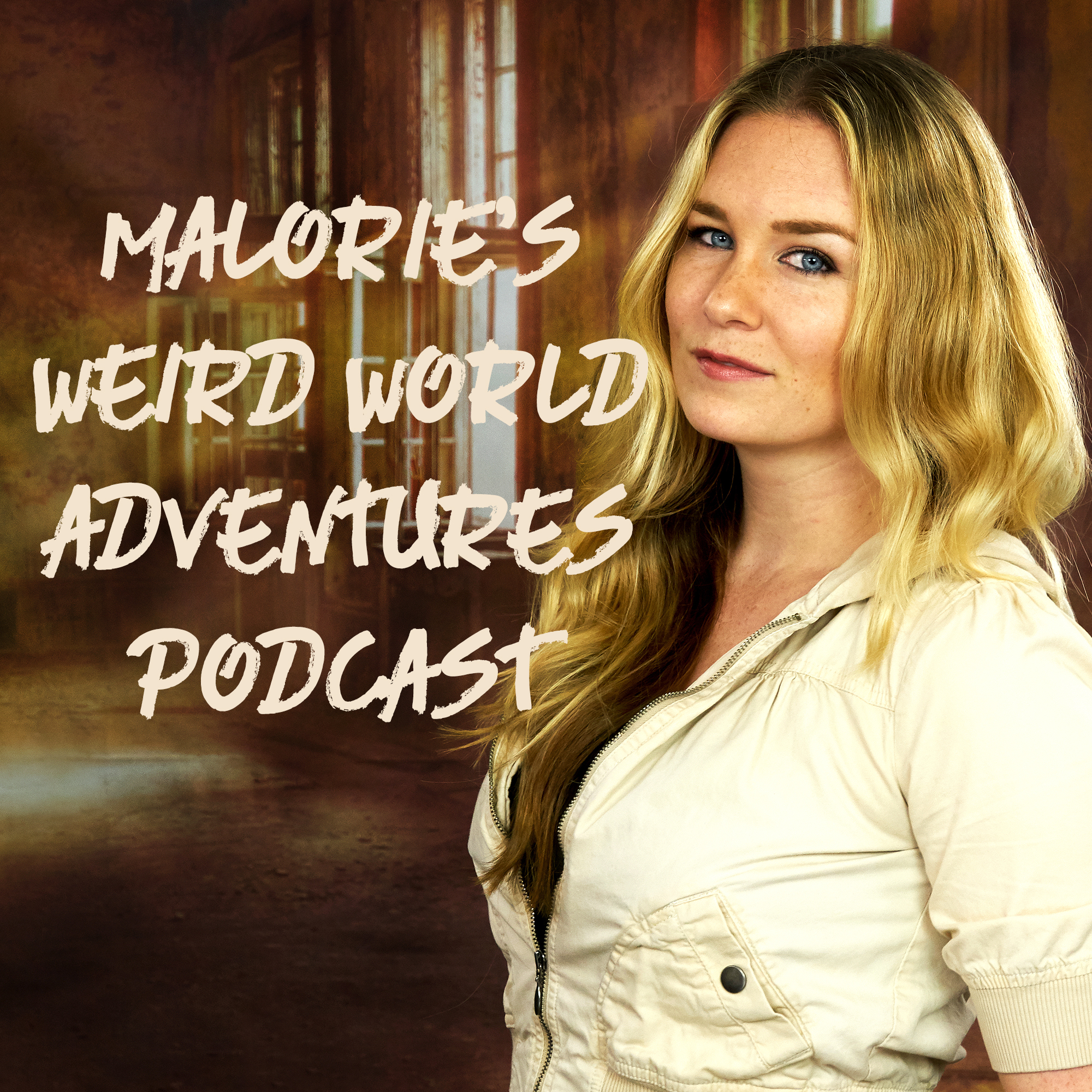
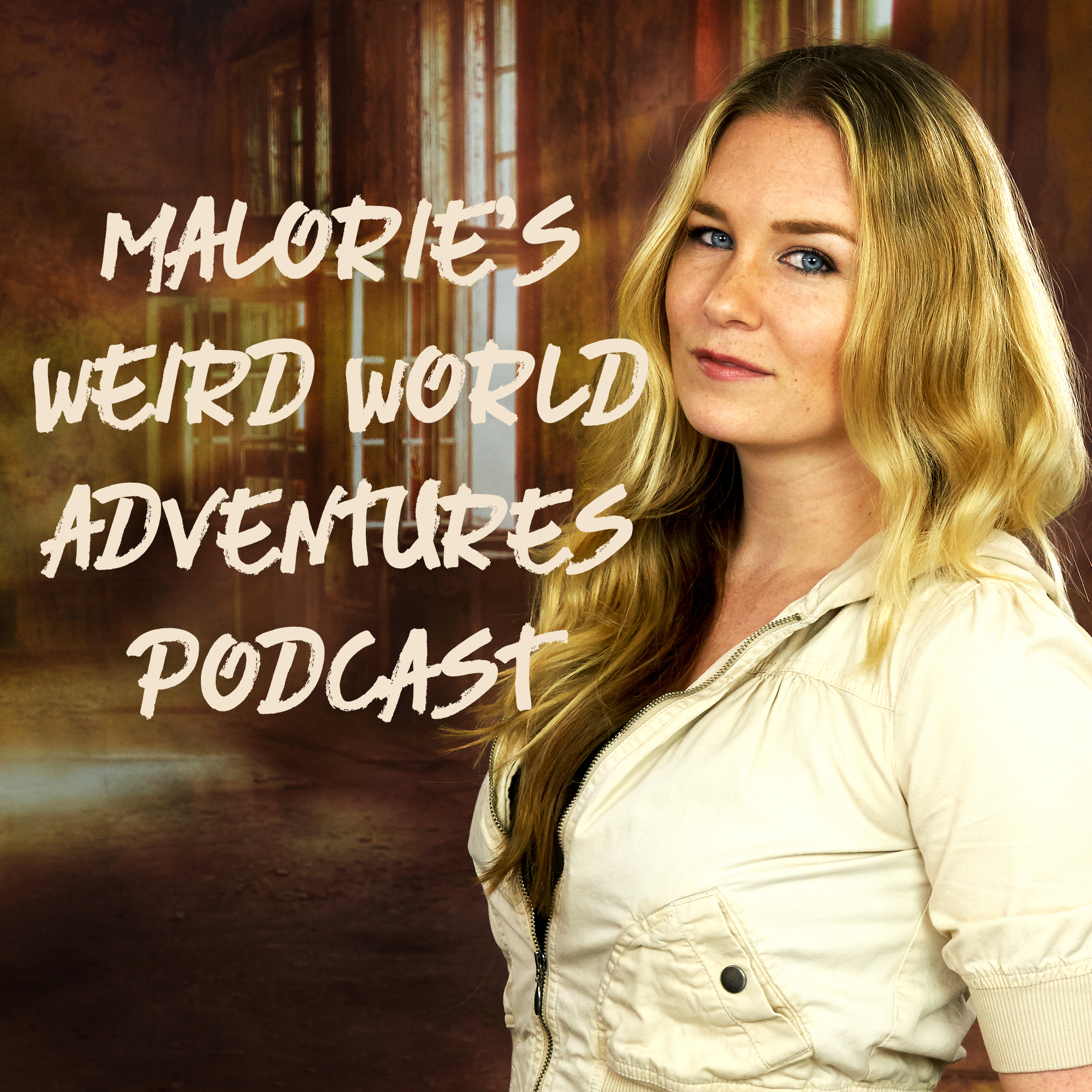
[00:00:06] Hello, hello, hello, everyone. Welcome back to Weird World Adventures, the podcast. I'm your host, Mallory, and I'm here to show you just how weird this world of ours really is.
[00:00:16] Today's episode is a little bit different. It's a little bit personal because I'm going to be talking about how to raise curious, critical thinking, wonder filled kids in an age where information is infinite, attention is fractured.
[00:00:30] So I'm a parent, as we know. I have a wonderful four year old named Autumn with Michael, and we have another little one on the way.
[00:00:42] And I'm also a journalist who specializes in anthropology who spends her career studying folklore, mythology and cultural transmission.
[00:00:51] So I think a lot about what I am passing down to the next generation is not just in terms of knowledge, but in terms of how to think, how to question, and how to explore.
[00:01:08] So I guess a question that comes up a lot is how do you raise an explorer when the world is already mapped?
[00:01:14] How do you teach wonder when everything has been documented and posted and debunked online?
[00:01:19] How do you instill critical thinking while also preserving the capacity for belief and imagination?
[00:01:26] Today, we're going to talk about family adventure, folklore, the stories we tell our kids about the world, about curiosity and what it means to discover something. And we'll explore how we can raise the next generation of myth hunters without either making them into cynics or letting them become credulous.
[00:01:44] Let's dive into this, guys.
[00:01:48] So the first part of this, I want to talk about the crisis of wonder.
[00:01:53] Here's something I've noticed with my daughter Autumn.
[00:01:57] She has access to more information than any child in human history has ever had, but she's arguably less capable of wonder than kids her age were maybe a generation ago.
[00:02:09] I can pull up a documentary about any animal, any place, any phenomenon on demand. She can Google any question immediately. We can take virtual tours of museums she'll never visit.
[00:02:21] She can watch videos of people exploring places she may never go.
[00:02:25] And that's great. Having that information out there is amazing, but yet something just seems like it's missing.
[00:02:32] There's a difference between information and discovery, between watching a video of someone else exploring a cave and actually going in to explore the cave.
[00:02:43] Between knowing facts about something and experiencing genuine curiosity about it.
[00:02:49] One of my favorite pieces of folklore is the concept of liminal spaces. Those in between places that feel slightly uncanny.
[00:02:58] The folklore has exploded on social media with people documenting empty malls, abandoned pools, empty parking garages.
[00:03:07] And there's something interesting happening there. Kids are going out and exploring these spaces in Person looking for that uncanny feeling.
[00:03:15] Creating a folklore community around discovery. That's the kind of active engagement I want to encourage. Not passive consumption of information, but actual exploration and interpretation.
[00:03:28] You know, when I was Autumn's age, the Internet was not easily accessible to me. Mystery was necessary. If I wanted to know something, I had to go find it. I had to ask people, I had to read books. That process of searching was part of the wonderful. This mystery created space for imagination.
[00:03:48] Now that mystery, that period of discovery, that searching is mostly gone. The world has been thoroughly documented. But I think that actually creates an opportunity.
[00:03:58] Instead of searching for facts around the world, we can teach kids to search for meaning, for patterns, for stories underneath of things.
[00:04:07] That's where family adventure folklore comes in.
[00:04:12] What a fun thing. Family adventure folklore by weird world adventures.
[00:04:18] Then there's, you know, also teaching critical belief.
[00:04:22] Here's the paradox I navigate constantly.
[00:04:26] I am a skeptic, and while I very much want to sometimes believe in ghosts and curses and magical thinking, I don't really.
[00:04:36] I also work in folklore and mythology, which requires me to take beliefs seriously and understand why people believe things.
[00:04:44] And I want Autumn to be both skeptical and open minded. I want her to ask questions and demand evidence, but also to hold space for mystery and meaning that goes beyond proof.
[00:04:56] So how do you do this with kids?
[00:04:59] It's hard, right? So I guess first you just have to model it. When we explore a place that has creepy folklore attached to it, I don't say, well, this is. This is stupid, this is fake. I don't believe it. I say, that's interesting. Why do you think people tell that story? What real events might have inspired it?
[00:05:19] What truths happened at this place that led to its inevitable legends?
[00:05:26] So I think kind of focusing on the storytelling and why it came to be is essential.
[00:05:33] Second, teaching the difference between is this literally true and is this meaningful? Because those are very separate questions.
[00:05:41] A ghost story is not literally true. There probably isn't actually a ghost haunting that cemetery. But the story is meaningful. It's carrying information about human trauma, about the way death affects communities, about cultural values, about grief and memory.
[00:05:59] Understanding that distinction is crucial. It allows you to engage seriously with mythology without becoming credulous.
[00:06:07] Then you can encourage investigation.
[00:06:11] Don't just consume the folklore passively.
[00:06:14] What Autumn hears a local legend, we talk about researching it. Obviously she's just four, but this is my theory of how I would like to parent and the example I would like to set. In case I didn't make that clear earlier, I just feel like I Have to clarify that.
[00:06:32] What's the historical basis? Who told this story first? Has it changed over time? What bias might be present in different versions?
[00:06:40] This is critical thinking. This is critical thinking applied to folklore. It makes engagement with mythology rigorous rather than naive.
[00:06:51] Fourth, and I think this is really important, you validate wonder and awe as legitimate responses to the world separate from beliefs.
[00:07:01] I can stand in front of a beautiful vista and feel genuine awe, even though I don't believe the landscape has magical properties.
[00:07:09] I can explore an abandoned building and feel unsettled by its emptiness, even if I don't think it's haunted. The aesthetic and emotional experience is real and valuable, even if the literal supernatural interpretation is not.
[00:07:24] Teaching kids to distinguish between the experience of wonder and the belief that causes the wonder I think is really powerful.
[00:07:34] And of course, there's a pushing adventure as a practice.
[00:07:39] The other thing I'm conscious of is that adventure in the digital age looks really different than it did for a previous generation.
[00:07:47] Autumn doesn't need to trek into the wilderness to feel like an explorer.
[00:07:52] She can be an explorer in her own neighborhood. She can investigate the history of a local building, research the folklore attached to a street, document patterns she notices in her environment.
[00:08:02] Adventure is an orientation towards the world, not physical location.
[00:08:09] This is something I would like to practice a lot.
[00:08:13] Going on a walk through Richmond and asking her, what story do you think that building has?
[00:08:19] Why do you think this street has its name? What do you notice about the patterns in this neighborhood? Who do you think lived here 100 years ago? These are exploration practices.
[00:08:29] It will have kids actively engaging with their environments, asking questions, developing theories, looking for evidence. This is how you raise an explorer in the digital age, by teaching curiosity as a practice rather than something that only happens on big expeditions. And of course, the big expeditions come, and they're wonderful.
[00:08:50] I mean, one of the things I want to do with Autumn and Tristan, our incoming one, is to have them work with penguins. I would love more than anything to bring them with me to Robben island for a summer to be able to work with the penguins and spend that time away. And just the remoteness of Robben island completely kind of off the grid, but being able to have that excitement every day of going out into the field and getting to tag the penguins and learn how that process works.
[00:09:27] But it's more than that. It's the adventure, the getting to be somewhere completely separate from home, getting to discover somewhere very new, and then seeing the practices of conservation in real time. Those are the big ones, but you can get Those little experiences in everyday life, regular life, too.
[00:09:45] And then this connects to the mythology aspect. Every place has stories.
[00:09:51] Every community has folklore. When you teach kids to look for and interpret the stories embedded in their own surroundings, you are giving them a tool for understanding anywhere they go.
[00:10:03] The digital age actually makes this easier in some ways. Kids can research the history of their neighborhood online.
[00:10:10] They can find photographs from decades ago. They can read old newspaper articles.
[00:10:15] But they can only experience the place itself by going there, by walking the streets, by feeling what the space is like right now.
[00:10:23] So the combination of digital research tools and physical exploration creates this really rich way of understanding place and community.
[00:10:35] And then there's building a family mythology.
[00:10:39] The last thing I want to talk about. The importance of building your own family folklore.
[00:10:46] Every family has stories. Stories about ancestors, about funny things that happened, about traditions and quirks. These stories all come and form a folklore. They're how families transmit values and identity across generations.
[00:11:05] With Autumn and with Tristan, I'll be very conscious of creating stories that will become part of their sense of family identity.
[00:11:12] Stories about adventures. We've had challenges, We've overcome weird things we discovered together. These stories are how I'm passing down not just information, but a way of being in the world together.
[00:11:27] One of my favorite family memories is. Is about a time we tried to venture out into the great Snoky Mountains for our book.
[00:11:37] And you know, that whole experience was wonderful because we mostly had trail maps and guidelines and vague directions and old photographs. But we went out looking for an old schoolhouse and being able to go on the trail and to find it with Autumn and to kind of be en route with her and for her to see something that old, it was incredible.
[00:12:02] We. We found something so magical.
[00:12:05] Beautiful places, interesting people, unexpected discoveries. That's what happens when you go out and you adventure together as a family.
[00:12:15] And there's times where you don't find what you're looking for. That's happened to me many, many times. And. And not every adventure has to be successful.
[00:12:25] It's about the process of searching, sometimes not just finding. And that's something else I think it's important to teach children, especially about exploration early on. These are stories that shape how kids approach the world. Not just what they believe, but how they engage with mystery and uncertainty.
[00:12:45] And I surely want to be that family that goes out and wants to have the adventure, not the family that goes out to the Great Smokies and eats at all the restaurants and never actually ventures into the mountains.
[00:13:01] Raising explorers in a digital age means teaching your kids that information is abundant but understanding is rare, that facts are available but meaning has to be constructed.
[00:13:13] That wonder isn't naive, it's a skill. It means modeling curiosity, supporting investigation, validating awe, and being honest about what you don't know. It never I don't understand why people are so afraid to say I don't know because sometimes you don't know. And that is perfectly fine.
[00:13:34] I mean, that's one of my go to's and things were, you know, even for job interviews is, well, you know what, I don't know anything about that, but I'll look it up. Or I don't know anything about that, but I'd love to learn about it. People seem to be afraid to say that, but there are many times where that is perfectly acceptable to say.
[00:13:54] And it means understanding that your job as a parent isn't to answer all of their questions, it's to help your kids learn to ask better questions.
[00:14:03] The next generation of myth hunters of adventurers. They aren't going to be chasing legends in remote places, though I wish they would.
[00:14:10] They're going to be finding meaning and pattern and story everywhere in their neighborhoods, their history, their families, their digital spaces, and hopefully throughout the world. And that's actually more exciting than traditional exploration because it means the whole world is their frontier.
[00:14:28] You can find resources for teaching kids folklore research, recommendation for family adventure activities, and more about how to foster curiosity in young
[email protected] we don't do much on the family stuff here in the podcast, but I did think it was a really wonderful opportunity to be able to speak on that and we will have more on that in the future.
[00:14:55] But for now I'm Mallory make sure you check out Weird World Adventures on Amazon prime and if you don't have prime, you can also stream Weird World Adventures for free pretty much on any smart TV or device using the Fawsome app.
[00:15:16] And we really hope you check it out. Season two has 12 wonderful episodes and we're very very proud of them. And be sure if you have checked out Weird World Adventures on Amazon prime or on Fossum or wherever you have watched it, please head over to IMDb and give us a rating. We'd greatly appreciate it. We would love your 8 nines and tens, but either way please head over to IMDb.com search for weird world Adventures and please rate each episode because you can rate each individual episode and also the overall show and each season. So please rate everything you can. We would greatly, greatly, greatly appreciate it and it really means the world to us. Excuse me.
[00:16:02] And please also, like I said, visit MallorySadventures.com for more, and you can follow me on Instagram aloriesadventures. Thank you guys so much for tuning in today, everyone.
[00:16:13] And until next time, everybody stay weird.