Episode Transcript
[00:00:00] Speaker A: Foreign.
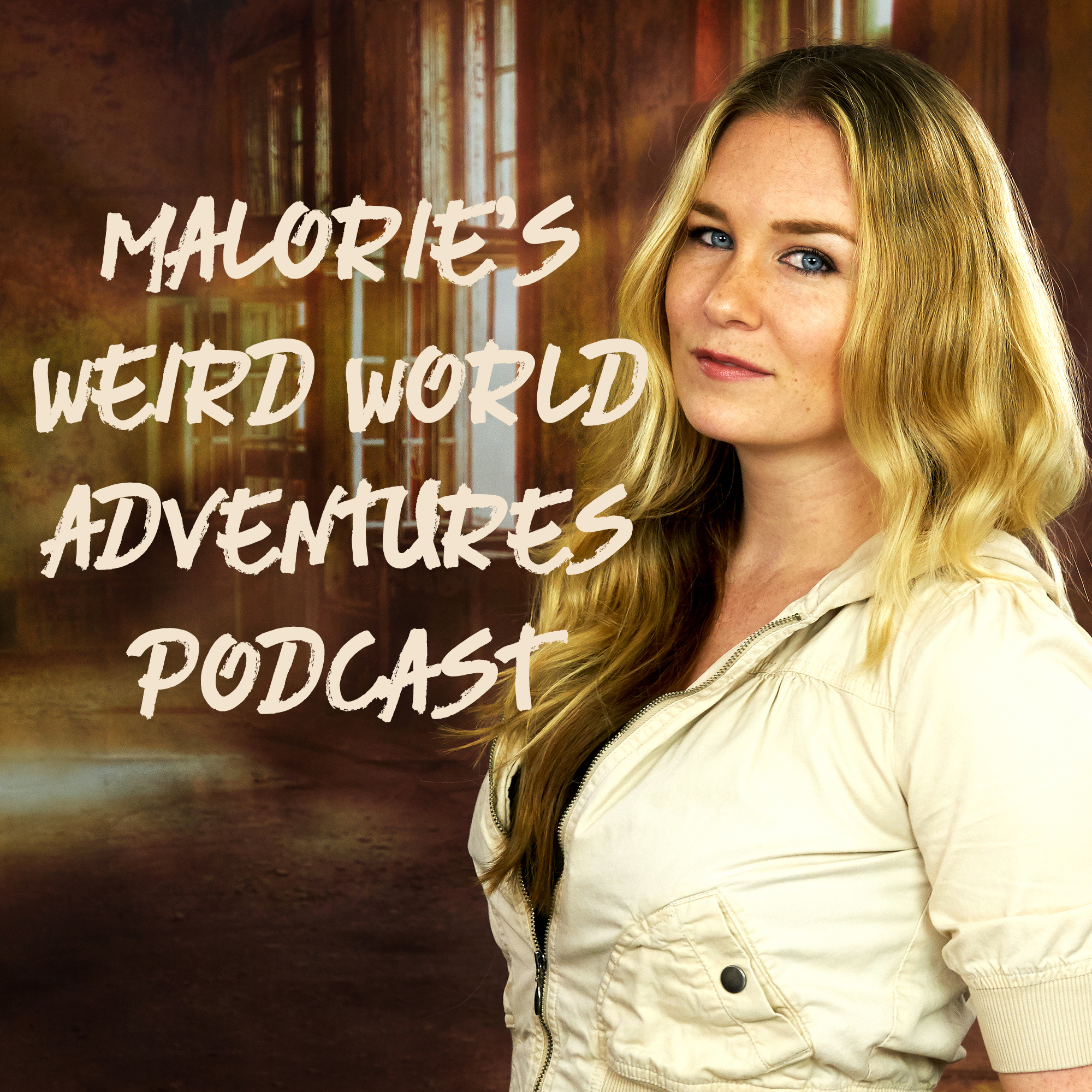
Hello, everyone. Welcome back to Mallory's Weird World Adventures, the podcast. I'm your host, Mallory, and I'm here to show you just how weird this world of ours really is. I'm very excited today to have Kayla Brandstetter on with me who wrote the book Don't Be an Athena.
So we'd love to hear from you, I guess your description of the book and how it came to be.
[00:00:28] Speaker B: Okay, so the title was originally going to be Choices, because I wanted to show women all the different choices that they had available to them or the different choices that women made for themselves. And it's this situation of when life presents you with two bad choices and you have to make the best of the two or just choices that life have given you. And that was kind of my mindset, but I was doing research and then I did my first TED Talk called Don't Be an Athena. And I went ahead and streamlined it because the message of my TED Talk was inspired by my message of my book. And I just used that legend to as a large metaphor into 21st century women to highlight that women have been through sexism and this medical gas eating and misogyny literally for thousands of years.
So people don't know the origin of Medusa begins with Athena.
And when Medusa was. There are a couple origin stories, but of them, she was the only mortal sister of the Gorgons.
And she was strikingly beautiful.
And she decided to Athena and legend. My book is following the Roman poet Ovid's origin story of her, and it's Poseidon became captivated by her. So you have this man or this God of immense power, and he takes advantage of Medusa in Athena's holy temple.
And then Athena, instead of holding Poseidon accountable for his crimes against Medusa, she transforms Medusa into this Gorgon and monster and makes her hideous. And I just think of 21st century women, other women in society accountable, completely out of their control, and not hold these powerful deities and these powerful men accountable for their crimes. And so I layered that into I. I talk about sexual assault in my book. I talk about domestic violence, but I also included reproductive health and our reproductive choices. So that's this behind my book.
My own fertility and my own miscarriage and the fact that I am a daughter of a teen mom just impacted this storyline that I wanted to create a platform for women to share their stories. And I wanted to create a book where women had a book to go to as the source of survival and a source of visibility that was important
[00:03:32] Speaker A: to Me, I love that. That's so admirable. And I feel like there's such a taboo talking about fertility and in obviously sexual assault. But even. Even something as simple as fertility, which you think should be like a positive experience, something that you're working towards, because my husband just went through IVF and it's. No one talks about it and everyone's weird when you talk about it, and people don't know how to respond. And I feel like you're put in society to believe that something must be wrong with you if you. If you are, can't just have a baby.
[00:04:05] Speaker B: Right.
[00:04:06] Speaker A: So you. And you have to go through a process to help with that. So it's lovely to see you kind of normalizing those conversations.
[00:04:14] Speaker B: Absolutely. And I interviewed a woman who had undergone ivf, and I interviewed a woman who froze her eggs and gave birth at 44 and interviewed a woman who was a surrogate.
And I remember interviewing the woman who had undergone ivf and she just told me, like, the whole process just seems so dehumanizing and cold and clinical.
And like, that was eye opening to me because I did go through infertility and I had gone through some procedures, but I was able to conceive without the use of ivf. And I'm so blessed. But it was isolating. When you do go through infertility, the amount of people who feel entitled to share their opinions going something. So I just. I'm trying to think of a word for it. It's so difficult, just so heartbreaking, because there's a grief attached to infertility that I think people don't understand because there's this. You're in denial that you're going through it. You're angry that you have to go through it.
And it's just circuitous of those emotions.
[00:05:25] Speaker A: Definitely. And I feel the grief is a great word because every month you are negative, you get that negative pregnancy test. There's a grieving because you wish, you hope that it could have been the opposite. And it's like a loss that.
That a lot of people don't understand.
[00:05:42] Speaker B: Absolutely.
[00:05:45] Speaker A: The book tackles what you call the myth of silent endurance. Where does that cultural script come from? And how does it get reinforced specifically inside the doctor's office?
[00:05:56] Speaker B: I think this goes from centuries of patriarchal society and putting unrealistic expectations on women, coupled with the health care system and not just the healthcare system. I'm just going to say science in general, not including women in research.
For centuries, we have viewed women's bodies through the lens of a man's body, because it's been men for centuries who have been able to attend medical school.
And even before we institutionalized medicine, it was women who were the midwives delivering babies. And then we institutionalized medicine, and all of a sudden it's men treating women and delivering babies who don't understand the body.
And how many centuries did we go where they thought a woman's uterus floated around her body?
If you read Shakespeare and even the plays back in that time period, they thought a woman's uterus floated and that emotional.
And the cure to it was pregnancy. So surprise, surprise and hysteria is a diagnosis what into the 1950s in the United States. And it wasn't until the early 1990s, we decided to start researching women's bodies. I think only a couple years ago, they've started using actual blood tester products.
And I know in my state, it wasn't only until recent that they removed a luxury tax on women's period products.
So if we think about. We've just had this expectation that women are just going to have to endure and just endure pain, both physical and emotional. But on top of that, if you have infertility, I felt like, well, it's your fault. It's automatically the woman's fault. And that's how I felt when I was going through it.
And it just translates into the medical field of just centuries of women not having a seat at the table when it comes to research of our bodies.
Right.
[00:08:10] Speaker A: Which is crazy.
And even. Even with. This is. So I'm. I'm pregnant now. We.
[00:08:16] Speaker B: We.
[00:08:16] Speaker A: If IVF was successful. I'm pregnant.
Thank you.
And it is. It's such a strange experience because especially with men, they don't understand it. So it's. It's like it makes them sad. So uncomfortable. And it's almost like you're completely ill. Like, we. We've always treated pregnant women, you know, like there's. Are you ill? Or something wrong with you, you're fragile. When you can really mostly go about
[00:08:40] Speaker B: your daily life and everything's fine.
[00:08:41] Speaker A: But it's interesting, just the stigma that comes with it. And the fact that we used to be.
I mean, we're just now kind of celebrating our bodies when we're pregnant. Women hid it for centuries. I mean, you know, hid the fact that they're pregnant. And just now, are we, like, wearing things that make us look cute when we're pregnant?
[00:08:59] Speaker B: Oh, in the maternity shoots, I. I did a maternity photo shoot with both of my pregnancies because it's when you struggle with infertility and you're finally pregnant, you're. You. Do you want to in, you know, show off that you're pregnant?
But I also know with infertility, I don't know if you had gone through this. I had such anxiety with both my pregnancies the entire time because they told me I was going to lose my first child.
I had a miscarriage.
And then with my third pregnancy, I was fine, but I was sick the entire nine months. So even though as happy as I was to be pregnant, I felt like I just could not enjoy being pregnant.
[00:09:39] Speaker A: Mm. There's always a.
The next milestone, I'll feel better. The next milestone, I feel better. And I feel.
I was so afraid it wasn't going to keep it. There was going to be an issue because we had had a miscarriage as well, just very early on in our IVF process. And I. I was so worried about it through the first, you know, several months. And then. Then you kind of get to do the ultrasound process. You get. You graduate from the fertility clinic. You see it. It becomes more real, and it's always, well, then I'll feel better than. During the next phase. During the next phase. And I just got to the part where I can. I can feel him moving now. So that's helped me at least know. I know he's down there because he's moving.
[00:10:21] Speaker B: Yes. Yes.
And I'm. Not only am I a big advocate for reproductive health, for taking care of born, I think we don't have enough advocacy on what's for the baby is taking care of mom, and we need more support in that area as well, with postpartum and giving mothers the grace to heal their bodies.
[00:10:48] Speaker A: Right.
[00:10:53] Speaker B: Yeah.
[00:10:53] Speaker A: So you've talked a lot, too, about women being told their pain isn't real. What's the most surprising moment you've had from interviews or experiences you've collected, or are there a few that just really stood out to you?
[00:11:06] Speaker B: Even in my own experience, fertility, my first doctor's appointment, we weren't trying hard enough to get pregnant, so that felt so dismissed. I know that's not really pain, but it's like this emotional pain of you are trying for eight months and you're not being successful, and then you encounter a practitioner or provider who is saying, we're not trying hard enough. Come back in a few months. And it just made me feel like any type of doctor because obviously there was an issue. I had a hormone issue with progesterone.
And after I had my second daughter, because with my first daughter, they.
I ended up having, like, a stage two tear, and they were able to give me Naproxen to help with the inflammation. And so with my second daughter, it was like the easiest labor and delivery. I would give birth again before being pregnant. If it was just like that one, it was just so simple, but there was still a little bit of pain. And so I asked for Naproxen, which is like prescription ibuprofen. It's not a controlled substance, it's not a painkiller.
And my regular doctor was off her rounds. And so it was a male doctor who was checking on me.
And he, like, they massage your uterus after you have a baby.
And I asked for Naproxen. And he goes, you're fine.
Completely dismissed, like, he's never experienced childbirth. And I'm over here thinking, well, shoot, hand me my purse. I'll just give you my extra strength Tylenol and take care of myself.
But it wasn't just that. Yeah, yeah.
And I've had women that I interviewed, it took years, And they're like, cysts were bursting, going to the emergency room and, like, completely in pain.
And not only that, they're going to the emergency room for assist that had just burst. They're in a tremendous amount of pain, not feeling heard and still turning around and going to work the next day.
[00:13:14] Speaker A: Yeah.
[00:13:16] Speaker B: Wow.
[00:13:17] Speaker A: I know. I. I had cysts, like, recurring when I was younger, and I think. I think I was 18.
And I had one burst. And, you know, that's just. Just never not a pleasant experience. And I remember going into the gynecologist afterwards to be like, what happened? And it's like, oh, you probably just had a cyst. It's fine. Just the. Just the dismissal, like, oh, that happens all the time.
[00:13:37] Speaker B: It's no big deal. And I'm like, well, that was awful.
[00:13:39] Speaker A: What are you talking about?
[00:13:41] Speaker B: It was a big deal to me.
And another woman I interviewed, she suffered from endometriosis for so many years. And there were some cultural factors in there, in that, in her culture, it was.
They didn't really talk openly about sex or their period.
And there was this assumption that if you were visiting a gynecologist before you were married, you're sexually active. And so if you were sexually active as a teenager, that was going to bring dishonor to the family.
So if you had heavy periods and you probably needed to have your reproductive organs examined even at a young age, it just wasn't going to happen.
And so she suffered in pain for Years and years and years. And then she, she did get married. She had passed out from the amount of blood she was losing. She became anemic. She was passing large clots. Just, that's a life.
It's just, it's not a life. And she was on her period for many days out of the month. And by the time her husband rushed her to the emergency room because she basically passed out from the pain and the amount of blood she was losing, the doctor had told her that she needed a hysterectomy, that her endometriosis was so bad and she had been living in pain so much and she had to go through that grieving process. She wanted to become a mother and. But the endometriosis and not being able to seek proper care and being in an environment safe enough to have that conversation was eye opening to me as well.
[00:15:19] Speaker A: If a physician reads your book, what's the one thing you want them to walk away with?
[00:15:27] Speaker B: Empathy and compassion, I think. I am teaching a narrative medicine course to high school students for the first time and they are working on what is called a braided essay. And my students had to find a health care issue. And with the braided essay, it's a braid, you take like three.
I made it my own. But you're like taking three subjects that may not seem like they go together and you braid them and you weave them in to where they make sense.
And so with my students braided essay, they begin with a narrative of a patient and then the next weave is the peer reviewed article to support what the patient has gone through. And then they go back to the patient and then they go back to the evidence base and then they have a conclusion where it's a call to action.
So I'm trying to paint this picture for my students that lived experience and storytelling goes along with evidence based and science based practice.
You can't have one without the other. And we talk a lot about removing patient shame and getting to the story and getting to the root. And you can't do that if patients don't feel comfortable talking to you.
And that's what we're going. That's what I'm teaching teenagers right now. And it's a type of certificate I'm hoping to build at my institution is understanding the power of storytelling. And there are fabulous doctors out there who understand empathy and compassion.
But you also have, I think, doctors who may be great at the science portion of it, but really struggle with the humanity side of it. And that, that's what my book is about is finding giving doctor strategies to remove patient shame so you can actually be in a position to treat the patient.
[00:17:29] Speaker A: Right.
I guess going back to the process for writing the book, when did it shift from I'm going to write this to I have to write this?
Like what was the, the driving factor that made you go for it?
[00:17:45] Speaker B: I began, I thought about this process in 2020. So at that moment I had a four year old and a six month old and I was on, you know, mother nature gave us all a timeout, so we're in quarantine, there's nowhere to go. And women were approaching me because I was open about my miscarriage and my infertility and the pain that came with that, which in some ways was still taboo, but it was becoming less taboo. So women were privately messaging me on my Facebook or they would meet me in public and they would talk about their stories.
So I started flirting with this idea of writing a book about different women's stories. During COVID I spoke to family members, I spoke to close friends like, hey, I have an idea for this book. And they said they loved it. They loved the idea of just having this book that's not really academic. And I mean this isn't, I mean there's academic journals in it, but it's, it's narrative nonfiction. This is a book for. I wanted it to be accessible for most women and not continuously looking up conditions and legal jargon and medical jargon like we're getting to the stories.
And so I started, I wrote one story, I wrote another story. I started seeking out help about to like with publishers of like what they were looking for. And they were adamant that I needed diversity.
And so it took me almost. I mean it'll be published next month and by the time it's published it'll be almost a six year process.
And it took me a couple years to find women.
And I did that through social media, through acquaintances and, and getting a diverse group of women and trying to create interviews where women would be comfortable enough to talk to me because in hindsight I'm a complete stranger and especially women from martial groups. And so I, I made that into a TED talk as well. Of I was able to get these women to trust me in these interviews. And I'm a writer, so what can a doctor do use from a writer to get women to feel comfortable enough to talk to them?
And so not every woman made my book. So after like the first couple of rounds, editors, we had to really streamline these women's stories and their Themes. But just because they didn't make the book. I will probably put them on my blog. But I have another book in mind. So these stories are still going to be utilized.
It just. They didn't make this specific book. But it was important to me to have most American women see themselves. So I had women from New York City and from rural, like rural Texas and so Idaho and California. I had red states and blue states and we talked about how.
I talk about how certain laws were able to help certain women in these specific states and how certain policies impacted women's health, other states and. But I really want women to see the commonality of all of us that we are still women and we're still encountering similar issues.
And so yeah, it was like after the first couple of chapters I'm. This needs to happen. And there were many nights where I'm like up at 3am and I just felt like this was never going to happen. This book isn't because like this has been six years and.
But these women trusted me with their stories and so I can't fail. That's how I kept saying it. I can't fail. They want their.
For many women, they've never told their stories and I do. Some women are under a pseudonym and I had to change their geographic location because I needed to respect their privacy. But the story is still true. It's just their name and maybe their geographic location. It's not true.
But they wanted an outlet. They wanted to feel like their voices mattered. And so that kept me going was they trusted me with their stories. They want.
They've never told their story and they want it out in the public because they don't want other women to go through what they're going through or they wanted to be a source of hope for if a woman has been going through something similar.
[00:22:11] Speaker A: I agree. There's so there's so many ways in which the world lets women down and policy wise and there's just, there's so many avenues where that's true. And I love that you, you kind of put that in with the, with the.
This. How am I trying to say this with mythology is the angle there how. Because mythology has always been a way culture explains what they fear or what they don't understand about the universe or the human body. So do you think medical misogyny is partly a mythology problem too? So we inherited these stories about women's bodies and medicine that it's just dressed up in clinical language and has been passed down to kind of push that misogyny oh, 100%.
[00:22:54] Speaker B: And I think if we know the story of Medusa that's thousands of years old and we're still facing it, you would think as we're progressing as a society, we would do better.
And.
And not only that, like, look how we're treating black women in the medical field and the statistics in that. And I talk about that history in my book as well, because there's a woman I interviewed, her name's Heather, and she had an unintended pregnancy at 20 years old.
And with her first pregnancy, she had a C section. And I remember interviewing her and asking him, like, did you want a C section? And she goes, you know, I don't remember. She goes, you're 20 years old. You automatically trust your medical team to make the decisions for you. You just assumed, yeah, I need a C section.
And so whether her situation was an emergency or not, I mean, that was lost in the past. But I still. It was a great opportunity to talk about how black women are more likely to be pressured into having a section and they're paying. Dismissed afterwards, and how that's still tied to how the black woman is perceived from the past with slavery, because there was a gynecologist who owned slaves that. That practiced C sections without anesthesia on them and how that continues on in the field of medicine.
[00:24:22] Speaker A: And it's interesting that even with a lot of clinical terms and language, they're. They're derived from mythology.
[00:24:28] Speaker B: Yes. Like mythology and history.
And even the C section, cesarean, you know, that's even laced in ancient times, just the way that we continue to see women thousands of years later. And I think it's time for us to do better.
I agree.
[00:24:51] Speaker A: And ancient medicine and mythology have really been intertwined forever with priests and gods and remedies. It's something that that have. Has always gone hand in hand. And I. I think we try to separate it now, like it's different, but we haven't done a great job all the way separating those two items.
[00:25:07] Speaker B: Oh, no.
And not even mythology with medicine, folk, what I call folk medicine is still.
And if you look at this, the root of folk medicine, why it's still. Still popular, is there's a connection there. There may not be science to back it up, but there's this trusting connection that keeps it going.
[00:25:32] Speaker A: You frame narrative medicine as the transformative practice of using storytelling to heal women's bodies. What does that actually look like in practice?
[00:25:43] Speaker B: Giving women a safe to place to tell their stories and to tell their stories about their bodies.
Because how Often do we go to the doctor, whether it's a routine checkup, you. You. You're feeling under the weather, or even a regular, like your. Your yearly pap smear. And the nurse or the doctor. And I get it, they don't have a finite amount of time. But I know. And even when I was giving birth, I was a checklist.
I'm a checklist. And I remember when I was going into labor with my first daughter, my nurse jokingly told me, she goes, you will probably give birth before we get through this checklist.
[00:26:25] Speaker A: Wow.
[00:26:27] Speaker B: Like, she was aware of it.
But what's the story behind the checklist?
Right?
Like, there's a human being there.
And that's what I want doctors to understand is when they're asking your height and your weight and your blood pressure and your vitals, you're more than that.
I remember having a conversation with my. With a co worker just a year ago, and her gynecologist was retiring, and she needed to find one, and she was struggling to find one because we're in a rural area and we're losing providers.
And she goes.
She goes, I know what my medical chart says. And she goes, and I feel like no doctor's gonna pick me up because of my medical chart. She goes, I want to write my narrative and put it in my medical chart and explain my medical chart to whatever provider may pick me up.
[00:27:22] Speaker A: Wow, that's so sad.
Well, so what do you want a woman who's been dismissed by a doctor to feel after reading your book?
[00:27:34] Speaker B: I want them to feel heard.
I want them to feel visible, like you. Because I feel like when we go to the doctor and we're dismissed, I feel like we're almost. They're gaslighting us. Like, this is a mental problem instead of a physical problem, or. That's how I feel. I mean, I can't speak for other women, but it's almost like you're not in pain. So instead of questioning the doctor, you start questioning yourself, like, am I in pain? Am I imagining this?
And the answer is, you are in pain.
And you deserve to feel heard and to feel visible. And I want them to feel inspired and that they're not alone. Their pain is real.
Actually, I have an appendix in my book about how to find providers that are trained in trauma.
So trauma care is now becoming.
I don't even want to call it a trend, because I feel like it's something that needed to be done. But I provide a list of resources for women, whether they're going for infertility gone through, pregnancy loss gone through, sexual assault, domestic violence. But I also include tips and tricks on how to find a provider that is trained in trauma.
So that way they're trained to listen to you and create a safe space. And I, there are six core principles and I include that in appendix as well. So I'm hoping to educate women and empower women to gain control over their voices and their stories when they go to Dr.
[00:29:07] Speaker A: I love that we've, we've covered a lot, but is there anything else we haven't covered that you want to mention from the book or your experiences overall?
[00:29:16] Speaker B: I don't think so. I'm just, I'm excited and nervous to get it out because like it's, it's been mine for six years and it's about ready to go public. So now I'm like, oh no, don't judge these women too harshly.
[00:29:31] Speaker A: No, I'm sure it'll come with a lot of support. I feel like the right people will read it and it will just provide support and confidence too. Something that I think some people I think will very much need to read it.
[00:29:45] Speaker B: And that's my hope. That's my hope.
[00:29:48] Speaker A: Do you have an exact release date?
[00:29:51] Speaker B: July 20th. Okay, perfect. It will be coincide with the Seneca Falls convention.
[00:29:59] Speaker A: And where can people pick up a copy?
[00:30:01] Speaker B: Barnes and Noble drew and directly with my publisher, which is ozarkahlo Press and it's available on ebook on Amazon.
[00:30:11] Speaker A: Amazing. Well, thank you so much, Kayla for joining us today. We're so happy to have you here.
[00:30:16] Speaker B: Thank you so much.
[00:30:18] Speaker A: Of course. And until next time, everybody stay weird.