Episode Transcript
[00:00:00] Speaker A: Foreign.
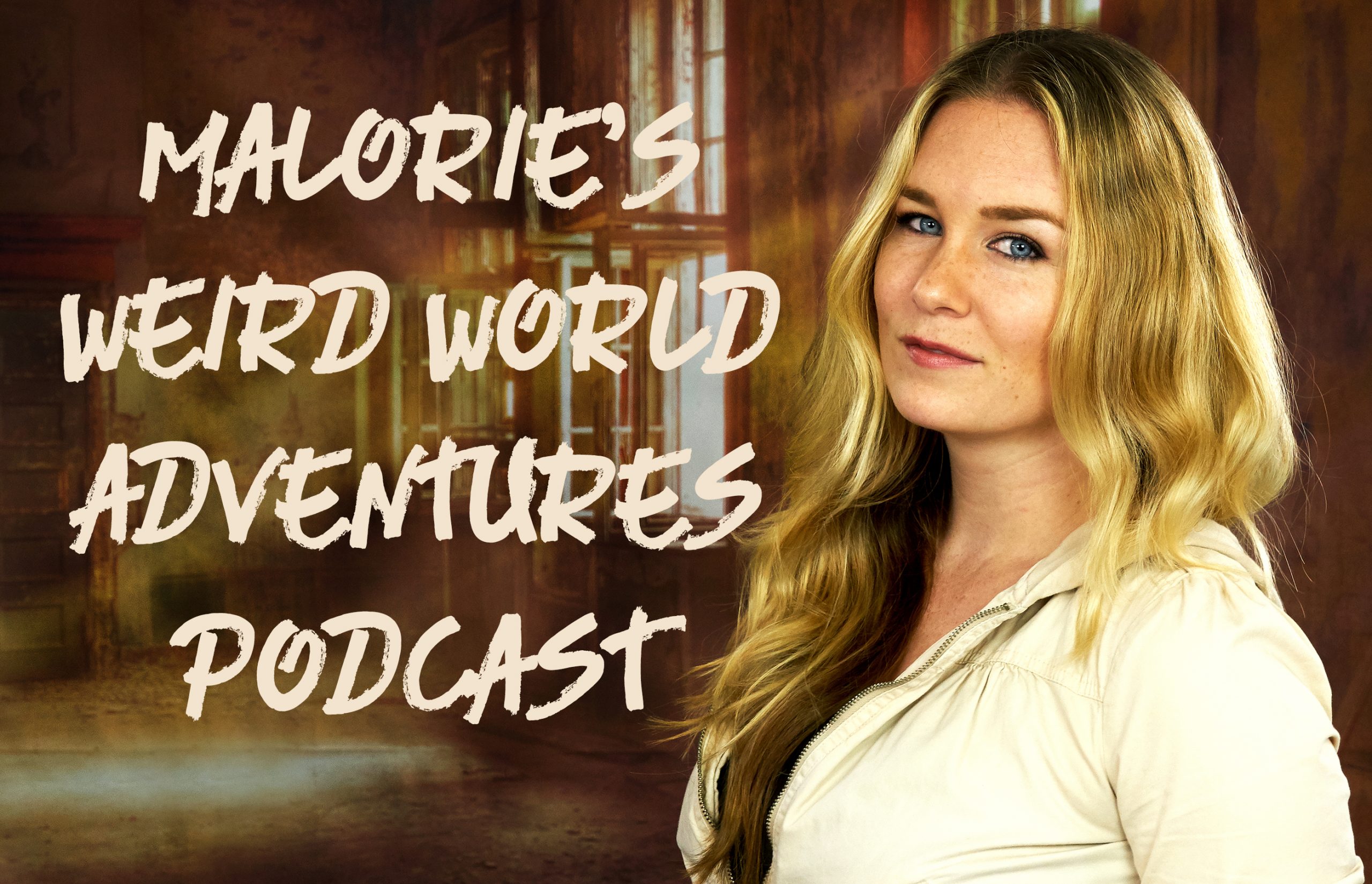
[00:00:07] Speaker B: Welcome back to Mallory's Weird World Adventures, the podcast. I'm your host, Mallory, and I'm here to show you just how weird this world of ours really is. I'm very excited today. I have Emily Roper here. Thank you so much for joining me, Emily.
[00:00:20] Speaker A: Thank you for having me.
[00:00:21] Speaker B: Of course. So I wanted to, I guess, start with your. Your kind of origin story and personal mission. So can you tell us a little bit about your experiences? You attended over 600 births as a midwife's assistant before transitioning into neurodevelopmental therapy, which is amazing. So I want to hear all about your story.
[00:00:41] Speaker A: Sure.
Yeah, I have. So actually, I have done both the birth work and the therapy kind of simultaneously.
So I got into them kind of around the same time. And they do seem like very oddly different types of. Types of careers. But they're really connected in that when we're talking about midwifery care and taking care of moms and babies during these early stages, and then when I'm looking at, like, neurodevelopment and supporting kids that have developmental delays, it all is just related to these early experiences that we have this early time period and trying to support families and kids through, like, their health and trying to look at health holistically, look at all the things that go into building healthy brains and healthy bodies and how to, like, take care of people at lots of different stages and how connected we all are from our earliest moments on into adulthood.
[00:01:42] Speaker B: And I'll have to say I'm. I'm currently pregnant right now. I'm 18. 19 weeks. 19 weeks today. And it is such a weird experience.
[00:01:52] Speaker A: How exciting.
[00:01:54] Speaker B: Have you had children of your own?
[00:01:56] Speaker A: I have one. I've got a little boy who's almost five.
[00:02:02] Speaker B: The pregnancy journey and what we go through is wild. I mean, it's what your body can do. And I know you know firsthand, but I'm just now getting to the stage of, like, I can feel him move. And now it's like I know he's awake. I know when he's asleep, he's just living his life in there. And I'm like, this is absolutely bizarre that there's. There's a human being living inside me, and I can feel him doing his own thing, which is separate than my schedule. He has a schedule and I have a schedule. And, like, you know, like, it makes sense. Well, obviously, that's what pregnancy is, but when you're living it, it's such a surreal experience.
[00:02:38] Speaker A: It is crazy that we just, like, can make A whole person in a relatively short amount of time and that they just, like, live inside of us. It is.
I remember the first time I saw my son move. I was like, whoa, this is bizarre.
[00:02:52] Speaker B: There's a whole. And in there, right?
I started feeling, like, little twitches at first, and I was like, is that me? Is that him? And then it became clear what was me and what was him. And the. The full turns. I'm like, oh, yeah, yeah.
[00:03:09] Speaker A: It's really cool once they get a little bit bigger and you can actually, like, see them through. Like, I remember just sitting and filming my belly and, like, watching my son wiggle around in there. It's crazy.
[00:03:20] Speaker B: So wild.
[00:03:22] Speaker A: I love it.
[00:03:23] Speaker B: It's been so weird already, and it only gets weirder.
So primitive reflexes sound like something out of a biology textbook, but you make them very approachable. So can you walk us through what they are and why a reflex? Why a reflex a baby should outgrow could still still be running someone's life decades later?
[00:03:44] Speaker A: Sure, yeah. So primitive reflexes are kind of probably the big thing that connects, like, pregnancy and birth to development later on, at least of the things that I look at. So let me just, like, back up and explain what they are so people know. So babies are born really early developmentally. So when they're born, their brains are pretty immature and underdeveloped compared to other animals. Like, horses will get up and walk within, you know, an hour or so, within a few minutes after birth.
But human babies, we don't get up and walk for, like, a year or so.
And so babies, because they're born so early, they really rely on a lot of these reflexes and kind of early ingrained motor patterns in order to function. So they're not actually really thinking about the movements that they're making. They're all reflexive. They're all kind of just controlled by this low part of our brain called the brainstem, is what. What takes or what regulates these reflexes. So babies are born with these, like, a whole bunch of different reflexes that help them to survive. They help with the birth process. They help them to develop lots of different skills that they will need later on as they age.
And all of those reflexes should start to disappear within the first year or so. And then they're replaced with a lot more mature movement patterns, mature systems, and, like, they just get a lot more complex and dynamic. But there's a lot of things that can happen during our early stages. So pregnancy during birth, during, like, the early postpartum period. During the first year that kind of disrupt that development. So what you'll see is sometimes these kids will keep holding on to these early reflexes, and then they don't develop other more mature things later on. So the. The most common one that I see, it's kind of the easiest example of this has to do with startle reflex and our stress response. So babies, when they're born, have this really sensitive, strong startle reflex. It's a lot. It's really easy to trigger. It's what helps them to start breathing after birth. It helps them to keep all of their different physiological levels elevated.
It's really beneficial for them during that early stage. But it should, because it's so sensitive, it's really easy to startle them, and they tend to have big physiological reactions.
So that should mature into a startle reflex that's a lot less sensitive. So it doesn't take nearly as much to startle. We develop other connections to different parts of our brain that help us to, like, evaluate a situation and to settle down and to have just all sorts of more dynamic, complex responses. But a lot of times what will happen is kids will keep holding on to that kind of early, immature, really sensitive startle reflex, and they don't develop these more mature connections. And so what you wind up with is older kids that are really kind of hypersensitive, they startle really easily. They struggle with things like attention and emotion regulation and sensory processing and all of these kind of more advanced skills. And most people don't realize that that can be traced back to kind of some of these early pieces, like these early reflexes.
And that's just one. I look at tons and tons of different reflexes, but they all just kind of give us a picture of how the brain and the body are working and how well they've developed. And so we can get like, a little. A little window into what's going on in that kid's brain and body. And we know, oh, if they're six years old and they still have these reflexes, then their brain and body haven't matured. Right. And they probably need some support.
[00:07:38] Speaker B: What's the most surprising or counterintuitive thing you've discovered about how our earliest experiences, even in utero, shape, who we become later? You kind of already said that. But what's the one that's surprised you? I feel like the most.
[00:07:51] Speaker A: So, honestly, what surprised me the most was when I learned that actually, like, things that happen during birth have such a big impact on brain development later on. And on reflex development later on.
So the school, the post school, school, graduate school that I went to was trying to develop this screening questionnaire to see if they could, like, identify kids that were going to have these types of early delays based on, like, risk factors in their history. And I think that they all expected it to be kind of pregnancy related, maybe early infancy related, because we know how important that time period is. And what they found was that birth complications were the number one risk factor, which I think surprised a lot of people.
And I think that's just because birth is such a small part of our development history. You know, pregnancy is like nine months. It's a long time. And birth is like a day, hopefully not more than that. Sometimes it is, but, you know, it's like really a short period of time. And so we didn't. I don't think anybody really realized how impactful it is, you know, how we're born and the things that happen, how impactful that can be later on. So that was definitely the most surprising thing that I learned through this process.
[00:09:11] Speaker B: That's crazy. And I know a lot of people talk about, you know, the trauma of birth that babies can hold onto, so it kind of adds credibility to that.
[00:09:18] Speaker A: Yeah, it's. It's kind of a way, you know, when you look at things like retained reflexes or a stress response that doesn't develop. Right. It's kind of the, like, physical, testable signs that like, these types of traumas are there. So, like, we kind of have the, like, we know, like, okay, we're understanding that trauma impacts us. We're understanding like that these things can.
That happen when we're early can affect us later on. But it's all. It can all be kind of vague, but when you look at it through this, like, development lens, you can really see like, oh, actually, yeah, there's some actual physical, testable signs that. That's true.
[00:09:56] Speaker B: Amazing. It kind of reminds me now I feel bad about it. The other day we were. We were filming an interview at this really creepy, bizarre, wonderful place in Buffalo called the Iron Island Museum. And the woman's like, can I. Can I scare you a little bit and tell you this story? And I'm like, sure, that's fine. What could go wrong? And, you know, it got dark and then she. She banged on something to kind of make us jump a little bit.
And I jumped. And then from my reaction, the baby woke up inside and then starts moving along like, he didn't like that. And I'm like, man, there's. There's again, a real person down there with their own responses.
Yeah, maybe I shouldn't have. Maybe this is why we're not allowed to ride roller coasters and get scared and say these things. Because I reacted and then I didn't. I didn't think it would also affect him. And it did.
[00:10:43] Speaker A: Yeah, it does. So their. Their little nervous systems and brains are learning how to function based on what your body is doing. So you're actually, like, teaching them how to function in the world. So. And that's not. You shouldn't feel bad about getting scared. We're going to get scared. It's. It's not about avoiding being startled or stressed. It's about learning how to experience stress and then recover, too. So as long as you're not staying in that heightened state, that's when it becomes problematic. But it's actually good. It's good for babies to experience some amount of stress and then experience recovery, because you're also teaching them, here's what a body does when it's stressed, and here's how it recovers.
[00:11:23] Speaker B: I love that. Thank you. I feel better.
Across cultures, I do a lot of cultural anthropology work. There are ancient rituals and beliefs around birth and the first year of life and things people do in different cultures, things we kind of dismiss here in Western civilization. Have you ever come across a traditional practice that turned out to have real neurodevelopmental benefits behind it?
[00:11:48] Speaker A: You know, what's really interesting is actually a lot of midwifery education is based on a lot of more traditional cultural practices, like, I remember.
So there's this really famous midwife named Ina Mae Gaskin. She worked in Tennessee and she ran this birth center, I think it was in the 70s, that had, like, really phenomenal statistics and, like, really positive outcomes. And during a time when a lot of the, like, local hospitals were. They did not have good stats. So she kind of became a little bit famous. And I remember listening to her talk about, like, she developed this method for helping, or she became famous for having this method for helping babies to get stuck when they're coming out. They get, like, this shoulder dystocia. So in the wife, where we have this whole, like, formula that we give her credit for, about, like, different positions and things and ways to help babies that are stuck. And I remember hearing something about how she had learned that. I think it was in Mexico from studying under midwives there who had no formal education and training. That was just what they had learned, what they'd passed down. And now it's something that's, like, really common practice here for helping and supporting babies. So there's a lot of, like, more traditional midwifery that comes from a lot of these cultural pieces.
It does get missed a lot when you look at more traditional medical system.
You know, a lot of these things are not necessarily practiced in hospitals and things like that. We've lost a little bit of that, that cultural piece, for sure.
[00:13:20] Speaker B: Like, the personal touch is kind of gone from it. It's very routine now. You go in, you're treated like this, you're given this, you birth, you're here for this, and then you leave.
[00:13:30] Speaker A: Yeah, it's all very formulaic. You gotta, like. They like their systems and their numbers and how to, like, put people through these things. And in my experience, birth is just not.
It's not something that you can put in a formula. It's a very, like, human wild experience. And you really, like, want somebody who understands, like, birth outside of the formula, who really kind of has that cultural wisdom to understand all of the things that go into it and all of those things at play. And there's definitely a lot of other cultures that do birth better than we
[00:14:03] Speaker B: do in the U.S.
yes. I feel. I feel it's very. Almost. Almost the loss of something personal when you're getting put into the routine in the hospital. And it can be really scary for someone who hasn't done it before, because I. I find that because we went through fertility studies and we did IVF and it's. It's like the people there have good intentions and are trying to help, but they do the same thing every day. And to them, I know this, I know. So they don't relay, I feel like, the correct information sometimes to you or what you. They don't. They don't answer the questions you might not even know you need the answers for.
They just expect you to kind of know what's in the routine and you don't. And that can be difficult.
[00:14:47] Speaker A: Yeah, no, it's. It's just not that there aren't good things about the system. There can be good things, too, but it really is just kind of a system. It's not really, you know, there for care necessarily. It's. A lot of hospitals are set up to see a lot of people and to make a lot of money and to kind of get you through their assembly line. And you do miss a lot of the kind of personal touch. And birth is such a personal thing. It's really. It's not the same as a lot of other medical experiences. It really is the most human thing we can do.
[00:15:25] Speaker B: Definitely.
For a parent who suspects their child has an unmet developmental need, but doesn't know quite where to start, what's the first thing you would want for them to understand?
[00:15:38] Speaker A: Sure. So the first thing, I guess, about development that is really important is that all. I feel like all of these things are connected. So the brain, body, our relationships to other people, our physical health and well being, it's all connected. And so if your child is struggling with something, you kind of want to try to back up and get a big bird's eye view of all of the different things that are going on.
And usually, I mean, that can be difficult as a parent, especially if you're like online trying to find information.
So really my advice is just try to reach out to somebody who really understands development and kind of like a holistic perspective and look into all of the factors that go into like building a healthy brain and body. And don't just look at these things in isolation.
[00:16:30] Speaker B: That is great advice.
What's a transformation story that still gives you chills? Do you have like a personal story with a child or family who came to you and left in a different place or moved you?
[00:16:43] Speaker A: Sure, yeah, I have quite a few.
Let me think. One that I haven't told in a while. So one of the ones, one of my favorite ones was a little girl that I worked with for several years.
I was actually at a homeschool conference. I had a booth there and her mom came up to me and I had like this little paper checklist full of common symptoms that parents could like fill out and look through and kind of get an idea if they, if they were concerned about their child. And I remember she came up to me and she was crying and she like handed me this list and she couldn't really talk to me because her daughter was like clinging to her and was having like a whole little panic attack. She was really overstimulated being out in public. She handed me this list. I looked at it and she had every single like one of the symptoms checked off and she wanted to, I knew she wanted to talk to me, but also her daughter was just there and was really struggling. It was not the right time. So I just like very quickly handed her some stuff and was like, we'll talk later.
So she called and she brought her daughter in and her daughter was just had really extreme anxiety and emotional difficulties.
She was really like even kind of scared of me when we were in the office. I had to be really careful the whole assessment we did. I had mom, like, basically in between us. I had mom doing a lot of it. I tried not to ask her too many questions. I had to like, skip all of the parts of the assessment where she would have to close her eyes or where she might fall over or anything like that because she would just like really panic.
And so I started working with her. She obviously, her stress response was really hypersensitive, but she had a lot of things going on.
And so I worked with her for a couple of years and it was really incredible to see the changes in her. She went from like being kind of that super anxious, buttoned up child to she would come in talking to me, telling me all about her day. She started making friends. She started like swimming in the pool, started catching up with school. It was, I mean, it was a long, slow. We worked together for a long time. It was a slow process, but it was really awesome to see her go from just like, she was just so miserable all the time.
Very happy. Typical kid.
[00:19:02] Speaker B: Must be so rewarding to get to experience that.
[00:19:05] Speaker A: I love it. I love this, doing this work. It's not. It's not always easy and straightforward. It can be real bumpy and tough sometimes, but it's. It's worth it.
[00:19:15] Speaker B: Do you think that our society is kind of creating more children that are anxious now, or do you think we're. They've always been. There's always been anxious children and we're just now noticing.
[00:19:26] Speaker A: No, I really, I mean, I do think we're better at like, identifying both anxiety and things like ADHD and autism and kind of that whole spectrum of childhood mental health stuff. I do think we're better at identifying it, but I do think that our culture is really contributing to a lot of struggles and problems with that. And I think it's really complicated and complex. And that's why there's a lot of people that have a lot of different opinions on it.
But I think, you know, at least in the U.S. we have just so many talk, like environmental toxins that we're exposed to that affect us prenatally. We have, we're losing a lot of the, like, preventative care in pregnancy and a lot of the birth practices that help to support good brain development.
We're losing a lot of the, you know, things that also promote good attachment and rest and recovery for moms and babies during postpartum time.
We have kids that are on, like, screens and eating lots of terrible foods. And we're like, having a lot of trouble with things like sleep and Breathing. And it's just kind of a lot of compounding factors that I think are all playing a part.
And I do think that the culture that we have right now is not supportive for mental health in a lot of different ways.
[00:20:49] Speaker B: Definitely.
If you could change one thing about how Western society approaches the first year of life, what would that be?
[00:20:57] Speaker A: Gosh.
[00:20:58] Speaker B: Or many.
[00:20:59] Speaker A: Oh, man, I have no idea how to fix this problem.
So if we could change anything, it would be that. I wish that moms during the first year after birth had actual, real support postpartum, which is. It's tied into a lot of things because so many moms are isolated from family and from people. They're back to work early because we financially cannot afford. They can't afford to take time off to really spend time with their babies.
We just don't have a lot of real support from moms. We have a lot of the, like, yeah, relax and take a bath and have your favorite drink and whatever. But it's not like the actual support that moms need to really be present for their babies where they're being given, like, really good, nutritious food and they have time and space to actually rest and focus on their. Their kiddo.
I think that that would go a long ways in supporting, you know, their mental health and baby's mental health as they grow and kind of our society as a whole. I love that.
[00:22:07] Speaker B: And I, again, I feel like the lack of. And not. Not that it's.
It's just a systematic problem overall. Not that it's anyone's fault, but even the support in pregnancy, I feel like we were very supported through our IVF journey from the physician side. Despite having so many questions and not knowing what to ask once you start to kind of get in, you do have a care team and you can reach out to them any day and you know exactly what's going on. And then we were graduated to just the regular ob. And here you go, you have. You come in on this date and. And there are months, gaps in between seeing anyone and in the early stages when you can't feel the baby, when you don't know what's going on, you know, you're constantly. Is the baby okay? How do I know that there's not a problem? You know, there's. There's so many things that get in your head and you. There's no guidance. There's no team to reach out to. There's no. There's giant gaps in between getting to do ultrasounds and you don't know what's happening at all.
[00:23:03] Speaker A: Yeah, yeah. And even like a lot of the system around, like supporting and taking care of health is, is about like what do you do when things go wrong, when there's lots of big problems? We don't have a lot of really good preventative care. And like I saw this picture of this birth center, I think it was in Korea and they were talking about how they support moms after birth and they have like all of these really intense, nutrient dense foods and they have like all of this, you know, bodywork like massage and support. They have lactation that's there that is like really supporting to take care of moms, that they don't have to worry about those things. Whereas in our hospital system, you know, the food is pretty garbage. It's not the type of stuff that is going to really help.
[00:23:49] Speaker B: They.
[00:23:50] Speaker A: A lot of them do have good lactation support, but a lot of moms don't get rest. They have people that are in and out all the time, waking you up a lot and then you go home and then you're totally alone and you have to come back for your visits. That's the nice thing that I do love about midwifery care is that we go to people's homes after birth. And so like when I'm doing postpartum visits for moms, I'm traveling to them. We do. I block off enough time to really like at least provide a lot of education about things like nutrition and supplements. But it would be really great if they had good support so moms aren't having to do all of that themselves too. They can really like focus on baby and support that. But we're a pretty under supported and undernourished country, unfortunately.
[00:24:37] Speaker B: I definitely agree and hopefully, hopefully we'll start moving in the right direction.
[00:24:45] Speaker A: I hope so.
[00:24:48] Speaker B: Well, is there anything else you would like to tell listeners about the work that you do?
[00:24:54] Speaker A: You know, I'm not sure. I guess just my biggest recommendations are if you have a kiddo that's struggling with something is to just try to find somebody that can support them kind of through this holistic lens.
You know, if you're pregnant, then try to find a care provider that will really like listen to you and take things personal, like give you personalized care, you know, that will help. Look at things like nutrition and stress and rest and all of those good things too.
[00:25:23] Speaker B: Definitely. Where can people find you online?
[00:25:26] Speaker A: If you want to find me on Facebook or Instagram, it's Earlyroots. And then if you want like a lot more in depth information about kids. Like, if you have a kid that's struggling with something, then I have a lot of information on my website, which is earlyrootstherapy.com My Facebook and Instagram cover a lot of different things.
[00:25:48] Speaker B: Fantastic. Thank you so much for joining me today, Emily.
[00:25:51] Speaker A: Yeah, thanks for having me on.
[00:25:53] Speaker B: Of course. And thank you all for listening today. Until next time, everybody stay weird.